
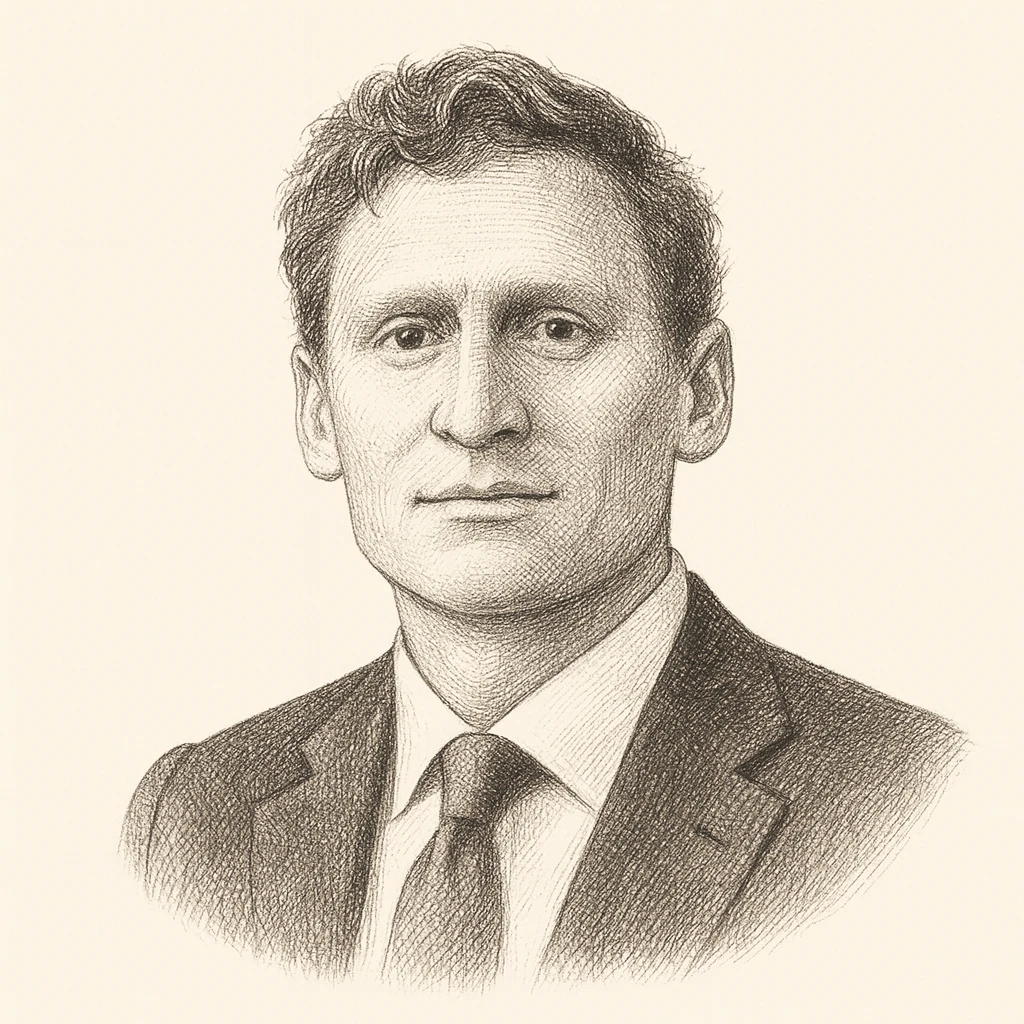
Blake Masters is best understood as a product of the intellectual milieu surrounding the tech investor Peter Thiel, for whom he worked closely and with whom he co-authored a widely read book drawn from Thiel's Stanford lectures on startups and innovation. That collaboration is central to his political identity: Masters absorbed and popularized a Thielian critique of contemporary America as a society suffering from stagnation, risk-aversion, and institutional decay, in which genuine technological and social progress has slowed even as bureaucratic and financial complexity has grown. This diagnosis of decline, more cultural and civilizational than narrowly economic, became the backdrop for his turn toward electoral politics.
When he sought the Republican nomination for U.S. Senate in Arizona in 2022, Masters positioned himself firmly within the emerging "New Right" and national-conservative currents that gained prominence during and after the Trump era. His platform combined restrictionist immigration politics, economic nationalism, and cultural conservatism with a distinctive skepticism of large technology companies and concentrated corporate power—an unusual posture for someone from the venture-capital world. He argued that elite institutions, media, and multinational business had grown detached from and even hostile to the interests of ordinary Americans, framing his candidacy as part of a broader populist realignment against a managerial establishment. He won the Republican primary but lost the general election to the incumbent Democrat, and a subsequent 2024 bid for a U.S. House seat ended in a primary defeat.
Masters is significant less for legislative achievement than as a representative figure of the fusion between Silicon Valley contrarianism and populist nationalism. He embodies a wing of the American right that draws on themes of stagnation and decadence, techno-optimism about frontier innovation paired with pessimism about present institutions, and a willingness to break with free-market orthodoxy on trade, immigration, and antitrust. His public commentary and campaigns illustrate how figures connected to the heterodox tech world sought to translate that worldview into a political program, and how the national-conservative movement has attempted to marry cultural traditionalism with critiques of both government bureaucracy and corporate power.
Blake Masters is associated with National Conservative. See the archetype