
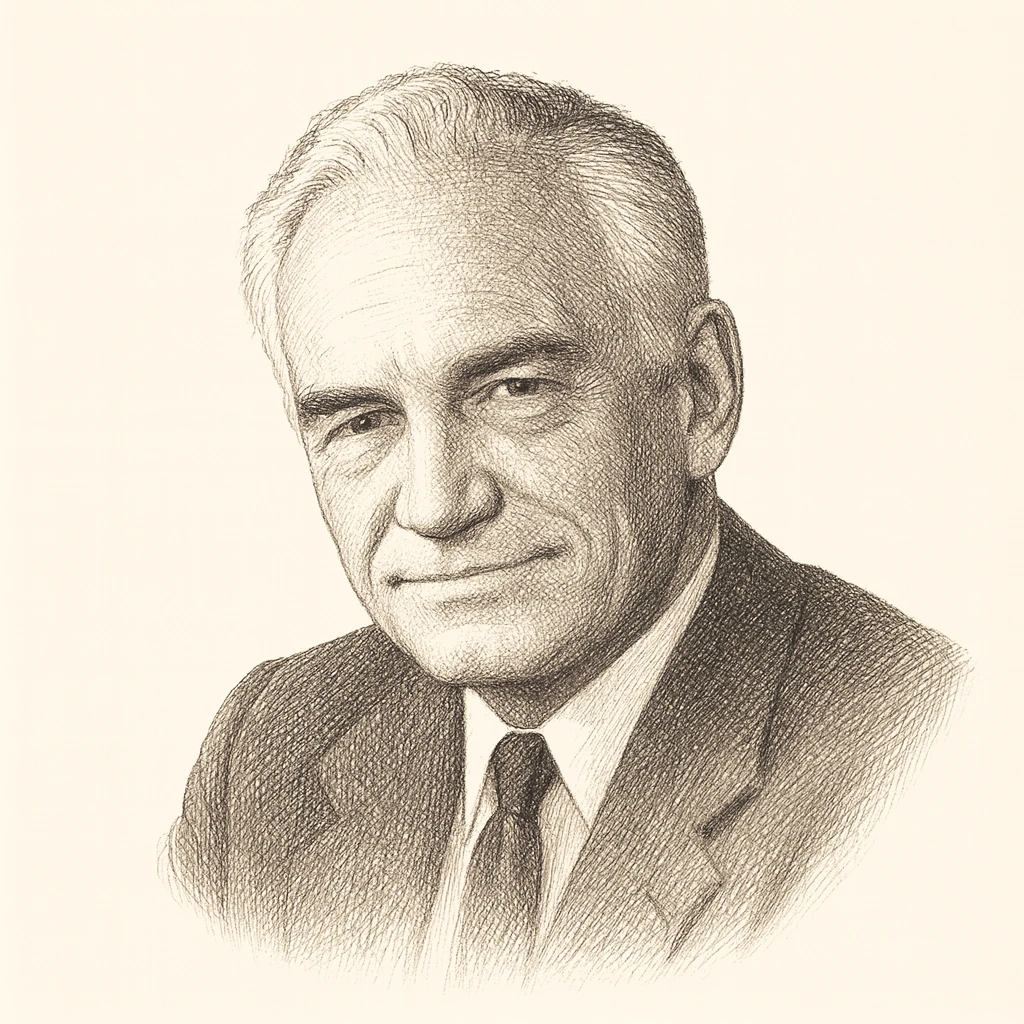
Barry Goldwater was an Arizona senator whose 1964 presidential campaign transformed American conservatism, laying the groundwork for Reagan's victory sixteen years later. A Phoenix department store heir, Goldwater entered politics as a World War II veteran, winning election to the Senate in 1952.
Goldwater's Conscience of a Conservative (1960)—drafted with L. Brent Bozell Jr.—became the movement's bible, advocating limited government, states' rights, and aggressive anti-communism. The book fused two strands that had often sat uneasily together: a libertarian suspicion of centralized federal power at home and an uncompromising hawkishness abroad, insisting that coexistence with communism was unacceptable and that liberty required a militant defense. It argued that the New Deal state had eroded constitutional limits and individual freedom, and it treated many federal social and economic programs as illegitimate expansions of Washington's reach.
His 1964 presidential campaign—declaring 'extremism in the defense of liberty is no vice'—terrified moderates and lost in a landslide to Lyndon Johnson, whose campaign painted him as reckless, most memorably in the 'Daisy' advertisement suggesting he might invite nuclear war. Goldwater's vote against the Civil Rights Act of 1964 became one of the most contested episodes of his career: he framed his opposition in constitutional and federalist terms, objecting to federal regulation of private businesses rather than endorsing segregation, and had earlier supported integration and civil rights measures. Critics then and since argued that this states'-rights posture, whatever his intent, aligned conservatism with white Southern resistance and helped realign the region.
Yet the Goldwater campaign—built in part by the grassroots 'Draft Goldwater' effort—assembled organizational infrastructure and identified themes that would triumph with Reagan, whose 1964 televised address on Goldwater's behalf launched his own political rise. The defeat, though crushing, gave the conservative movement a national activist base and a coherent ideological identity distinct from the Eastern Republican establishment it had challenged.
Goldwater himself became more libertarian in later years, supporting abortion rights, gay rights, and criticizing the Religious Right as dangerously theocratic—warning that mixing religion and politics threatened both. He returned to the Senate, championed Native American rights, and died in 1998 as a conservative icon who had also become something of a maverick, admired across the spectrum for a consistency that placed personal liberty above cultural conformity.
Barry Goldwater is associated with Traditional Libertarian. See the archetype