
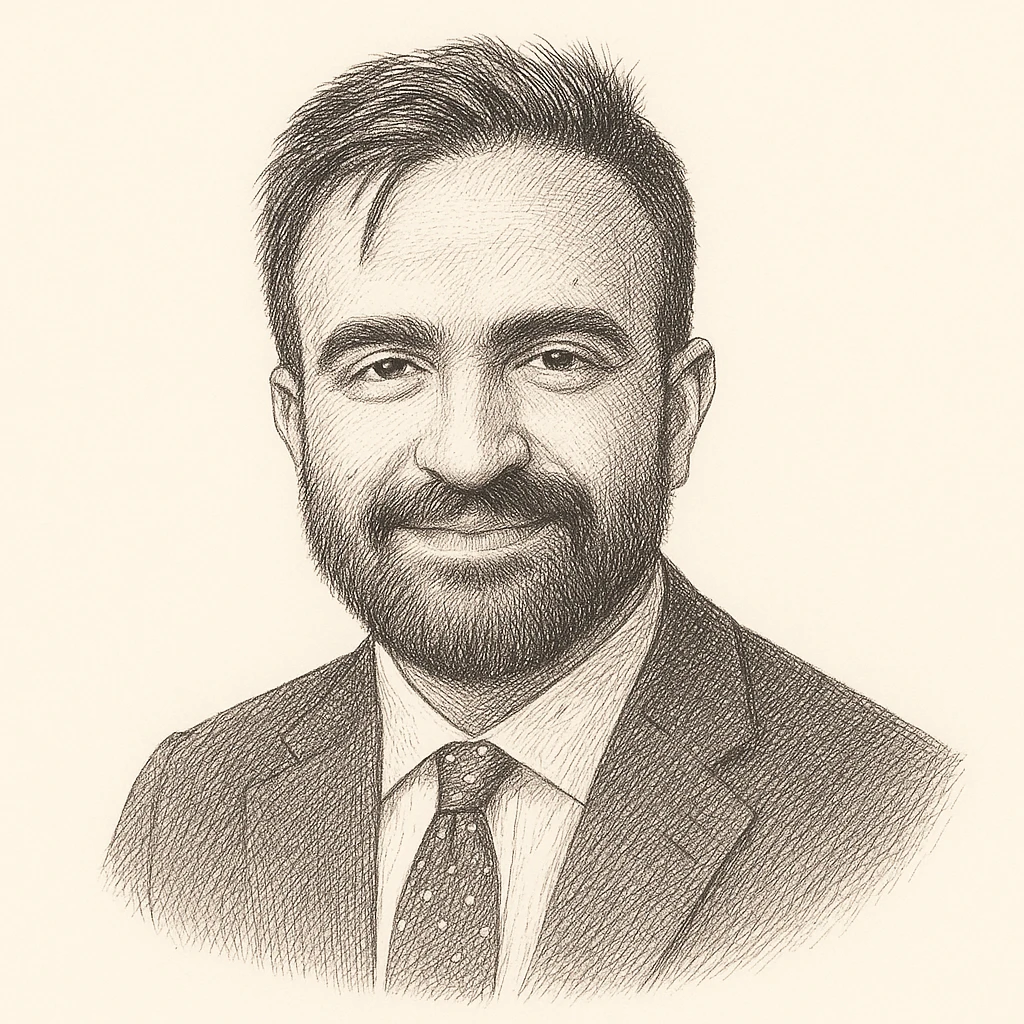
Zohran Mamdani is an American politician associated with the democratic-socialist wing of the Democratic Party and with the Democratic Socialists of America. Born in 1991 in Kampala, Uganda, and raised partly in New York City, he entered electoral politics after work as a housing counselor and organizer, winning a seat in the New York State Assembly representing part of Queens in 2020. His political identity has been shaped by movement organizing rather than by conventional party machinery, and he has consistently framed material insecurity — rent, transit fares, the cost of childcare and groceries — as the central problem that municipal politics should exist to solve.
Mamdani's thought sits within a broader tradition of urban democratic socialism that treats the city as a site where redistribution and public provision can be enacted directly, without waiting for national reform. His signature arguments center on decommodifying essentials: freezing rents on stabilized housing, making public transit free, and having the state provide services the market prices out of reach for working people. The recurring premise is that affordability is not a technocratic detail but a question of power — of who the economy is organized to serve — and that visible, universal public benefits build durable political coalitions in a way that means-tested programs do not.
His rise drew national attention because it tested whether an explicitly socialist, affordability-first message could win beyond safe legislative districts. His 2025 campaign for mayor of New York City, built on that agenda and on large-scale volunteer mobilization, answered the question decisively: he defeated former governor Andrew Cuomo in the June 2025 Democratic primary, won the November general election with over 50 percent of the vote, and was sworn in as mayor on January 1, 2026. Supporters see in him proof that populist economics can be paired with coalition politics; critics question the fiscal and administrative feasibility of his proposals and the limits of city-level power to deliver them — a debate his administration now settles in practice rather than in theory.
As a young Muslim politician of South Asian descent, and an outspoken critic of Israeli policy and advocate for Palestinian rights, Mamdani has also become a lightning rod in contested arguments over identity, foreign policy, and the boundaries of acceptable dissent in American politics. His influence lies less in a body of theoretical writing than in demonstrating, in practice, a template for how the democratic-socialist current governs rather than merely protests — his mayoralty is now the most prominent test of that template in the country.
Zohran Mamdani is associated with Democratic Socialist. See the archetype