
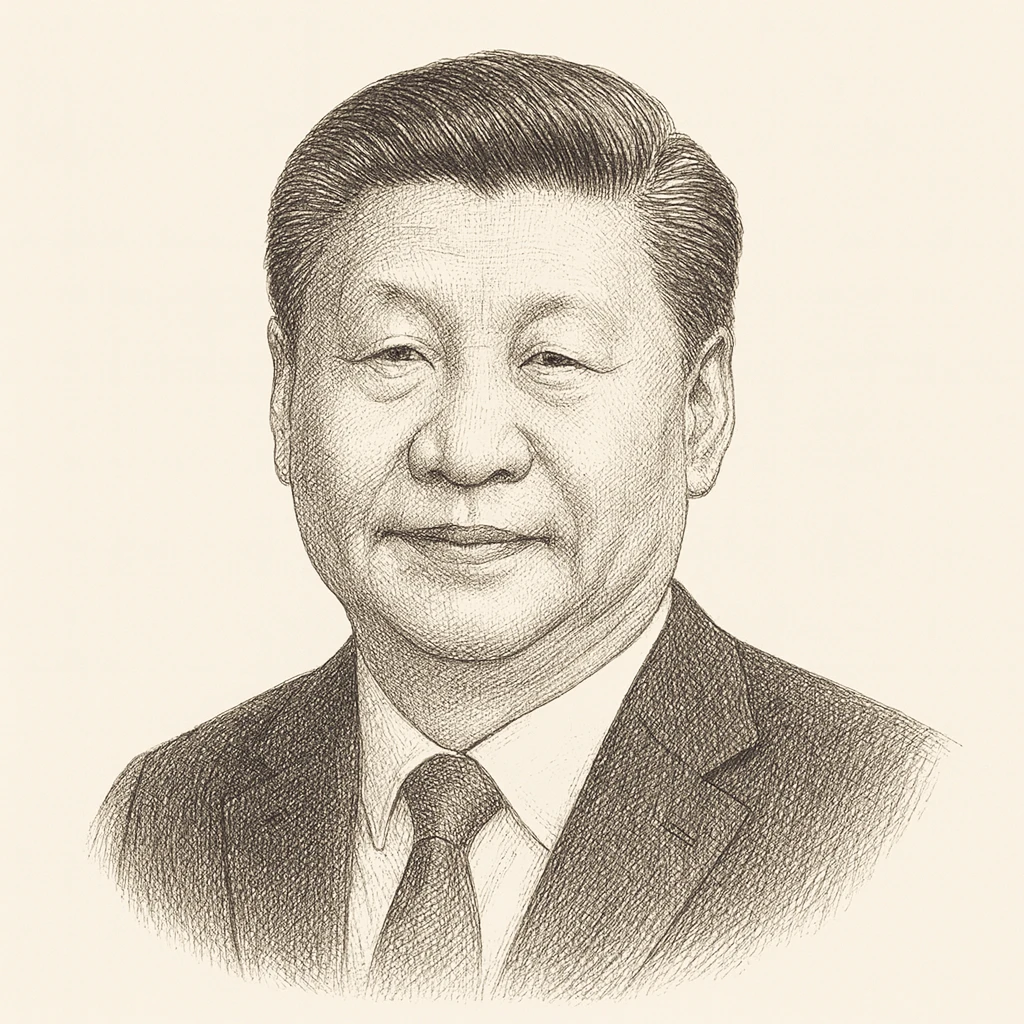
Xi Jinping, General Secretary of the Chinese Communist Party since 2012 and China's president since 2013, is the central author of contemporary party-state ideology. His signature body of thought, formally enshrined in the party constitution as "Xi Jinping Thought on Socialism with Chinese Characteristics for a New Era," restates a durable Leninist premise: that a disciplined vanguard party is the indispensable agent of national development and the legitimate steward of society's collective destiny. Against what he portrays as the drift and corruption of earlier decades, Xi has argued that the party must lead everything—government, economy, military, and culture alike—rather than retreat into a narrow administrative role.
His political thought fuses several traditions. From Marxism-Leninism he takes the model of centralized, cadre-driven mobilization and the rejection of liberal pluralism; from Chinese nationalism he draws the theme of "national rejuvenation," the recovery of wealth and power after a "century of humiliation." These combine in a distinctive claim that stability, discipline, and unified leadership are the preconditions of both prosperity and dignity. His anti-corruption campaign, framed as moral cleansing of the party, also consolidated authority; his revival of the slogan "common prosperity" signals ambitions to temper inequality and market excess through state direction rather than redistribution alone.
Centralization is the through-line. Xi has curtailed the collective-leadership norms that governed his predecessors, elevated ideological conformity within party ranks, and expanded surveillance and control over civil society, media, and religion. The abolition of presidential term limits removed a key institutional check on personal power. His governance rests on the conviction that order and coherence flow downward from a strong center, and that dissent and factionalism are threats to the collective project.
His record is sharply contested. Critics and international observers describe mass detention and coercive assimilation policies targeting Uyghurs and other minorities in Xinjiang, the dismantling of political freedoms in Hong Kong, and a broad tightening of repression against dissidents, lawyers, and independent journalists. Supporters credit him with restoring party discipline, reducing poverty, and projecting Chinese power globally. Either way, Xi stands as the most consequential theorist-practitioner of vanguard collectivism in the twenty-first century, arguing that centralized party rule, not liberal openness, is the surest path to shared national strength.
Xi Jinping is associated with Vanguard Collectivist. See the archetype