
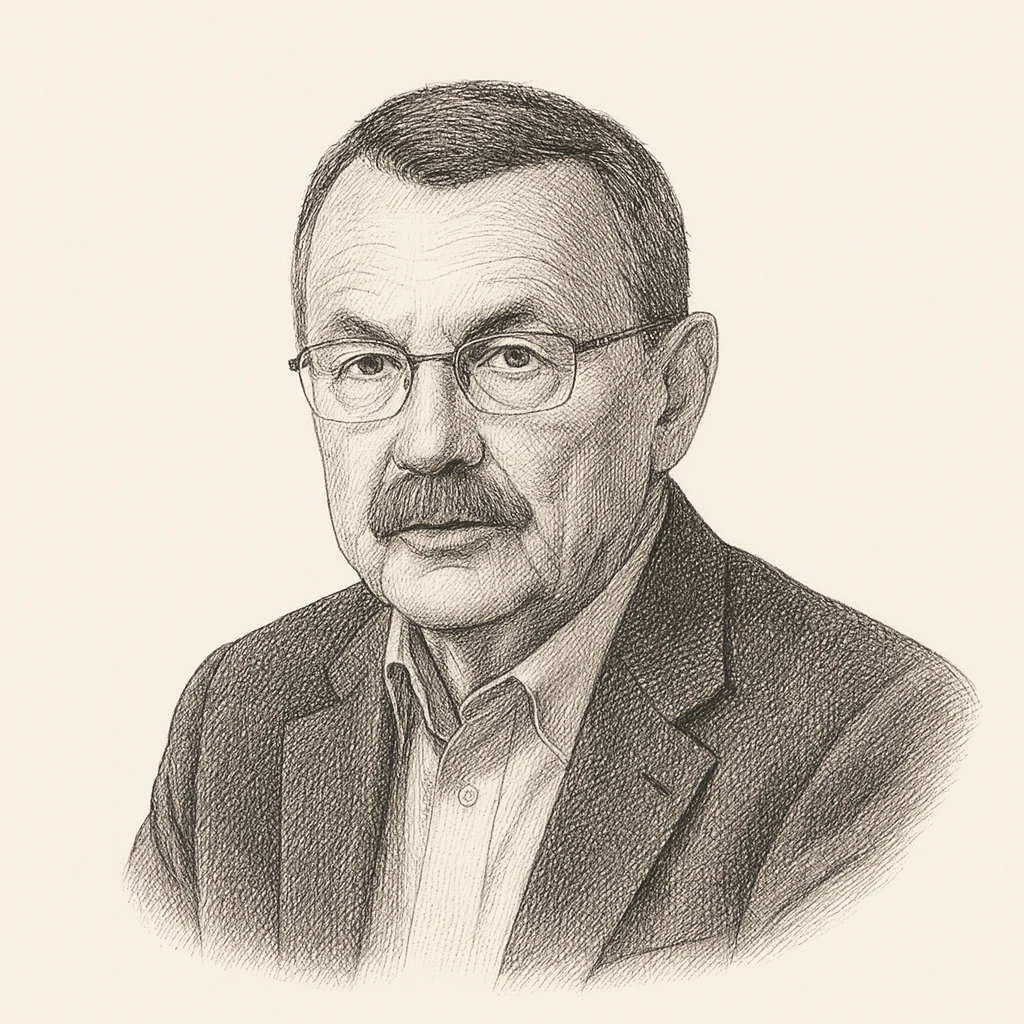
Wolfgang Streeck is a German economic sociologist long associated with the Max Planck Institute for the Study of Societies in Cologne, which he directed for many years. His early work established him as a leading analyst of political economy, industrial relations, and the varieties of capitalist organization, particularly the corporatist institutions that once mediated relations between labor, capital, and the state in postwar Europe. Over time his interests broadened into a sweeping account of the trajectory and internal contradictions of modern capitalism, and he became one of the more prominent left-leaning critics of the direction taken by European integration.
Streeck's central argument concerns what he calls the fraught marriage between democracy and capitalism. He contends that the postwar settlement, in which democratic politics could constrain and civilize markets, has been progressively hollowed out. In his telling, states have responded to recurring crises by shifting from inflation to public debt and then to private debt and austerity, each stage buying time while displacing the underlying tension between the demands of citizens and the demands of capital. The result, he argues, is a growing gap between what markets require and what democratic majorities can legitimately claim, leaving political systems increasingly unresponsive to their own electorates.
From this analysis flows his sharp skepticism toward the European Union and especially the single currency. Streeck views the euro as an institutional straitjacket that removes essential instruments of national economic adjustment, entrenches the dominance of creditor states and market discipline, and insulates key decisions from democratic accountability. He has been notably critical of technocratic governance and of what he sees as the neoliberal reconstruction of the European economic order, arguments that placed him at odds with more optimistic defenders of integration and drew both admiration and controversy.
His influence lies in giving a rigorous sociological framing to widespread unease about the compatibility of markets and self-government. Writing in a tradition that draws on political economy and critical social theory, he has shaped debates on the left about globalization, financialization, and the limits of supranational institutions, while his stance on the nation-state as a possible site of democratic renewal has been vigorously contested. He remains a reference point for those questioning whether contemporary capitalism can be reconciled with meaningful democracy.
Wolfgang Streeck is associated with Left Nationalist. See the archetype