
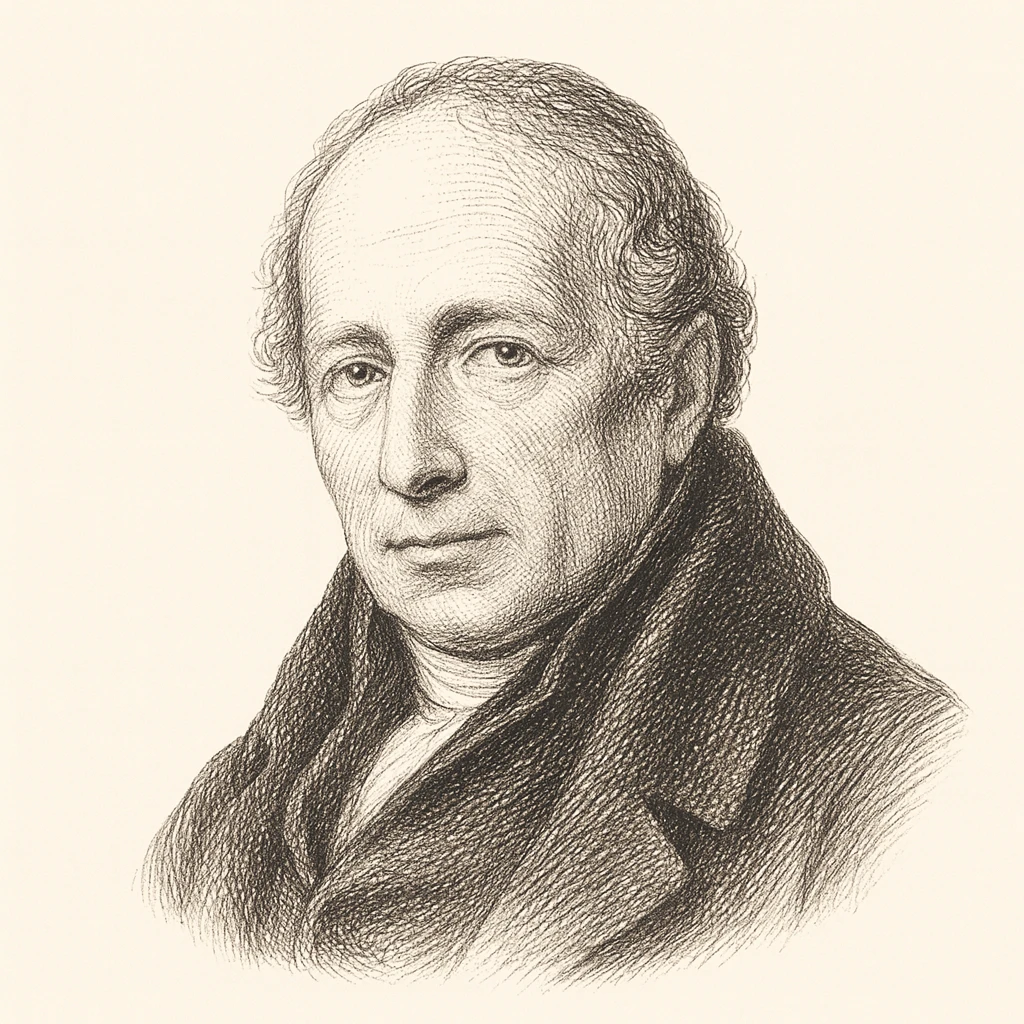
Wilhelm von Humboldt (1767–1835) was a Prussian philosopher, linguist, and statesman whose political thought centered on the idea that the highest end of human existence is the fullest and most harmonious development of individual capacities. In his best-known work on the limits of state action, written in his youth though published fully only after his death, he argued that the state should confine itself to securing the safety and freedom of its citizens against internal and external threats, and should refrain from actively promoting their welfare, morality, or happiness. For Humboldt, an overreaching, paternalistic state threatened to make citizens uniform and passive, sapping the energy and diversity of character that flourishing depends upon.
Central to his argument was the value he placed on variety, spontaneity, and what he called the cultivation or self-formation (Bildung) of the individual. He held that genuine human growth arises from freedom combined with a diversity of situations, and that state interference, however well-intentioned, tends to standardize experience and diminish the range of individual development. This linked his political liberalism to a broader humanistic vision of culture and education, one that also shaped his influential reform of Prussian schooling and his role in founding the university that bears his family name in Berlin.
Humboldt's insistence on a narrow, protective role for government and his celebration of individuality made him a touchstone for later liberal thinkers. He is most famously associated with John Stuart Mill, who drew on Humboldt's emphasis on individuality and self-development in his own defense of liberty, quoting him prominently. Through this transmission, Humboldt's ideas fed into the classical liberal and later libertarian traditions that stress limited government and the intrinsic worth of personal autonomy.
Humboldt was not a purely abstract theorist; he served in Prussian diplomatic and administrative roles and participated in the reordering of European affairs following the Napoleonic period. This combination of practical statesmanship and philosophical reflection gives his political thought a distinctive texture, tempering his skepticism of state activity with an awareness of the tasks government must perform. His enduring significance lies less in a systematic political program than in his powerful articulation of why individual liberty and human diversity matter, and why the state's ambitions ought to be restrained.
Wilhelm von Humboldt is associated with Civil Libertarian. See the archetype