
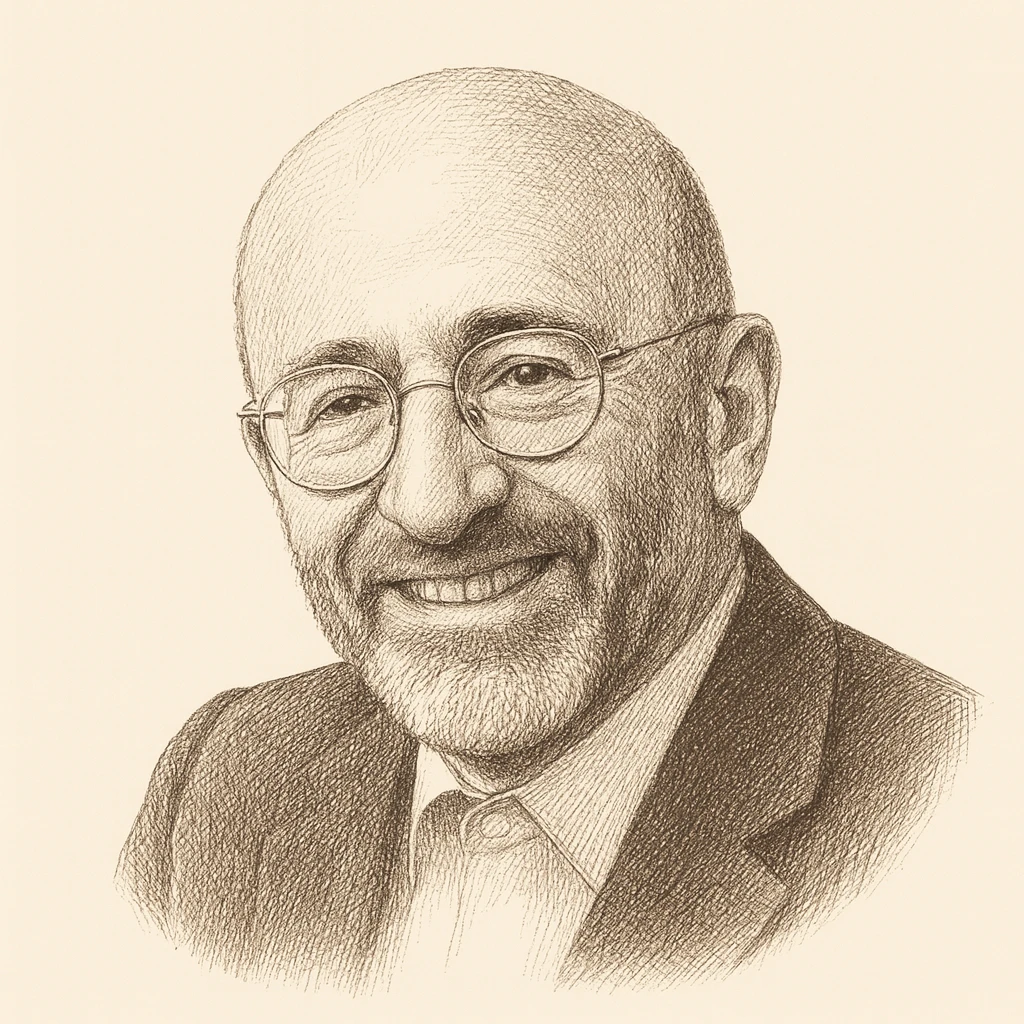
Tony Judt (1948–2010) was a British-born historian, long based at New York University, whose work moved from the specialized study of French politics and the twentieth-century European left toward broad reflection on the political character of the modern West. His early scholarship examined French socialism and the French labor movement, and he became widely known for a sharp critique of the mid-century French intellectuals—figures associated with Jean-Paul Sartre and fellow-traveling engagement with communism—whom he charged with excusing Stalinist repression in the name of revolutionary hope. This established a recurring theme in his thought: a suspicion of intellectuals seduced by grand systems and a corresponding insistence on moral clarity and empirical honesty in political judgment.
Judt's most influential contribution was his synthetic history of Europe after 1945, which framed the continent's postwar recovery around the construction of welfare states and mixed economies. He came to regard this social-democratic settlement not merely as an economic arrangement but as a civilizational achievement—an infrastructure of shared institutions, public goods, and mutual obligation that fostered social cohesion and blunted the extremes of politics. In his later, more polemical writings he argued that the market-driven turn of the 1980s and after had eroded this inheritance, corroding trust, deepening inequality, and impoverishing the public realm. His defense of social democracy rested less on egalitarian abstraction than on prudential and communal grounds: the claim that collective provision binds citizens together and sustains the conditions of a decent society.
Judt situated himself in a broadly liberal and social-democratic tradition, drawing on thinkers concerned with liberty, responsibility, and the moral costs of ideology. He was also a prominent public commentator, notably a controversial critic of Israeli policy who questioned the future of the nation-state model in that context—positions that provoked significant debate. Diagnosed with a degenerative neurological disease, he continued to publish reflective and autobiographical work in his final years, including a dialogue on the intellectual history of the twentieth century.
His lasting political significance lies in his articulation of why the state and its public institutions matter—an argument that reframed social democracy as a defense of solidarity and shared citizenship rather than a purely economic program. For a generation grappling with rising inequality and diminished public life, Judt offered both a historical account of how the postwar order was built and a warning about the consequences of dismantling it.
Tony Judt is associated with Rooted Progressive. See the archetype