
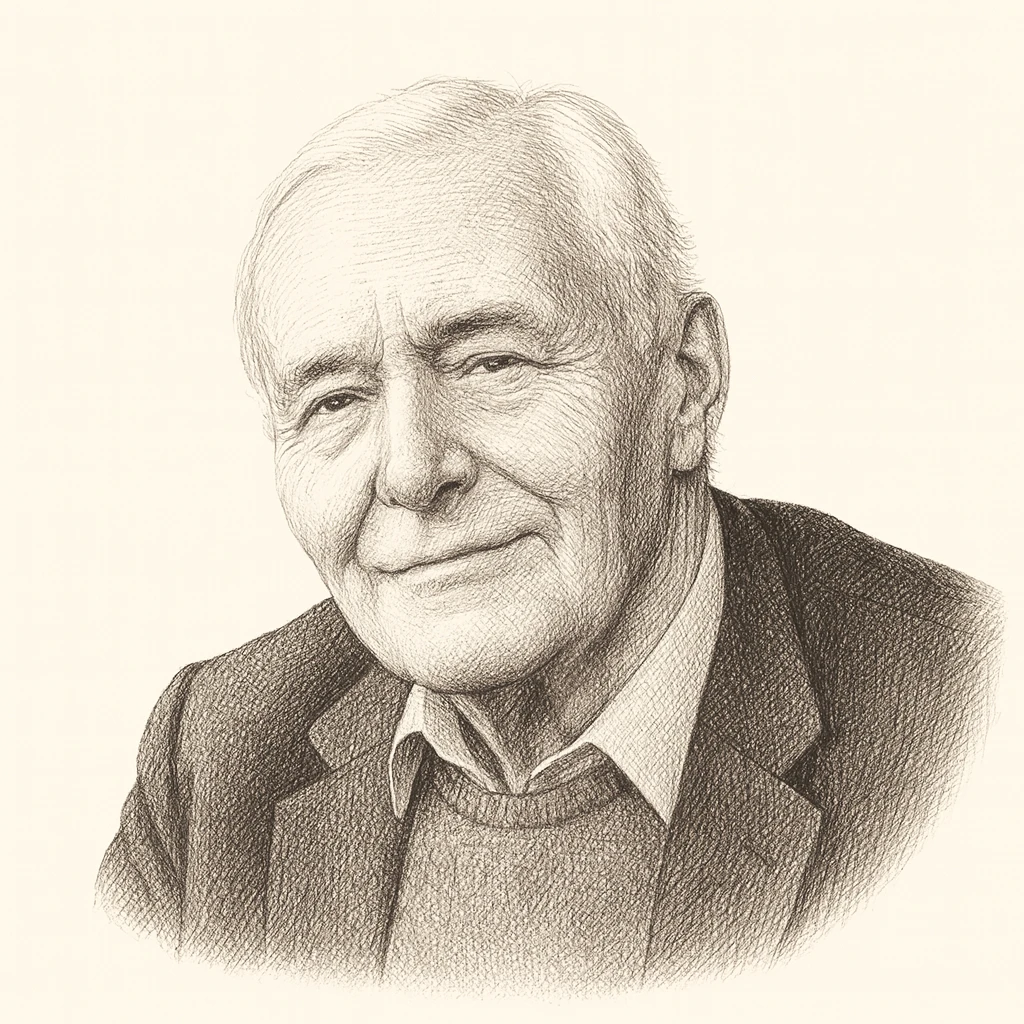
Tony Benn was one of the most recognizable figures of the British Labour left across the second half of the twentieth century, and the intellectual anchor of the movement that took his name, "Bennism." Elected to Parliament in the 1950s and later serving as a minister in Labour governments, he moved decisively leftward over his career, becoming a leading critic of the party's centrist leadership and a champion of policies aimed at shifting power toward working people. He also renounced an inherited peerage, a fight that reshaped the rules allowing hereditary peers to disclaim their titles and sit in the Commons.
At the core of Benn's thought was the conviction that political democracy remained hollow so long as economic power stayed concentrated in private and unaccountable hands. He argued for democratic control of the economy through public ownership, industrial democracy giving workers a voice in the firms that employed them, and greater accountability of the state to ordinary citizens. He was a persistent Euroskeptic on the left, opposing what he saw as the transfer of sovereignty away from democratically elected bodies, and he framed constitutional questions—who holds power and how it can be removed—as central to socialism.
Benn distilled this outlook into a set of questions he said should be put to anyone who holds power: what power they have, where they got it, in whose interests they use it, to whom they are accountable, and how they can be removed. Those who cannot answer the last question, he argued, do not live in a democratic system. This test of accountability became his best-known contribution to popular political argument, repeated well beyond the Labour movement.
In his later decades, having left Parliament, Benn became a widely heard campaigner, diarist and speaker, associated with anti-war activism and the defense of civil liberties. Critics on the right and center-left held that his program was economically unworkable and that Bennism helped keep Labour out of power through the 1980s; admirers saw a principled democrat who insisted that inequality of wealth is a political question. His influence persisted in later left revivals within Labour, where his emphasis on membership democracy and economic transformation was consciously revived.
Tony Benn is associated with Democratic Socialist. See the archetype