
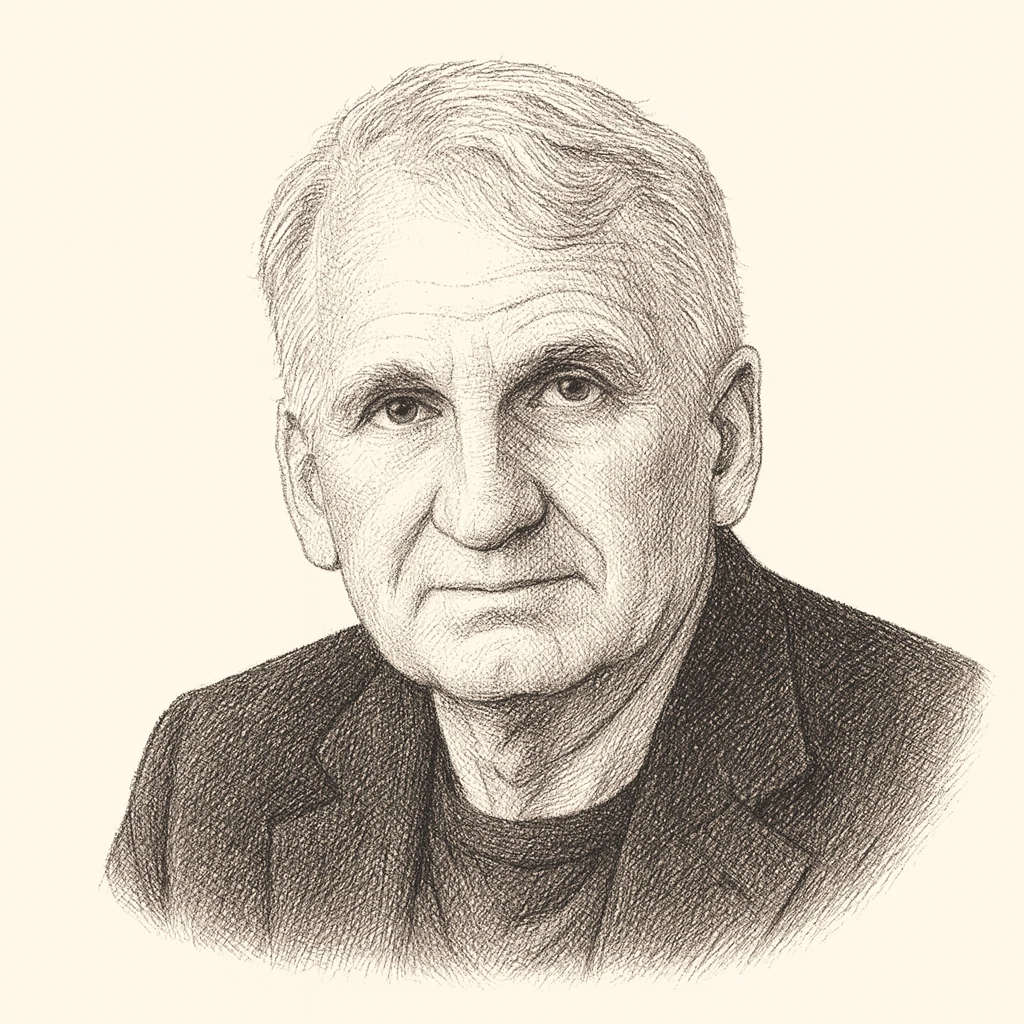
Timothy Snyder is an American historian, based for much of his career at Yale University, whose scholarship on the twentieth-century history of Central and Eastern Europe has made him one of the most widely read academic voices on tyranny, mass violence, and the fragility of democratic institutions. His major historical work examines the lands between Germany and Russia where the regimes of Hitler and Stalin overlapped, documenting how state power, ideology, and the collapse of legal and civic protections combined to produce industrialized killing. That research grounds his broader political argument: that democratic norms and the rule of law are not self-sustaining but depend on active civic effort and institutional guardrails.
From this historical foundation Snyder has developed a public political voice centered on the defense of liberal democracy against authoritarian drift. His short, widely circulated primer on resisting tyranny distilled lessons from the interwar collapse of European democracies into practical civic guidance, urging citizens to defend institutions, resist normalization of abnormal politics, and refuse the language and habits authoritarian movements rely on. He has argued that the greatest dangers come not only from dramatic coups but from the gradual erosion of truth, independent institutions, and shared factual reality.
Snyder situates himself within a tradition of anti-authoritarian civic liberalism, one attentive to how propaganda, disinformation, and cynicism corrode the possibility of self-government. He has written critically of what he calls a politics of eternity and inevitability, contrasting both with a politics of responsibility that treats freedom as something citizens must continually construct. His analyses of Russian politics and of Ukraine have made him a prominent commentator on contemporary geopolitics, and a vocal defender of Ukrainian sovereignty.
As a public intellectual Snyder is engaged and openly normative, and his interventions into current politics have drawn criticism from those who find his historical analogies too direct or his warnings alarmist. Supporters counter that his value lies precisely in translating archival rigor into accessible civic instruction. Either way, his influence is substantial: he has helped shape how a broad public understands the mechanics by which democracies decay and the concrete practices ordinary people can adopt to resist that decay.
Timothy Snyder is associated with Social Liberal. See the archetype