
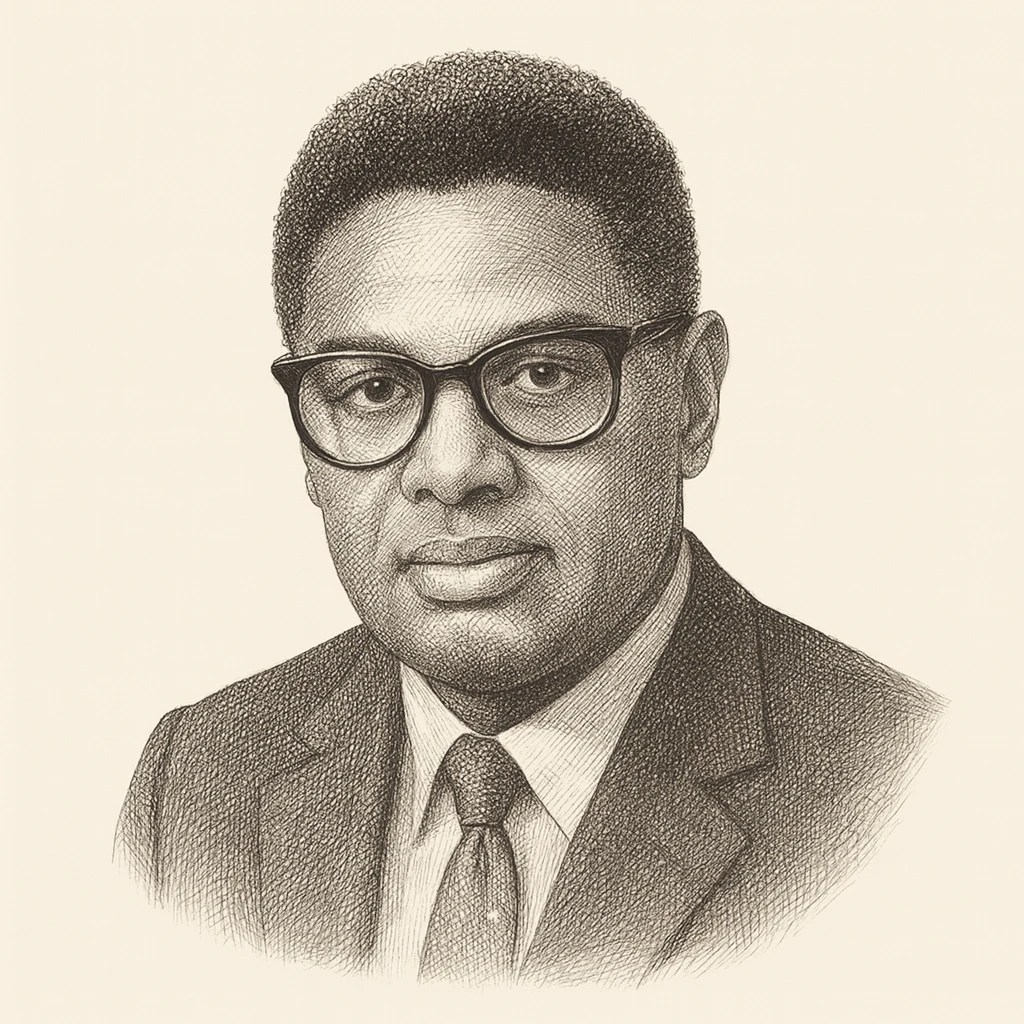
Thomas Sowell is an American economist and social theorist widely associated with free-market economics and a broadly conservative or classical-liberal intellectual tradition. Trained in economics and long affiliated with the Hoover Institution at Stanford University, he became one of the most prominent African American public intellectuals in the United States, known for challenging what he regards as prevailing assumptions among academics, policymakers, and the political left. His work spans economic theory, the history of ideas, race and ethnicity, education, and the analysis of political rhetoric, and he built a substantial public audience through books and a long-running syndicated newspaper column.
A central thread in Sowell's political thought is skepticism toward centrally directed solutions to social problems and an emphasis on the dispersed, decentralized knowledge conveyed through markets and prices. He is especially known for a framework contrasting what he calls "constrained" and "unconstrained" visions of human nature—arguing that many political disagreements stem from differing underlying assumptions about human perfectibility and the trade-offs societies must accept. From this vantage he criticizes what he views as utopian or intentions-focused policymaking, urging attention instead to actual consequences, incentives, and empirical outcomes.
Sowell is a persistent critic of race-based preferences and affirmative action, of the welfare state's incentive effects, and of what he describes as an intellectual class insulated from the results of its own prescriptions. Drawing on comparative history and cross-national data, he has argued that group disparities often reflect complex cultural, geographic, and historical factors rather than discrimination alone, a position that has made him influential among conservatives and controversial among many on the left. His writings on culture, migration, and economic development extend this comparative approach across societies.
His influence on political thinking lies less in holding office than in supplying arguments and vocabulary to the modern American conservative and libertarian movements. By combining accessible prose with an insistence on evidence and trade-offs, he helped popularize market-oriented reasoning for general readers and shaped debates over race, education, and the proper scope of government. Admirers credit his rigor and independence; where he parts company with much of his field is on how much structural barriers explain. Either way, he remains a widely cited figure in disputes about equality, opportunity, and the role of the state.
Thomas Sowell is associated with Moderate Conservative. See the archetype