
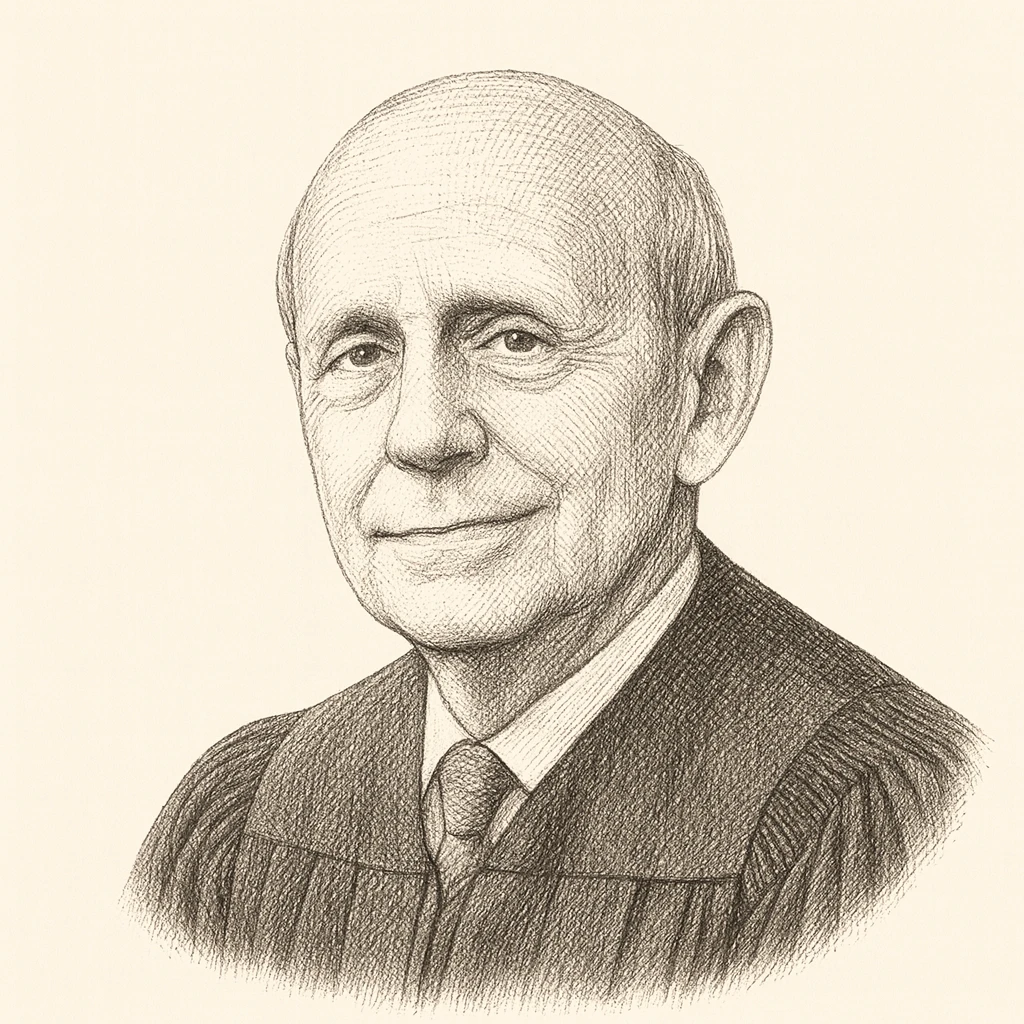
Stephen Breyer served as an Associate Justice of the United States Supreme Court after being appointed by President Bill Clinton in the 1990s, becoming one of the leading voices of the Court's liberal wing until his retirement. Before joining the bench, he built a reputation as a scholar and administrative-law expert, with particular interest in regulation, economics, and how government agencies function. This background shaped a jurisprudence attentive to how legal rules operate in practice and what real-world effects follow from judicial decisions.
Breyer is most closely associated with a pragmatic, purposive approach to interpreting statutes and the Constitution. He argued that judges should consider the purposes behind laws and the practical consequences of competing interpretations, rather than relying solely on text or original meaning. This placed him in sustained intellectual dialogue with the originalist and textualist methods championed by colleagues such as Antonin Scalia, and the two frequently framed a broader public debate about how the Constitution should be read. Breyer contended that a rigid formalism could produce results at odds with the workable governance a constitution is meant to enable.
At the heart of his political thought is the idea of "active liberty": the notion that the Constitution is oriented toward enabling citizens to participate in democratic self-government, not merely toward protecting individuals from the state. He emphasized that courts should interpret constitutional provisions in ways that sustain a functioning democracy and encourage civic participation, treating democratic engagement as a central constitutional value. He also stressed judicial modesty, warning against the Court overreaching or being drawn into partisan conflict, and he defended the legitimacy and independence of the judiciary as institutions that depend on public trust.
Breyer's influence lies in articulating a coherent liberal alternative to originalism grounded in pragmatism, consequences, and democratic purpose. Through his opinions and his writings and public lectures, he offered a philosophy that framed constitutional interpretation as a practical craft aimed at making self-government work. His positions on issues such as regulatory authority, statutory interpretation, and the role of courts continue to inform debates over the proper scope of judicial power and the relationship between law and democratic life.
Stephen Breyer is associated with Moderate Liberal. See the archetype