
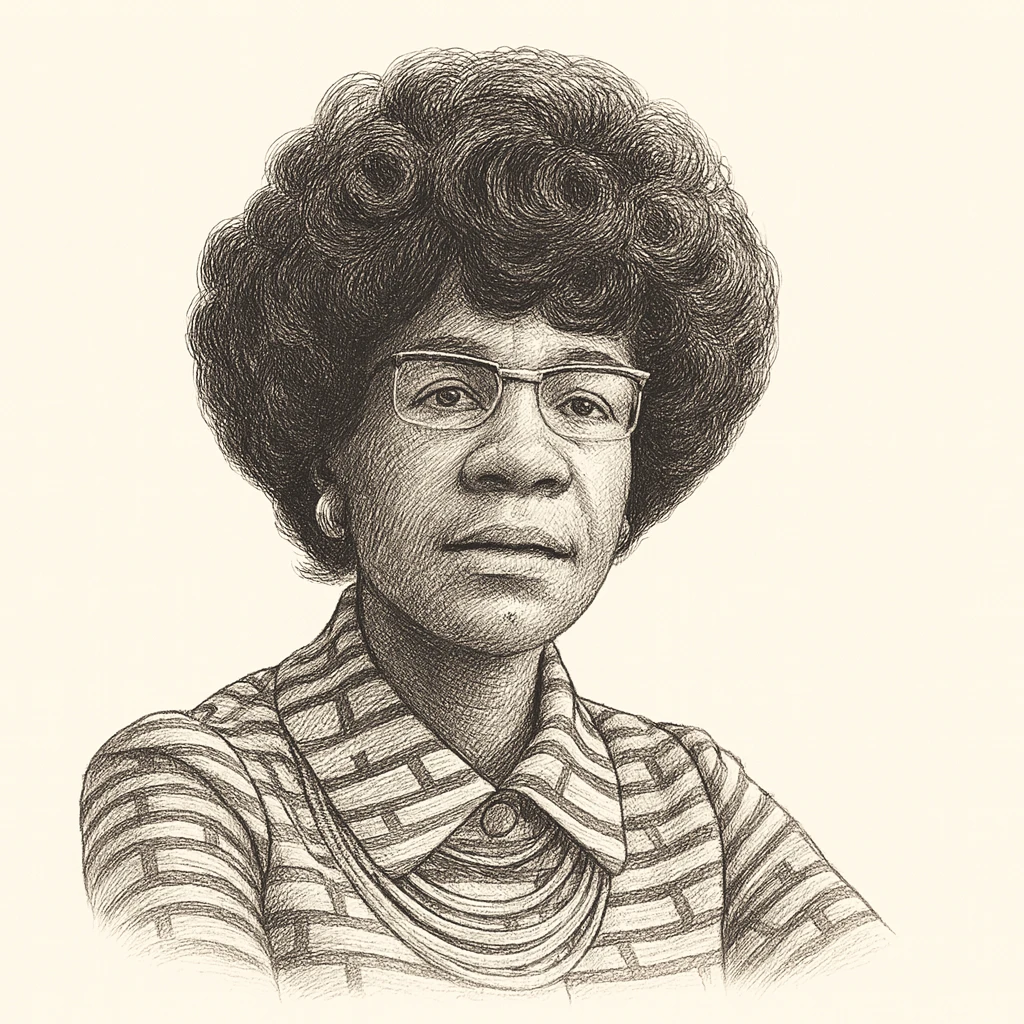
Shirley Chisholm built her political identity around the idea that democratic institutions should answer to ordinary people rather than to entrenched machines and moneyed interests. Rising through New York politics after a career in early childhood education, she won a Brooklyn congressional seat in 1968, becoming the first Black woman elected to the U.S. House of Representatives. Her campaign slogan, "unbought and unbossed," distilled a political philosophy that fused independence from party gatekeepers with a commitment to representing the poor, workers, women, and communities of color who she argued were routinely overlooked by both major parties.
In Congress, Chisholm pressed an agenda that combined economic and social reform: expanded access to education and childcare, a stronger social safety net, higher minimum wages, and opposition to military spending she believed came at the expense of domestic needs. She was an early and outspoken advocate for women's rights and reproductive freedom, and a founding presence in efforts to organize Black legislators and women in politics as durable blocs. Her thought reflected a conviction that coalition politics—linking labor concerns, racial justice, and gender equality—was the practical route to redistributing power and opportunity.
Her 1972 bid for the Democratic presidential nomination marked her most enduring symbolic contribution. Facing skepticism from party insiders and limited resources, she ran to demonstrate that the presidency was not the reserved terrain of white men and to force marginalized constituencies into the national conversation. She framed her candidacy less as a conventional path to victory than as an act of political disruption meant to widen who could plausibly seek and hold power.
Chisholm's influence lies more in her posture and example than in a body of theoretical writing. She modeled an insistent, coalition-minded progressivism that treated representation itself as a substantive political demand, and she articulated a skepticism toward political establishments that continues to resonate across later generations of reform-minded and outsider candidates.
Shirley Chisholm is associated with Rooted Progressive. See the archetype