
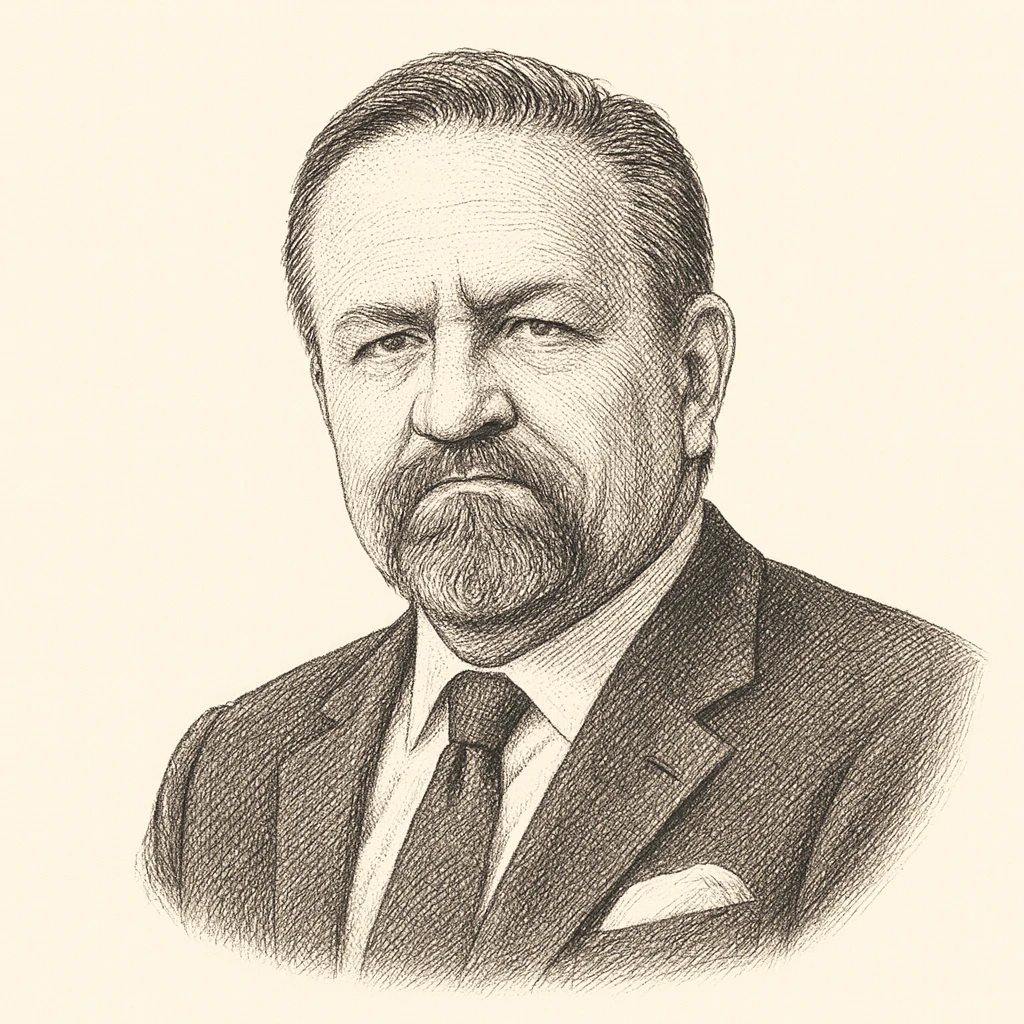
Sebastian Gorka is a British-born commentator, author, and government official of Hungarian descent who became a prominent voice in American right-wing national-security discourse. His political thought centers on a confrontational vision of counterterrorism, framing radical Islamist movements as an ideological and civilizational threat that Western governments, in his view, refused to name plainly. He argued that defeating such threats required treating them as a coherent global adversary rooted in ideology rather than as isolated criminal acts, and he was sharply critical of the counterterrorism approaches of the Obama administration, which he portrayed as constrained by political correctness and reluctance to identify enemies clearly.
Gorka rose to national attention as a strategist and commentator associated with the populist-nationalist wing of the American right, contributing to outlets on the conservative media landscape and serving as an early figure in the first Trump administration. His arguments blended a hawkish security posture with the broader themes of that movement: skepticism toward globalist elites, emphasis on national sovereignty and borders, defense of Western and Judeo-Christian identity, and hostility to what he characterized as a complacent foreign-policy establishment. He has been an outspoken defender of Donald Trump and a frequent presence on talk radio and cable news, where his forceful, polemical style made him both influential among supporters and a target of criticism from scholars and journalists who questioned his academic credentials and the rigor of his analyses.
His framing of Islam and terrorism has drawn the charge of essentialism, and his prescriptions the complaint that they rest more on rhetoric than on detailed policy analysis. His associations and symbolic choices also drew scrutiny and accusations regarding ties to far-right Hungarian political currents, which he has disputed. Supporters, by contrast, see him as a clear-eyed truth-teller willing to articulate uncomfortable realities that mainstream security thinkers avoid.
Within the intellectual lineage of contemporary populist nationalism, Gorka matters less as an original theorist than as a popularizer and combatant in the media arena. He helped translate hardline counterterrorism arguments and nationalist themes into accessible, aggressive messaging aimed at a mass conservative audience, embodying the fusion of security hawkishness and cultural populism that characterized the Trump-era right.
Sebastian Gorka is associated with Reactionary Strongman. See the archetype