
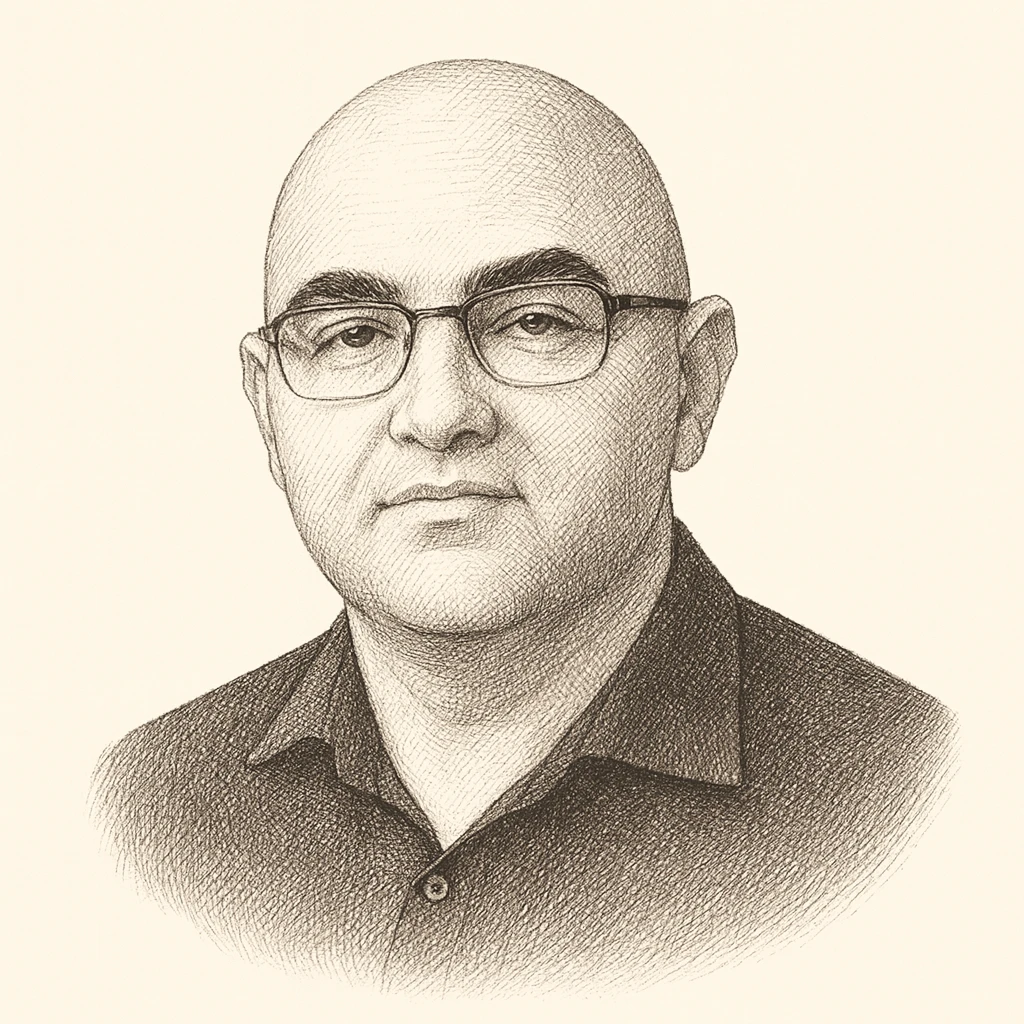
Scott Alexander is the pen name of an American psychiatrist and writer who became one of the most influential figures in the online "rationalist" community, first through the blog Slate Star Codex and later through its successor, Astral Codex Ten. Though he is not a political theorist by training, his long-form essays on reasoning, cognitive bias, statistics, and social dynamics have made him a widely read commentator on how political disagreement works and why it so often fails. His writing sits at the intersection of the rationalist movement associated with figures like Eliezer Yudkowsky and the broader Bayesian, empirically minded style of argument that prizes probabilistic thinking, calibration, and charitable engagement with opposing views.
Alexander's political thought is difficult to place on a conventional left-right axis, and this is partly by design. He is generally associated with a cautious, procedural liberalism that stresses free speech, open inquiry, and the value of norms that allow ideologically diverse people to coexist and argue productively. Recurring themes include the dangers of tribalism and in-group signaling, the way media incentives amplify conflict, the limits of naive consequentialism, and skepticism toward both utopian social engineering and reflexive reaction. He has written extensively about the failure modes of political discourse, coining or popularizing framings that circulated widely in adjacent internet subcultures.
He is also linked to effective altruism, sharing its emphasis on evidence, quantification, and doing good efficiently, and his commentary often applies that analytic sensibility to policy questions. His influence has been amplified by controversy: the blog gained broad attention after disputes over anonymity and press coverage, which became a flashpoint in debates about journalism, privacy, and online speech. One line of objection holds that his measured tone can lend a veneer of neutrality to contentious claims, and that the rationalist milieu he helped shape has served as an on-ramp to heterodox and sometimes reactionary ideas. Supporters counter that his commitment is to open argument rather than any fixed program.
Alexander's lasting political significance lies less in a systematic ideology than in a method and a sensibility: a widely imitated model of careful, quantitative, self-questioning public reasoning that has influenced a generation of writers, technologists, and policy-minded readers, particularly in Silicon Valley and adjacent intellectual circles.
Scott Alexander is associated with Independent Localist. See the archetype