
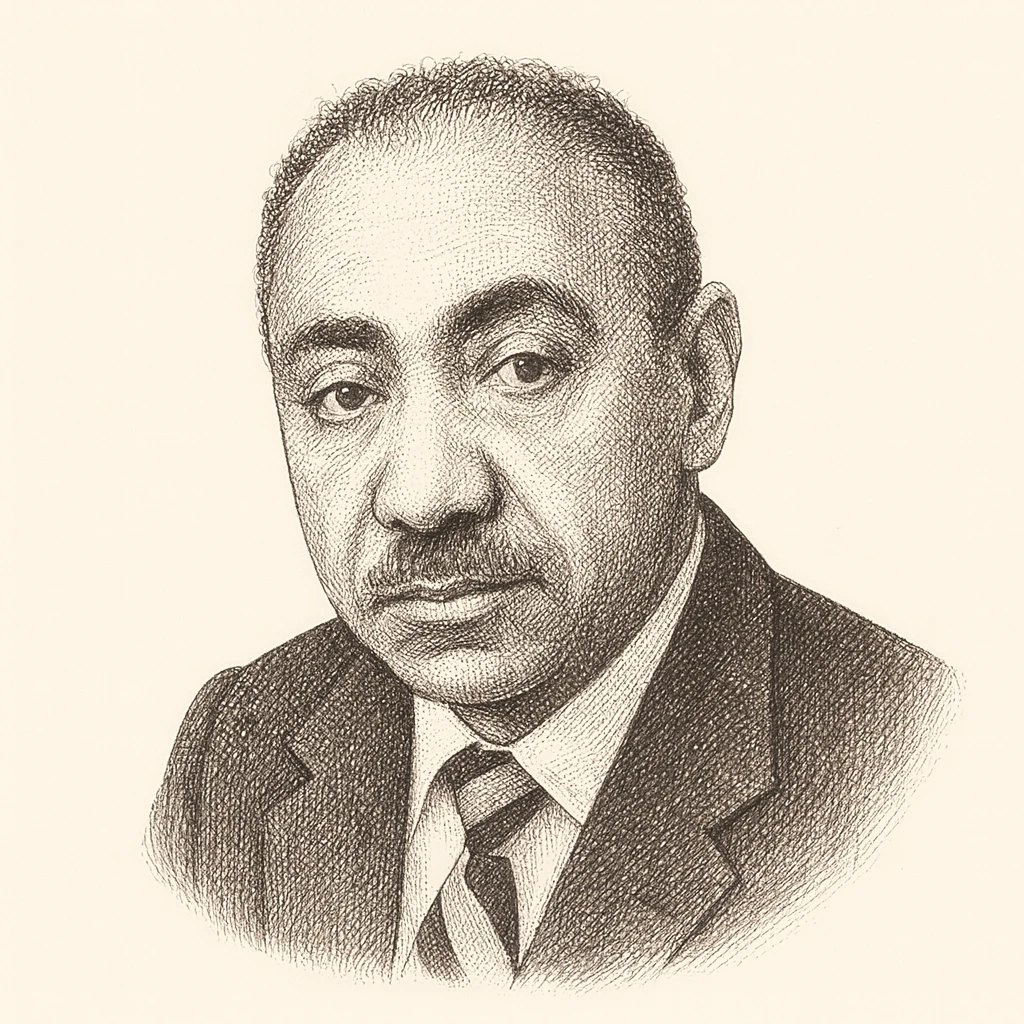
Sayyid Qutb was an Egyptian writer, educator, and theologian who became the most influential ideologue of modern political Islamism. Trained as a literary critic and civil servant in Egypt's ministry of education, he underwent a decisive religious and political turn in the late 1940s, partly shaped by a period of study in the United States that left him repelled by what he saw as Western materialism, racism, and moral laxity. On his return he joined the Muslim Brotherhood, becoming one of its leading intellectuals and its most radical voice during the confrontation with Gamal Abdel Nasser's secular nationalist state.
Qutb's core political argument holds that sovereignty belongs to God alone (hakimiyya) and that any system placing authority in human legislation—whether liberal, nationalist, or communist—represents a form of illegitimate rule. He revived and radicalized the concept of jahiliyya, the "age of ignorance" that Islam originally overcame, and applied it not to pre-Islamic Arabia but to the whole of modern society, including nominally Muslim states. From this followed his most consequential and contested claim: that a committed vanguard must actively work to dismantle existing orders and establish governance under divine law, by struggle if necessary. These ideas, developed most fully in his prison writings, notably Milestones, reframed Islam as a total political program and a revolutionary project rather than a private faith.
He developed much of this thought while imprisoned and tortured under Nasser's regime, and he was executed in 1966 after being convicted of conspiring against the state—a death that made him a martyr figure for later movements. His work provided intellectual scaffolding for a wide arc of subsequent Islamist and jihadist currents, and figures associated with al-Qaeda and other militant organizations drew directly on his framing of jahiliyya and vanguard struggle.
Qutb's legacy is deeply and legitimately contested. Critics across the political and religious spectrum, including many Muslim scholars, argue that his sweeping condemnation of entire societies as apostate supplied a rationale for takfir and political violence against fellow Muslims and non-Muslims alike. Defenders read him as a thinker responding to colonial humiliation and authoritarian repression. What is not in dispute is his centrality: he transformed Islamism from a reformist tendency into a revolutionary ideology, and his writings remain a foundational reference point for the movements they helped inspire.
Sayyid Qutb is associated with Reactionary Strongman. See the archetype