
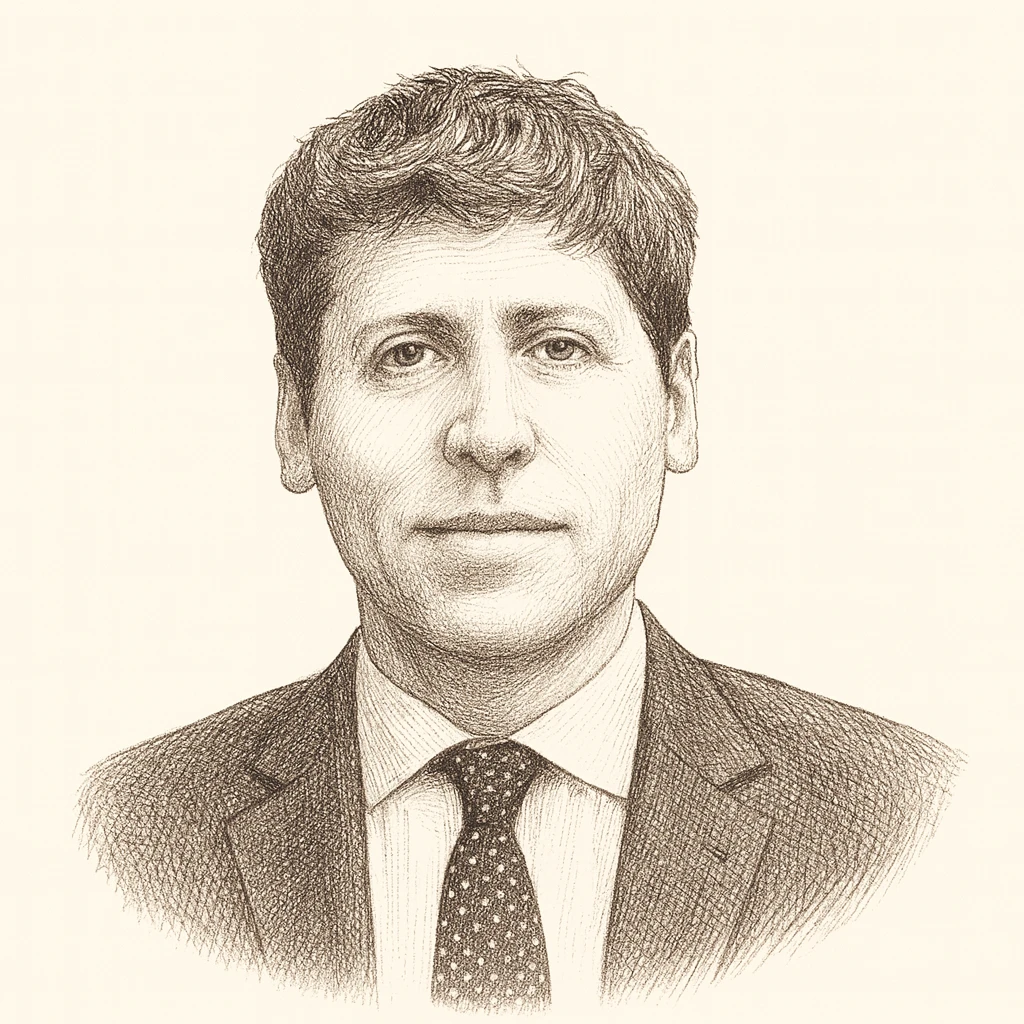
Sam Altman (born 1985) is an American technology entrepreneur and investor best known as the chief executive of OpenAI, the artificial-intelligence research company behind widely used generative systems. Before leading OpenAI he was president of the startup accelerator Y Combinator, a role that placed him near the center of Silicon Valley's culture of rapid technological development and venture-backed disruption. His political significance derives less from a systematic ideology than from his position as a spokesperson for a powerful and controversial industry, and from his repeated efforts to frame how governments and publics should think about the risks and benefits of advanced AI.
Altman is associated with the argument that artificial intelligence could be profoundly beneficial for humanity while also posing serious risks, and that these risks warrant proactive governance. He has publicly called for government regulation and oversight of the most powerful AI systems, including proposals for licensing or coordinated international rules, and has testified before legislators on the subject. This stance situates him within a broader tension in tech politics: a belief in accelerating innovation coupled with an acknowledgment that some technologies may require guardrails. Critics note the ambiguity of a leading industry figure advocating regulation that could also entrench incumbents, and debates over OpenAI's governance and mission have made him a lightning rod in discussions about who should control transformative technology.
Beyond AI safety, Altman has expressed interest in universal basic income as a response to potential technological unemployment, and he has supported experiments studying cash transfers. This links him to a growing strand of thinking that treats automation as a force requiring new social contracts and redistribution, rather than a purely market matter. His outlook broadly reflects a techno-optimist tradition that sees economic abundance and human flourishing as achievable through scientific and technological progress, tempered by concern about existential and societal risk.
Altman's influence on political thought is thus primarily agenda-setting: he helps shape the vocabulary through which policymakers, journalists, and the public discuss AI governance, corporate responsibility, and the distributional consequences of automation. He is not a political theorist in any formal sense, but as a prominent industry leader he functions as an interlocutor in debates over how democratic societies should respond to concentrated technological power.
Sam Altman is associated with Techno-Progressive. See the archetype