
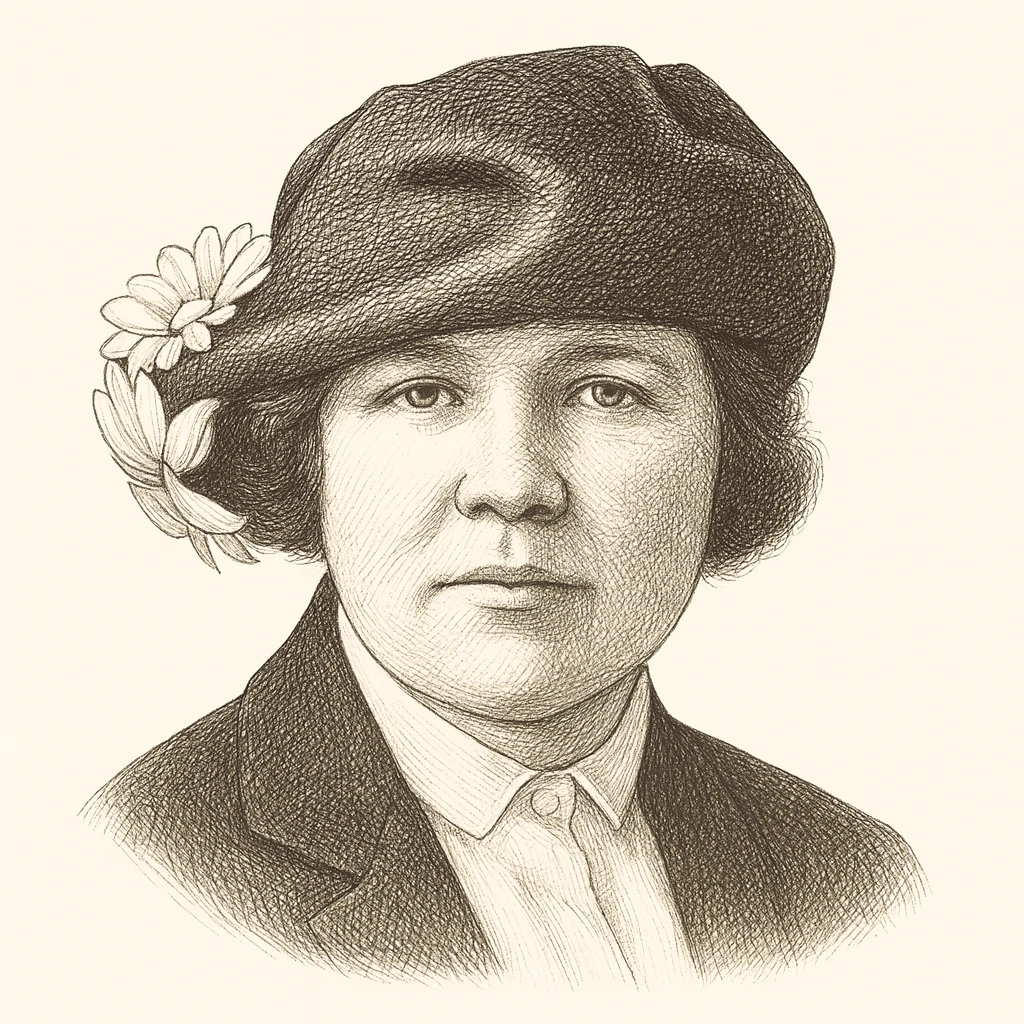
Rose Wilder Lane began as a successful journalist, biographer, and popular fiction writer, working closely on the manuscripts that became her mother Laura Ingalls Wilder's Little House books. Over the course of her career she moved from early sympathy with socialist and progressive ideas—including admiration for the Russian Revolution, which she reported on firsthand—toward a passionate, sweeping defense of individual freedom. Her travels through the Soviet Union and other tightly governed societies helped sour her on collectivism and convince her that concentrated state power was the enemy of ordinary human flourishing.
Her central political statement, The Discovery of Freedom (1943), argued that human energy and progress flow from free individuals acting on their own judgment, and that authority, coercion, and centralized planning suppress the creativity that produces prosperity and civilization. The book appeared the same year as works by Ayn Rand and Isabel Paterson, and the three women are often grouped together as founding mothers of American libertarianism for their near-simultaneous defenses of individualism against the collectivist currents of the New Deal era. Lane cast liberty not as a policy preference but as the natural condition of human beings, framing history as a long struggle to free individual initiative from the control of kings, priests, and planners.
Beyond the book, Lane spread these ideas through prolific correspondence, reviews, and mentorship of younger writers and activists, becoming an influential connective figure in the emerging postwar right and libertarian circles. She was fiercely resistant to the growth of the administrative state, opposing Social Security and income taxation as intrusions on personal autonomy, and she lived much of her later life in deliberate frugality partly to minimize what she owed the government.
Lane's thought is more polemical and inspirational than systematic; she was a moralist of freedom rather than a technical economist or philosopher. Critics note the sweeping, sometimes historically loose character of her arguments and her tendency toward absolutism. Yet her insistence that liberty is the engine of human achievement, and her role in articulating that conviction at a moment when statism seemed ascendant, secured her lasting place in the lineage of American libertarian thought.
Rose Wilder Lane is associated with Traditional Libertarian. See the archetype