
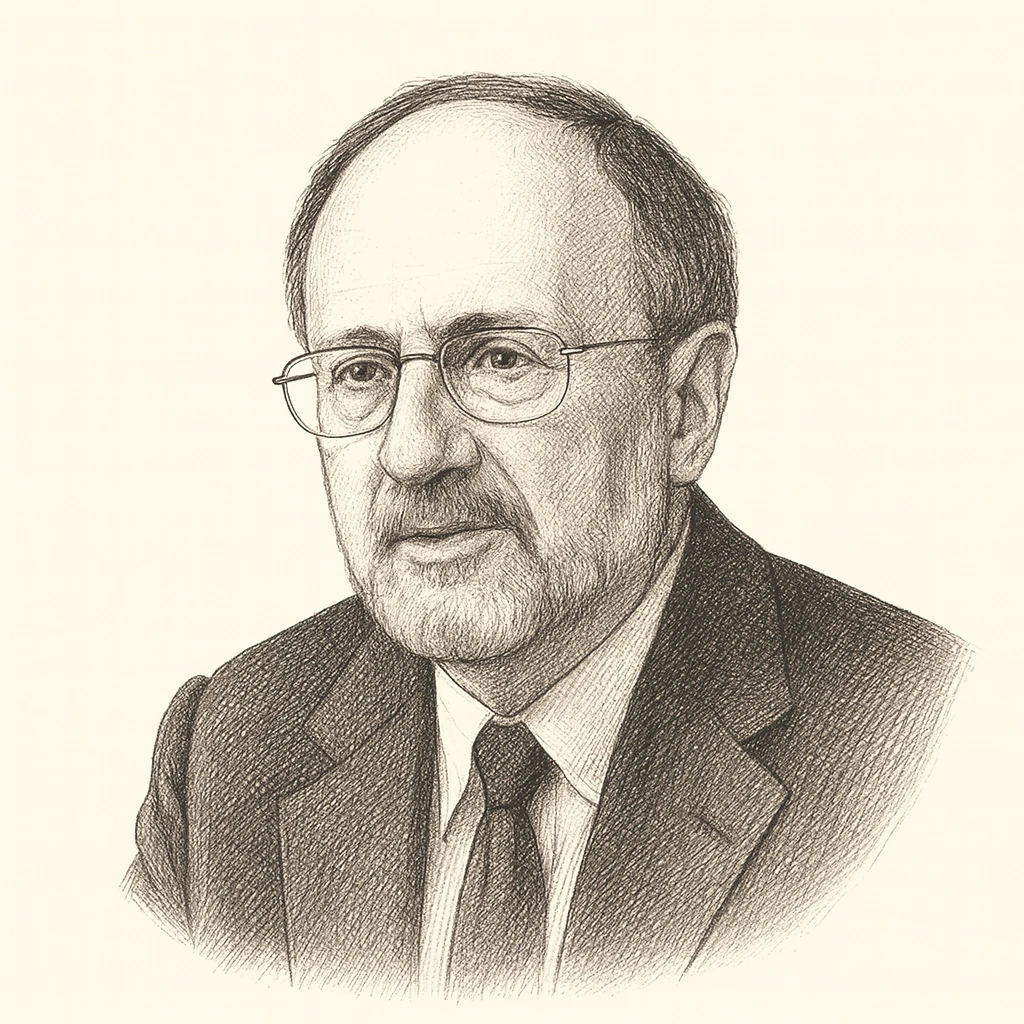
Robert Kuttner is an American journalist, author, and editor whose work has articulated a modern liberal critique of market fundamentalism. In 1990 he co-founded The American Prospect, a magazine intended to advance ideas grounded in the New Deal and social-democratic traditions, and he remains one of its central editorial voices. Over decades of writing—including newspaper columns and a series of books on economics and public policy—he has become a prominent intellectual defender of the mixed economy and of government's role in tempering the excesses of capitalism.
Kuttner's central argument is that markets, left to themselves, do not reliably produce socially desirable outcomes and can corrode the democratic institutions on which they depend. He has consistently challenged the idea that deregulation, free capital flows, and laissez-faire policy are self-correcting, arguing instead that active public policy, strong labor institutions, and social protections are necessary for both prosperity and political stability. On trade he is associated with skepticism toward pure free-trade orthodoxy, favoring managed approaches that account for labor standards, domestic industry, and the distributional consequences of globalization—positions that placed him at odds with the market-liberal consensus of the 1990s.
Intellectually, Kuttner draws on Keynesian economics and the thought of Karl Polanyi, whose account of how societies resist the disembedding of markets from social life informs much of his writing about the tensions between capitalism and democracy. He has argued that the erosion of postwar social bargains, financialization, and rising inequality have fueled political discontent, and he has warned that failures of liberal governance can open space for authoritarian and reactionary politics. His work situates economic policy squarely within questions of power, citizenship, and self-government rather than treating it as a technical matter.
As both a working journalist and an institution-builder, Kuttner has helped sustain a strand of American progressivism that seeks to renew rather than abandon the New Deal legacy. Through The American Prospect and his broader body of writing, he has influenced debates on the political left about inequality, trade, financial regulation, and the relationship between economic policy and the health of democratic institutions.
Robert Kuttner is associated with Left Nationalist. See the archetype