
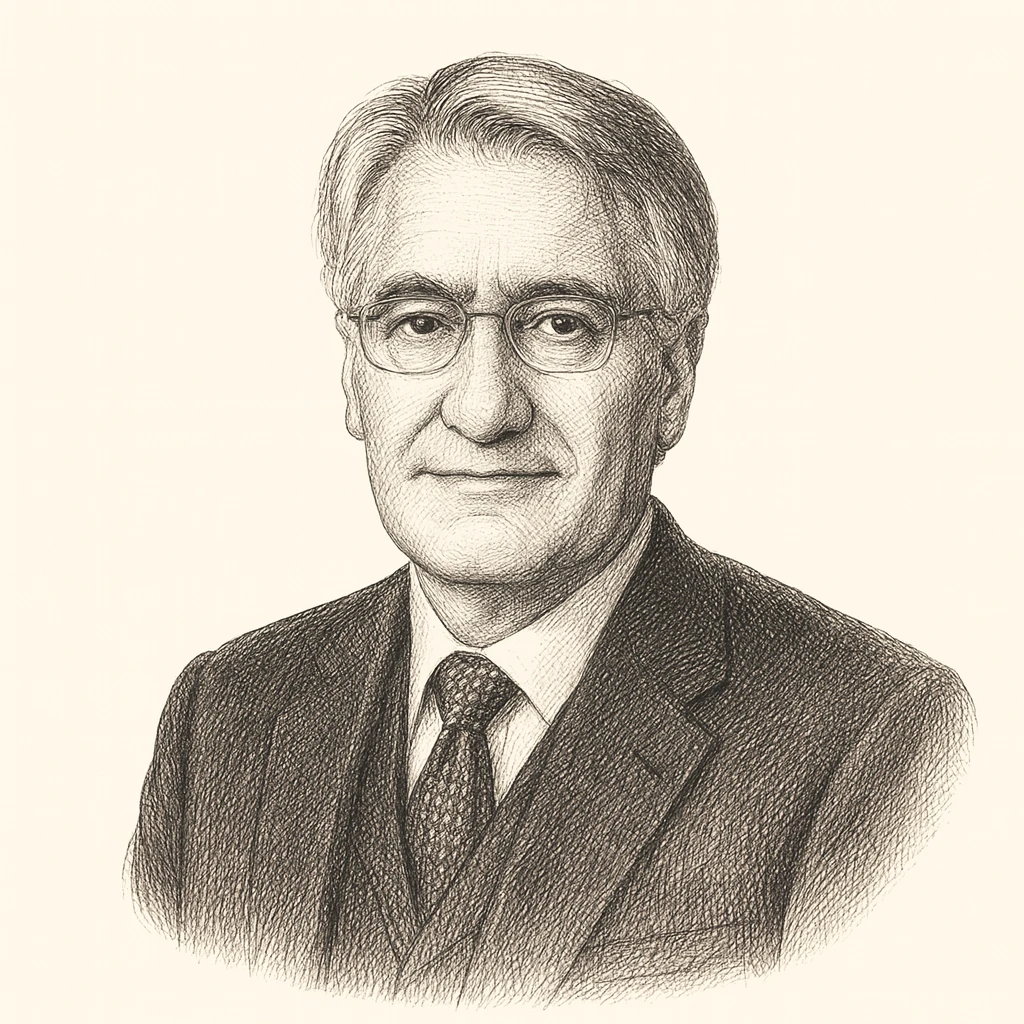
Robert P. George is an American legal and political philosopher who holds the McCormick Professorship of Jurisprudence at Princeton University, where he directs the James Madison Program in American Ideals and Institutions. He is among the most prominent contemporary exponents of the "new natural law" tradition, an approach developed with thinkers such as John Finnis and Germain Grisez that grounds moral and political reasoning in objective basic human goods knowable through reason rather than in religious revelation alone. On this view, law and public policy should be evaluated by whether they serve genuine human flourishing, and political authority is understood as ordered toward the common good rather than being merely a product of will or consent.
George's political thought challenges the dominant liberal claim that the state should remain neutral among competing conceptions of the good life. He has argued that morality and the law are inevitably intertwined, and that a healthy political order rests on shared moral commitments concerning matters such as human life, the family, and the dignity of the person. This has made him a leading intellectual voice in debates over abortion, marriage, religious liberty, and bioethics, where he defends positions associated with social conservatism using arguments cast in the language of reason and philosophy rather than sectarian appeal.
Beyond his academic writing, George has been influential as an institution-builder and public intellectual, mentoring students and fostering a network of scholars committed to natural law and constitutional principles. He has served on public advisory bodies and been active in civic debates, and he is known for cultivating dialogue across political divides, including a well-publicized friendship and joint teaching with the progressive scholar Cornel West aimed at modeling civil disagreement. Through the Madison Program and his broader public engagement, he has helped shape a cohort of conservative legal and political thinkers.
George occupies a distinctive place in American political thought as a defender of the idea that reason can identify moral truths binding on political communities, and as a critic of relativism and pure proceduralism. Admirers see him as reviving a classical and Thomistic tradition for modern constitutional democracy; the chief objection is that his natural law arguments build contested moral premises into claims of universal reason. Either way, he remains a central figure in ongoing arguments about the relationship between morality, law, and the public order.
Robert George is associated with Religious Conservative. See the archetype