
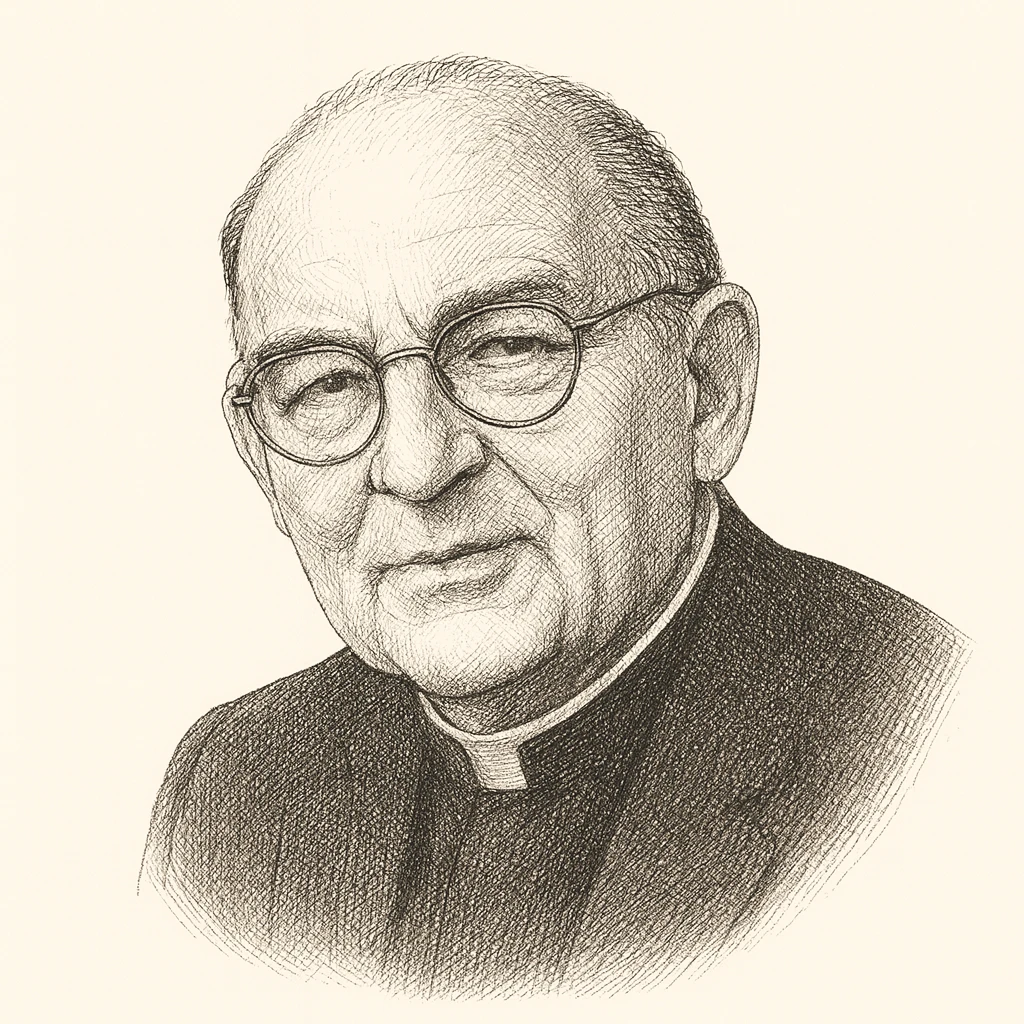
Richard John Neuhaus was an American theologian and writer whose work centered on the proper role of religion in democratic life. Originally a Lutheran pastor who later converted to Roman Catholicism and was ordained a Catholic priest, he moved over his career from the political left—he was active in civil rights and antiwar causes in the 1960s—toward a form of religiously grounded conservatism. This trajectory made him one of the more visible figures in the realignment of American religious intellectuals in the latter half of the twentieth century.
Neuhaus is most closely associated with the argument that secularism had improperly excluded religious voices from public life, a condition he famously described as "the naked public square." Against the view that democratic deliberation should be scrubbed of religious reasoning, he contended that faith communities were legitimate participants in political debate and that stripping public discourse of moral and religious argument left a vacuum that would be filled by other, often less accountable, forms of authority. This position placed him at the heart of debates over church and state, pluralism, and the sources of moral consensus in a liberal democracy.
He founded and edited the journal First Things, which became an influential forum for religiously informed commentary on politics, culture, and public policy, drawing together Catholic, Protestant, and Jewish thinkers. Neuhaus was also a key participant in efforts to build alliances across confessional lines, including the initiative known as "Evangelicals and Catholics Together," which sought common ground on cultural and moral questions. His concerns extended to bioethics, abortion, and the defense of a natural-law tradition he believed could ground shared public morality.
Neuhaus's influence lay in giving intellectual respectability to the claim that religious citizens need not bracket their convictions to participate in politics, and he became a prominent voice in debates over religion and the courts, sometimes provocatively questioning the legitimacy of a judiciary he saw as usurping democratic self-government on moral matters. Admired by religious conservatives and criticized by secular liberals, he remains a reference point in ongoing arguments about pluralism, the limits of the secular state, and the place of faith in a democratic order.
Richard John Neuhaus is associated with Religious Conservative. See the archetype