
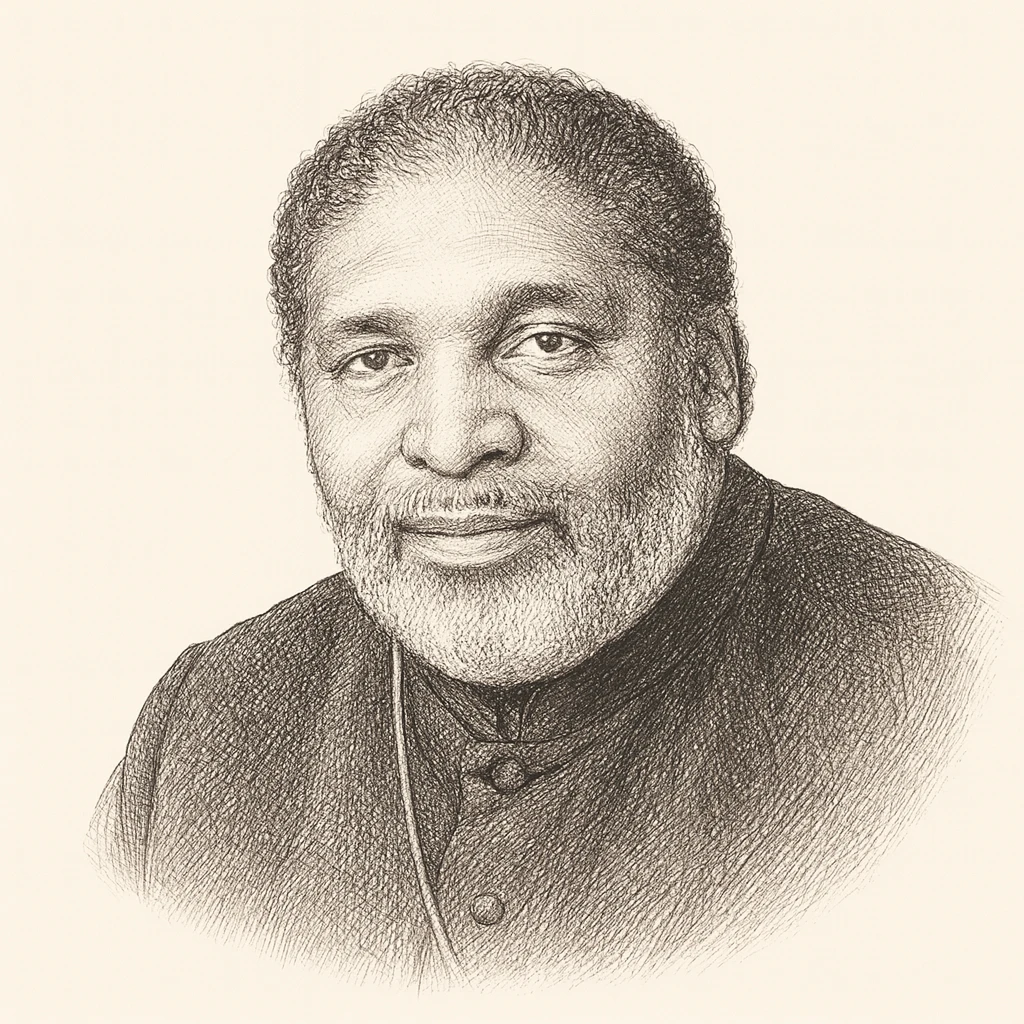
Rev. William Barber II is an American minister and organizer whose political thought draws on the tradition of the Black church, the social gospel, and the civil rights movement, particularly the later economic-justice vision of Martin Luther King Jr. He argues that morality is not the property of the political right, contending that questions like poverty, health care, voting rights, and living wages are fundamentally moral and even constitutional concerns. A central feature of his thinking is the framing of a "moral" versus "immoral" politics, in which he insists that public policy be judged by how it treats the poor, the sick, and the marginalized, invoking both scripture and the language of America's founding documents.
Barber rose to national prominence leading the North Carolina NAACP, where he helped launch the "Moral Monday" protests against state legislation on voting, education, and social programs. These demonstrations became a model of sustained, faith-rooted civil disobedience that he later described as "fusion politics" \u2014 the deliberate building of coalitions across race, religion, class, and issue lines. He argues that movements fail when they remain single-issue or narrowly identity-based, and that lasting change requires uniting diverse constituencies around a shared moral and economic agenda. This emphasis on cross-racial, multi-faith organizing is one of his most distinctive contributions to contemporary movement strategy.
He is perhaps best known for reviving the Poor People's Campaign, the initiative King was organizing at the time of his death, relaunching it as the Poor People's Campaign: A National Call for Moral Revival. Through it, Barber advances the claim that poverty and economic inequality are systemic and interlocking with racism, militarism, and ecological harm \u2014 themes echoing King's critique of what he called intertwined evils. Barber presents poverty not as an individual failing but as a policy choice, insisting that a wealthy nation's tolerance of widespread deprivation is a moral indictment.
Barber's influence lies in reintroducing explicitly religious and moral language into progressive politics without ceding it to the political right, and in modeling a coalition-based organizing tradition rooted in the prophetic strands of American Christianity. His work has shaped debates about the relationship between faith and social justice, offering a template that other clergy and activists have sought to emulate.
Rev. William Barber II is associated with Christian Socialist. See the archetype