
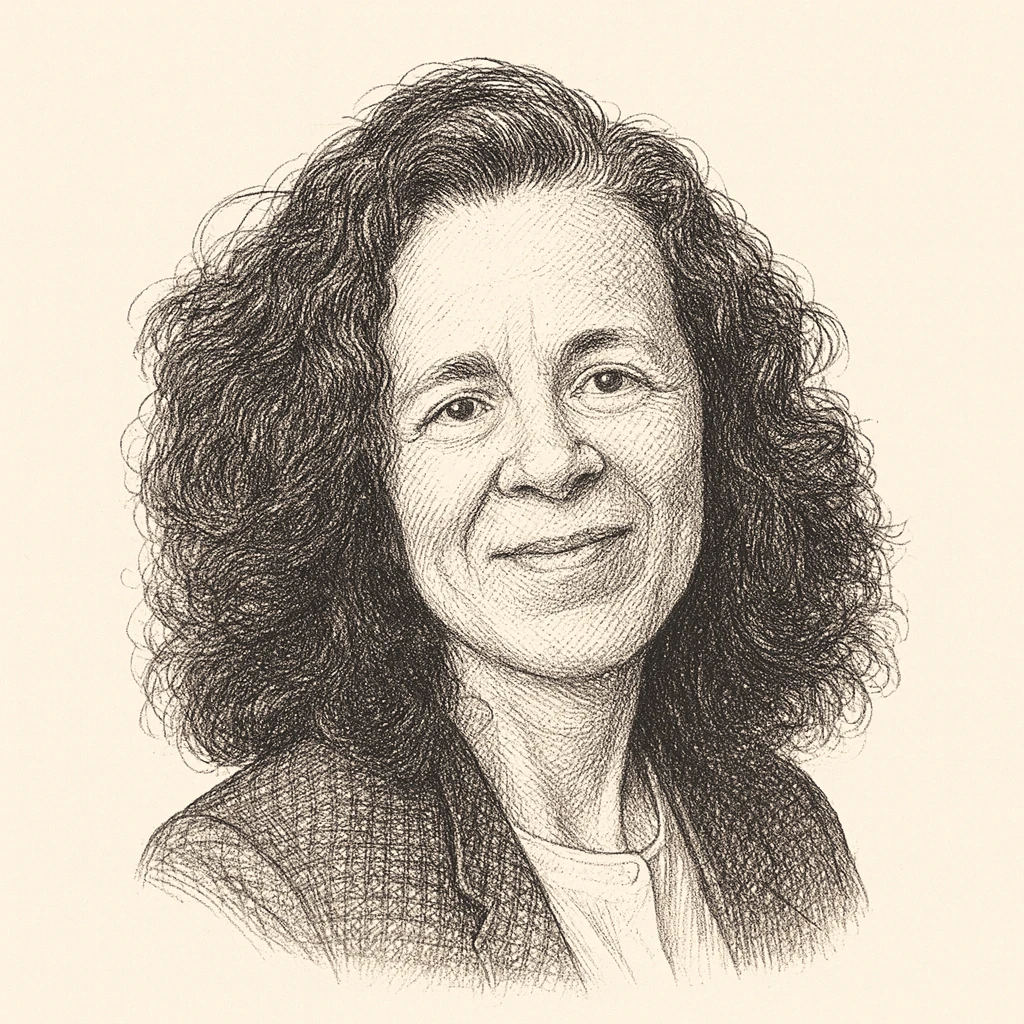
Rebecca Henderson is an economist and University Professor at Harvard, where she teaches jointly at Harvard Business School and works at the intersection of economics, strategy, and the study of large-scale institutional change. Much of her early scholarship concerned innovation, organizational capability, and how firms respond to technological and market disruption. In more recent decades her attention has turned to the relationship between private enterprise and the broader social and ecological systems on which it depends, making her one of the more prominent academic voices questioning whether shareholder-centered capitalism can address problems such as climate change and rising inequality.
Her central political argument is that unregulated, profit-maximizing markets systematically fail to price in social and environmental costs, and that treating shareholder value as the sole purpose of the firm has corroded the institutions—functioning government, trusted civil society, shared norms—that markets themselves require to operate. She contends that free markets are not self-sustaining but depend on political and moral foundations, and that both business leaders and public institutions bear responsibility for repairing them. This places her within a reformist tradition that seeks to save capitalism from its own excesses rather than replace it, emphasizing purpose-driven business, cooperation among firms, and, crucially, a revived and capable democratic state to set rules that individual companies cannot establish alone.
Henderson is careful to argue that voluntary corporate virtue is insufficient on its own; she stresses that self-interested actors will not solve collective problems without changes to underlying incentives, regulation, and governance. Her work thus engages debates about the limits of market solutions, the meaning of corporate responsibility, and the need for what she frames as healthy government and inclusive institutions. She is widely read in discussions of stakeholder capitalism and "business and society," and her ideas have influenced how executives, students, and policymakers think about the political role of the corporation.
Her intellectual stance draws on economics, management theory, and moral reasoning, and it situates her among thinkers who see the twenty-first-century challenge as reconciling capitalism with democracy and environmental sustainability. While critics from the left question whether reform from within business can achieve deep structural change, and market skeptics doubt firms will act against short-term interests, Henderson's framing has become a reference point in mainstream debates over the future of the economic system.
Rebecca Henderson is associated with Establishment Progressive. See the archetype