
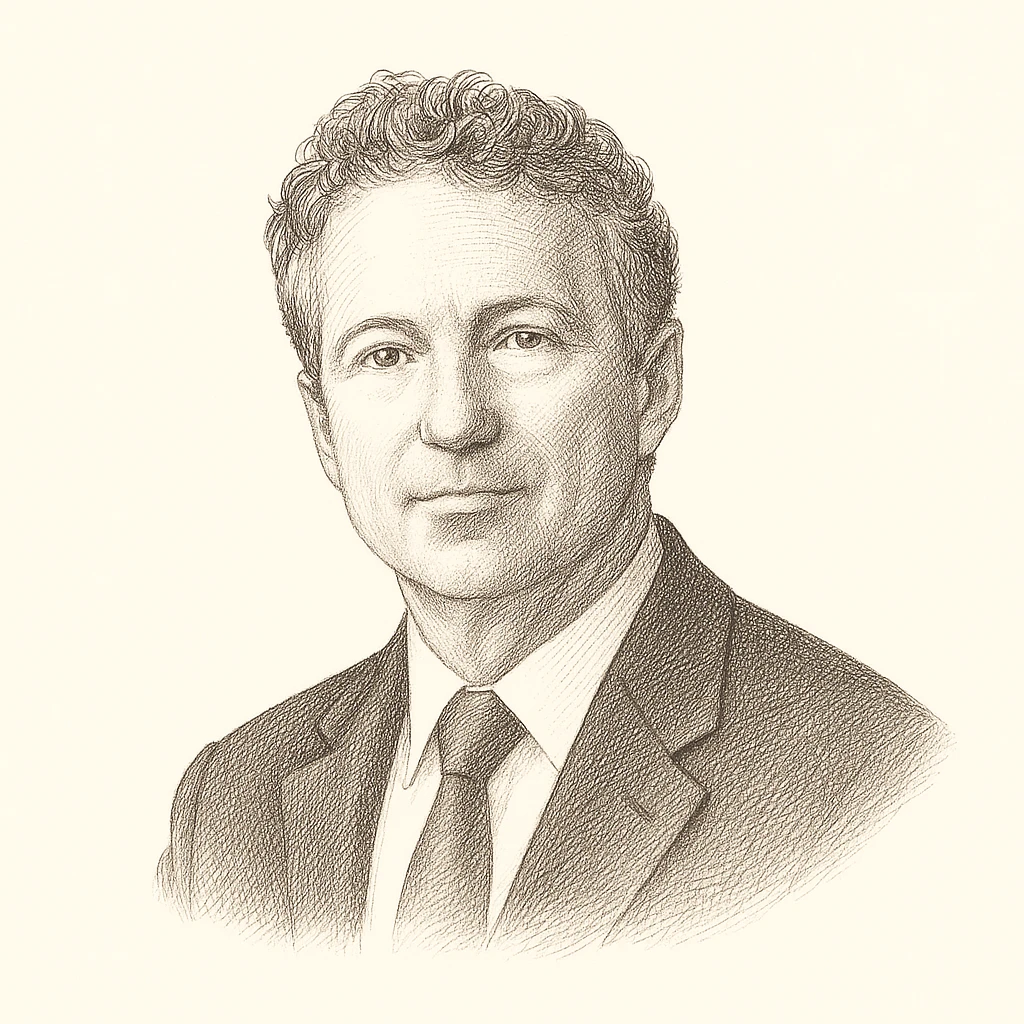
Rand Paul emerged in national politics as a Kentucky senator elected in 2010 amid the Tea Party wave, carrying forward a libertarian-leaning strain of conservatism most closely associated with his father, former congressman and presidential candidate Ron Paul. An ophthalmologist by training, he entered politics as an outsider critical of both parties' comfort with government spending, executive power, and open-ended military commitments. His thought blends fiscal conservatism with an insistence that constitutional limits on the state apply as forcefully to national-security policy as to economic regulation.
Paul is best known for making civil-liberties arguments prominent within the Republican Party, a party more often associated with a robust security state. He staged a lengthy filibuster over the government's drone and targeted-killing policies, and he became one of the most vocal Senate opponents of the National Security Agency's bulk collection of telephone metadata, challenging the reauthorization of surveillance authorities under the Patriot Act and its successors. He has consistently argued that mass surveillance violates Fourth Amendment protections against unreasonable searches, and that Congress has ceded too much war-making authority to the executive branch, calling for reassertion of legislative control over the use of force.
These positions place him within a broader civil-libertarian tradition skeptical of concentrated power, whether wielded for security or social ends. Paul has also pursued criminal-justice reform, including sentencing changes and criticism of civil asset forfeiture and aggressive policing, sometimes in bipartisan coalitions. His foreign-policy views tend toward restraint and non-intervention, a stance that frequently puts him at odds with hawkish colleagues.
Paul's record is contested and not uniformly libertarian. Critics note that his positions on some social and immigration questions diverge from a consistent libertarianism, and early in his career he drew sustained criticism for remarks questioning aspects of the Civil Rights Act's application to private businesses, which he framed as a property-rights concern rather than an endorsement of discrimination. His 2016 presidential campaign gained limited traction. Nonetheless, his influence lies in keeping surveillance, executive war powers, and constitutional restraint on the agenda of a major American party, giving contemporary civil-libertarian arguments a persistent voice in the Senate.
Rand Paul is associated with Civil Libertarian. See the archetype