
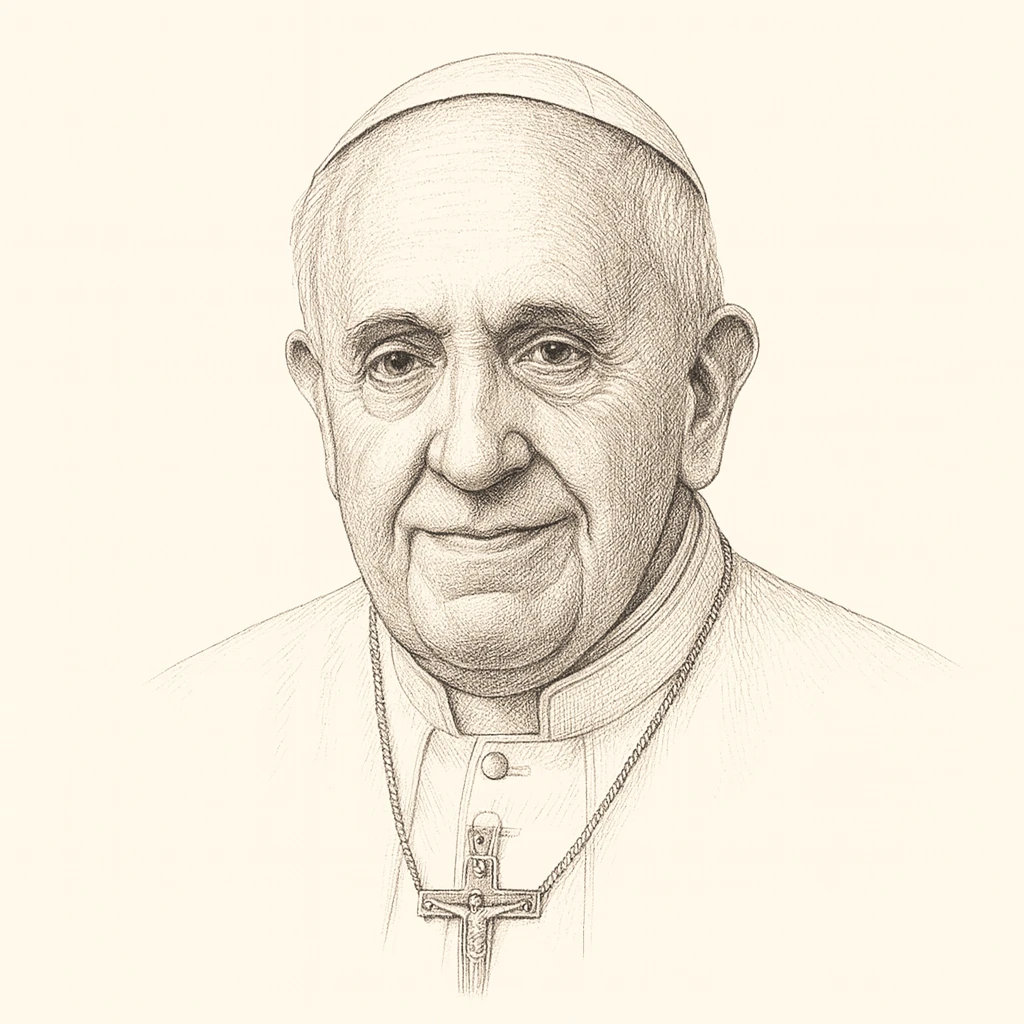
Jorge Mario Bergoglio, who took the name Francis on his election in 2013, brought to the papacy a distinctly Latin American reading of Catholic social teaching, shaped by the concerns of the poor and the marginalized. While he distanced himself from the harder political edges of liberation theology, he absorbed its central conviction that the Church must read the Gospel from the standpoint of the excluded. His political thought fused this with the long tradition of papal social encyclicals stretching back to Rerum Novarum, and he repeatedly framed poverty, migration, and inequality as moral rather than merely technical problems.
His most influential interventions came in two encyclicals. Laudato Si' (2015) linked environmental degradation to an unjust economic order, arguing that the cry of the earth and the cry of the poor are inseparable and calling for an "integral ecology" that binds care for creation to social justice. Fratelli Tutti (2020) extended this into a vision of universal human fraternity and social friendship, criticizing unfettered markets, nationalism, and a "throwaway culture." Running through both is his recurring critique of an "economy of exclusion" and of what he called the "idolatry of money," phrasing that made him one of the most prominent global critics of neoliberal capitalism.
Francis consistently defended migrants and refugees, condemned the "globalization of indifference," and pressed wealthy nations on their obligations to the global South. These positions won him admiration on the political left and unease among market advocates and some conservative Catholics, who saw his economic pronouncements as overreaching. On matters of doctrine his record was more contested: critics on the left faulted the pace of change on the role of women and LGBTQ Catholics, while traditionalists accused him of doctrinal laxity. He also confronted the Church's clerical sexual-abuse crisis, drawing praise for some reforms and sharp criticism for perceived inconsistency.
Francis died in April 2025. His enduring political legacy lies in reframing Catholic social teaching for an age of climate crisis and extreme inequality, giving religious language to arguments about solidarity, ecology, and the moral limits of markets that resonate well beyond the Church.
Pope Francis is associated with Christian Socialist. See the archetype