
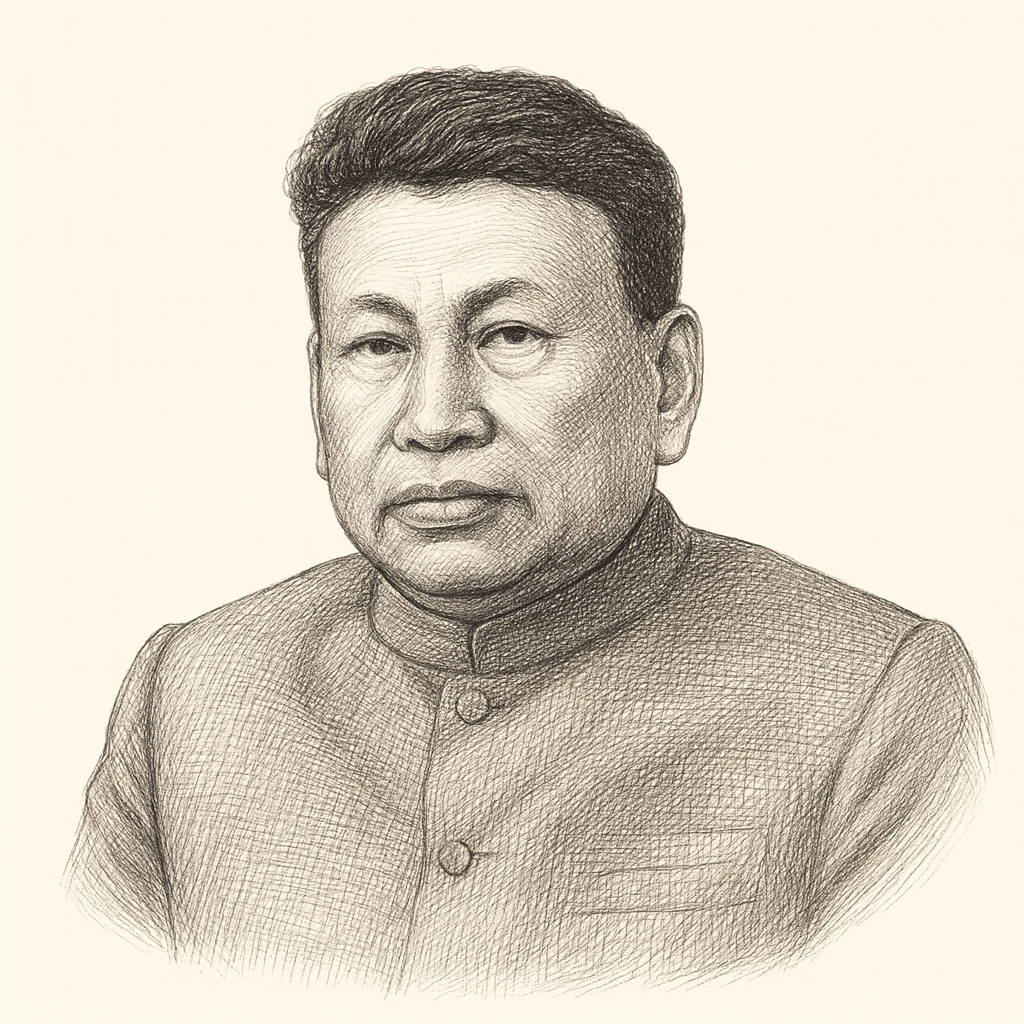
Pol Pot was the leader of the Khmer Rouge, the Cambodian communist movement whose radical agrarian revolution caused one of the worst genocides of the 20th century. Born Saloth Sar to a prosperous farming family, he was radicalized in Paris in the 1950s before returning to lead the Cambodian communist insurgency. In France he encountered Marxism-Leninism amid the intellectual ferment of postwar European communism, and he later fused it with a fierce peasant nationalism and a hostility to the urban, educated classes he came to see as corrupted by foreign influence.
The political thought that emerged was extreme even by revolutionary communist standards. Where orthodox Marxism located the revolutionary vanguard in the industrial proletariat, the Khmer Rouge idealized the poor peasantry and treated the city itself as an enemy. They imagined a self-reliant, classless agrarian society purged of markets, money, private property, and dependence on the outside world. This was the vision behind 'Year Zero': the deliberate erasure of the existing order so that society could be rebuilt from nothing.
After the Khmer Rouge seized power in 1975, they evacuated cities, abolished money, and attempted to create the agrarian utopia they called 'Year Zero.' The result was catastrophe. Approximately 1.5-2 million people—a quarter of Cambodia's population—died from execution, starvation, disease, and forced labor. The regime targeted intellectuals, ethnic minorities, religious groups, and anyone suspected of opposition. The Killing Fields became synonymous with mass murder.
The ideology paired utopian collectivism with extreme secrecy, paranoia, and a cult of the anonymous organization known as Angkar, which demanded total obedience while purging its own ranks. Its combination of ethnic and class targeting has made it a central case in debates over whether such crimes are best understood as genocide, politicide, or the endpoint of totalitarian ambition.
Vietnam's 1979 invasion ended the regime, but Pol Pot remained active until captured by his own movement in 1997. He died under house arrest in 1998, never facing international justice. His legacy haunts Cambodia and endures in wider thought as a warning about revolutionary purism—the disaster that follows when an ideology treats an entire existing society as something to be abolished and remade by force.
Pol Pot is associated with Vanguard Collectivist. See the archetype