
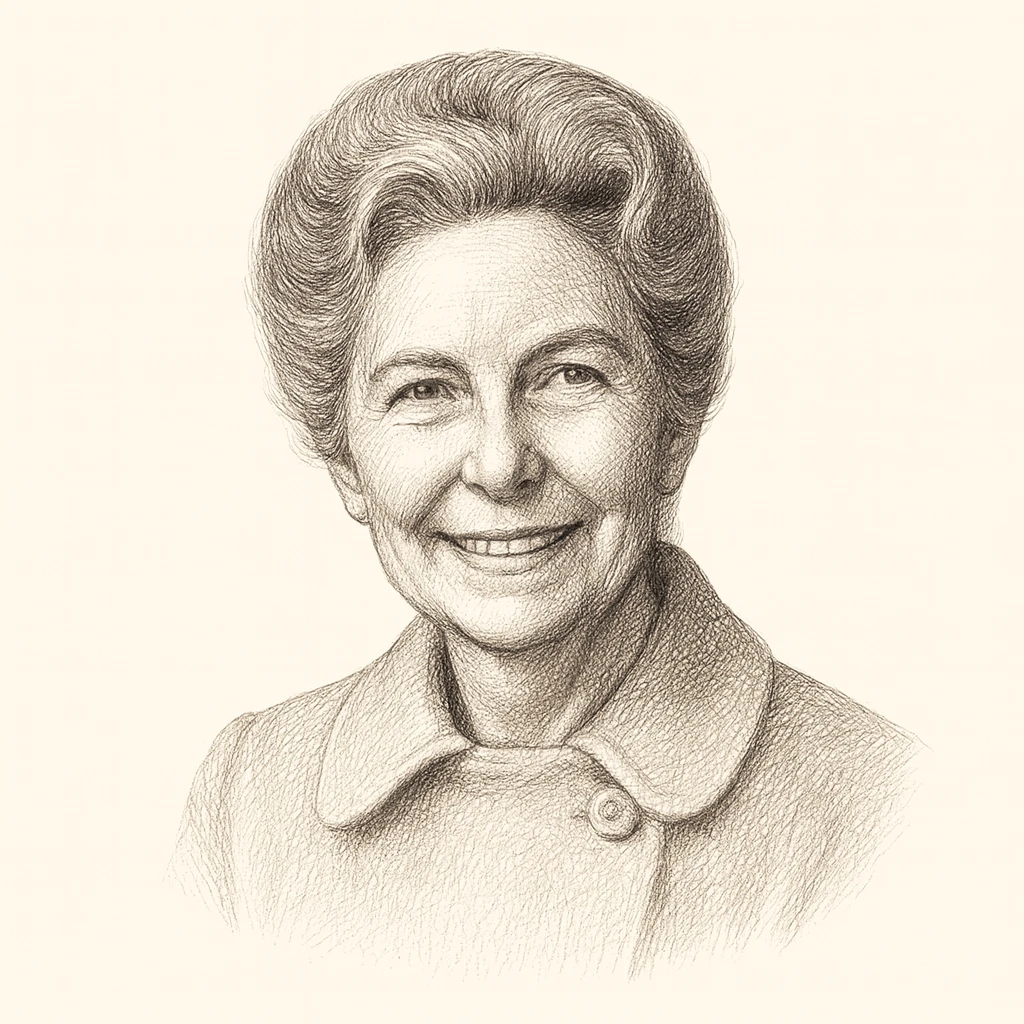
Phyllis Schlafly was one of the most consequential organizers of American social conservatism in the second half of the twentieth century. She first gained prominence in the Republican right of the early 1960s, associated with a staunchly anti-communist, hawkish, and small-government strand of conservatism, and she authored a widely circulated tract defending the party's conservative wing during the Goldwater era. But her enduring political influence came through her leadership of the campaign against the Equal Rights Amendment, launched in the early 1970s, which she built into a national grassroots movement under the banner of STOP ERA.
Schlafly's central argument was that the ERA, marketed as a guarantee of equality, would in practice strip women of protections and privileges she believed the existing social order afforded them—exemption from military combat, presumptions in family law, and the legal recognition of marriage as a distinct institution. She fused this legal case with a broader traditionalist vision in which the intact, single-breadwinner family was the foundation of social stability and a bulwark against an expanding, secularizing state. Her genius lay less in novel theory than in political mobilization: she demonstrated that religiously motivated homemakers, long treated as apolitical, could be organized into a disciplined and effective lobbying force. The ERA, once thought certain of ratification, ultimately failed, an outcome widely credited in significant part to her efforts.
Through her long-running newsletter, her organization Eagle Forum, and decades of speaking and writing, Schlafly helped knit together the coalition that came to define the religious right—linking opposition to feminism, abortion, and gay rights to a defense of family, nation, and faith. Admirers saw a principled defender of tradition who gave voice to women dismissed by cultural elites. Opponents pointed out that she was a highly educated, publicly ambitious woman campaigning to constrain the very opportunities she herself enjoyed. That tension, and her opponents' accusations of exclusionary and reactionary politics, followed her throughout her career.
Her legacy is the template of morally framed, faith-inflected grassroots activism that fuses cultural conservatism with electoral organizing—a model that continued to shape the Republican coalition well after her death.
Phyllis Schlafly is associated with Religious Conservative. See the archetype