
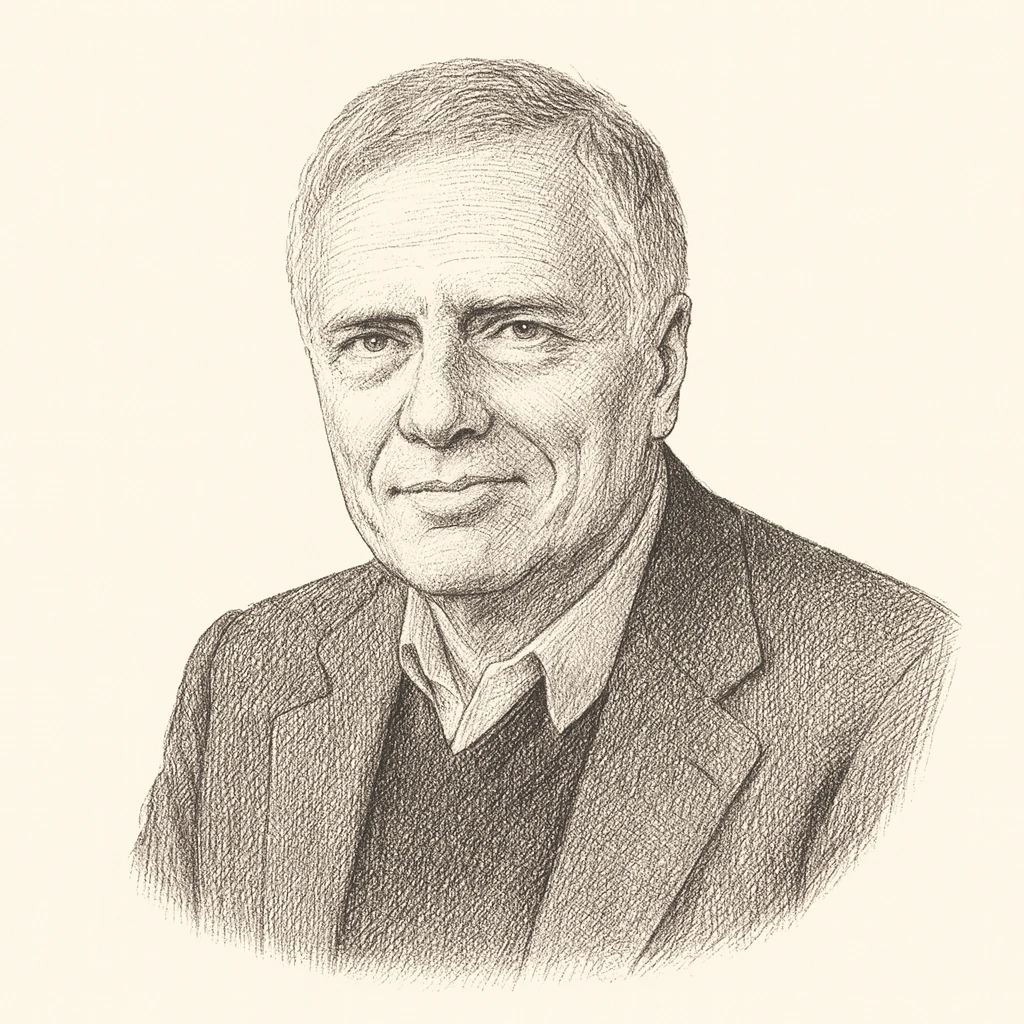
Philip Tetlock is a psychologist and social scientist whose work sits at the intersection of political science, psychology, and the study of judgment and decision-making. He is best known for a long-running empirical investigation into the accuracy of expert political forecasts, in which he tracked thousands of predictions made by specialists, commentators, and analysts about political and economic events. His central finding—that the average expert performed only marginally better than chance, and often worse than simple statistical baselines—became a widely cited challenge to the authority of political punditry and to the assumption that credentialed expertise reliably translates into predictive skill.
Drawing on the distinction popularized by Isaiah Berlin between the "hedgehog" who knows one big thing and the "fox" who knows many small things, Tetlock argued that forecasters who thought in a more self-critical, eclectic, and probabilistic manner tended to outperform those wedded to a single overarching ideology or explanatory framework. This became one of his most influential political ideas: that the cognitive style of open-mindedness, willingness to update beliefs, and tolerance for uncertainty matters more for accurate judgment than political orientation or grand theoretical commitment. His research implicitly critiques dogmatism across the political spectrum and champions intellectual humility as a civic and epistemic virtue.
Tetlock later co-directed large-scale forecasting research associated with government-sponsored tournaments, which identified a subset of consistently accurate forecasters he termed "superforecasters." This line of work advanced the argument that forecasting is a trainable skill grounded in habits such as breaking problems into parts, seeking diverse information, expressing predictions as calibrated probabilities, and keeping score. He has been a prominent advocate for greater accountability in public debate, proposing that pundits and policymakers make their claims testable and be evaluated against outcomes.
His influence on political thought lies less in a substantive ideology than in a methodological and temperamental one: a call to treat political judgment as something that can be measured, improved, and held to account. His ideas have shaped discussions in intelligence analysis, policy evaluation, and the broader rationalist and evidence-based movements that emphasize probabilistic reasoning over confident narrative. In this sense he represents a modern, empiricist strand of thinking about how democracies and their experts ought to reason about an uncertain world.
Philip Tetlock is associated with Pragmatic Centrist. See the archetype