
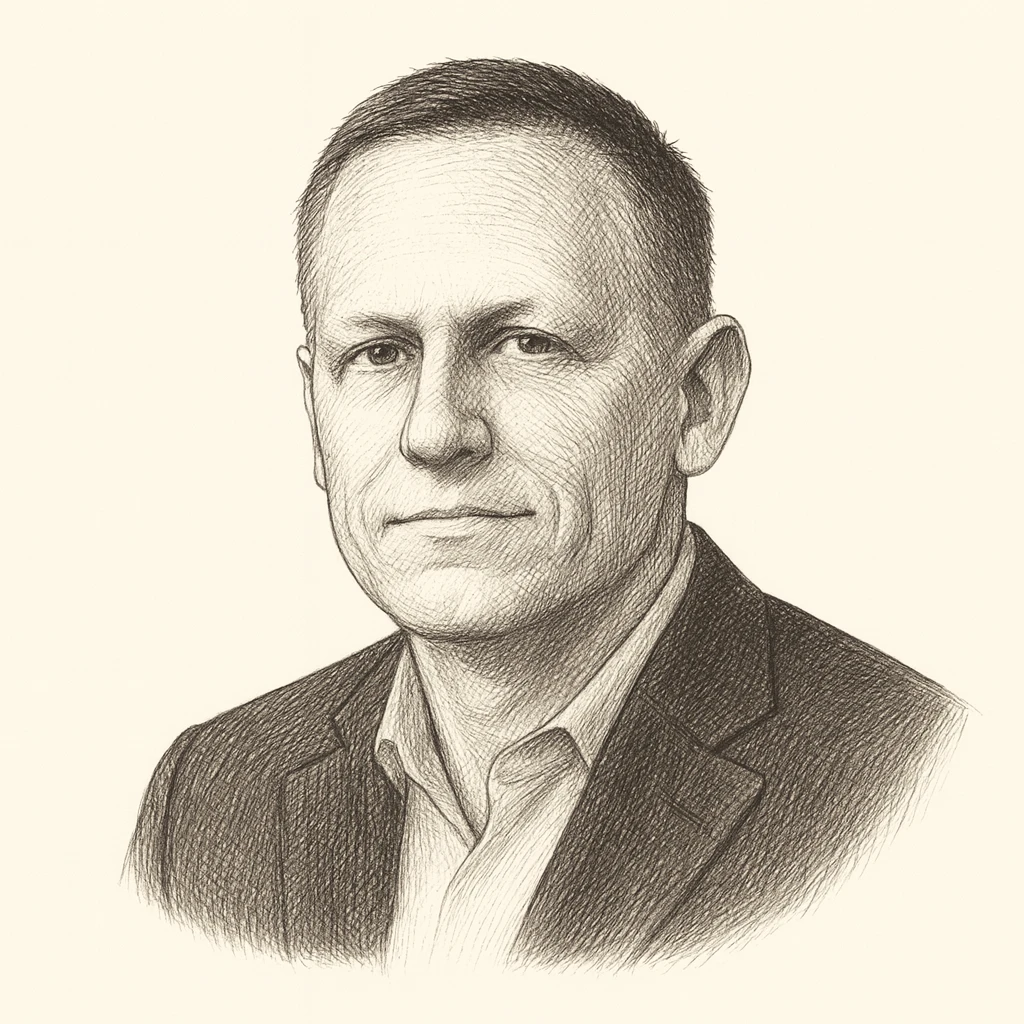
Peter Thiel is an entrepreneur, investor, and political financier who co-founded PayPal and the data-analytics firm Palantir, and who chairs the venture capital firm Founders Fund. Though best known as a Silicon Valley figure, he has become influential in political thought primarily through his ideas, patronage, and provocations rather than any single systematic doctrine. Trained in philosophy and law at Stanford, he co-founded a conservative campus publication as a student, and his intellectual sensibility has consistently combined a libertarian skepticism of the state with a contrarian critique of what he views as cultural and technological stagnation.
Thiel's most-cited political argument is his declared doubt about the compatibility of freedom and democracy, a position he articulated in widely discussed essays associated with libertarian circles. He has argued that democratic politics tends toward redistribution and conformity, and that meaningful human progress comes instead from bold, founder-driven innovation and from escaping the constraints of consensus. This has drawn him toward thinkers on the political margins—he has publicly engaged with the anti-egalitarian ideas of writers linked to the "neoreactionary" current—and toward a broader diagnosis that Western institutions have grown risk-averse and technologically timid.
His practical influence has arguably outweighed his written output. Thiel broke with much of Silicon Valley by openly supporting Donald Trump's 2016 presidential campaign and speaking at the Republican National Convention, positioning himself as a bridge between populist nationalism and tech-world capital. He has since funded candidates and networks associated with a nationalist, anti-establishment right, and mentored figures who moved into elected politics. Through this patronage he helped popularize a synthesis—part libertarian, part nationalist, deeply suspicious of managerial elites and the university system—that has come to characterize an emergent "tech-right."
Thiel's thought is contested and difficult to classify: critics see an anti-democratic elitism that rationalizes concentrated private power, while sympathizers frame him as a heterodox champion of innovation against decline. What is not disputed is his role as a catalyst, giving money, ideas, and legitimacy to currents that question whether liberal democracy remains the best vehicle for progress. That combination of capital and contrarian conviction makes him a distinctive node in contemporary right-wing political thinking.
Peter Thiel is associated with Techno-Authoritarian. See the archetype