
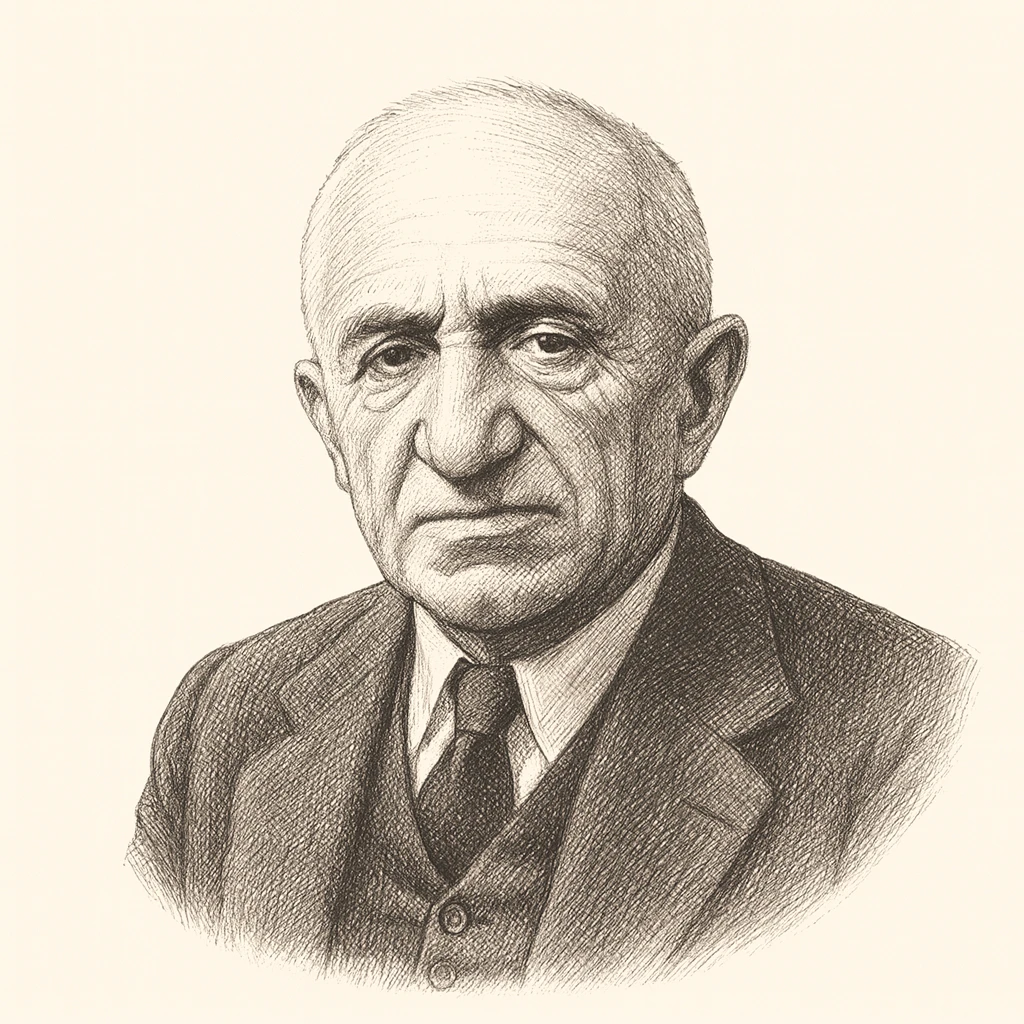
Peter Maurin (1877–1949) was a French-born Catholic thinker and activist best known for co-founding, with Dorothy Day, the Catholic Worker movement in New York City in 1933. Drawing on Catholic social teaching, personalist philosophy, and a distrust of both industrial capitalism and centralized state socialism, Maurin developed a distinctive vision of a social order rooted in personal responsibility, voluntary poverty, and works of mercy. He argued that social transformation should begin not with seizing state power but with individuals changing how they lived, worked, and treated the poor—an approach that placed moral and spiritual conversion at the center of political life.
Maurin's program is often summarized around a set of interlocking commitments: houses of hospitality where the poor could be sheltered and fed directly by their neighbors rather than by impersonal bureaucracies; roundtable discussions to cultivate what he called the clarification of thought; and agrarian communes or farming communities intended to reconnect people with the land and with meaningful labor. He was drawn to the ideas of distributism—associated with thinkers who favored the wide dispersal of property and productive resources over concentration in either corporations or the state—and to personalism, which emphasized the dignity and moral agency of each person. His slogans and short, aphoristic writings, which he circulated widely, sought to make Catholic social ideas accessible to ordinary workers.
Politically, Maurin is best understood as a radical critic of the modern industrial order from within the Catholic tradition rather than as a partisan of any conventional left or right. He advocated a society in which charity and justice were personal obligations, mutual aid replaced dependence on the state, and manual labor was dignified. His famous emphasis on building "a society where it is easier for people to be good" captured his conviction that structures and cultures shape moral behavior.
Maurin's influence has endured largely through the Catholic Worker movement, which continues to operate houses of hospitality and to publish the newspaper he helped launch. His synthesis of gospel radicalism, decentralism, and nonviolence has informed later religious social activism and anti-materialist critiques of consumer society, and he remains a touchstone for those seeking a communitarian alternative to both market individualism and statism.
Peter Maurin is associated with Trad Socialist. See the archetype