
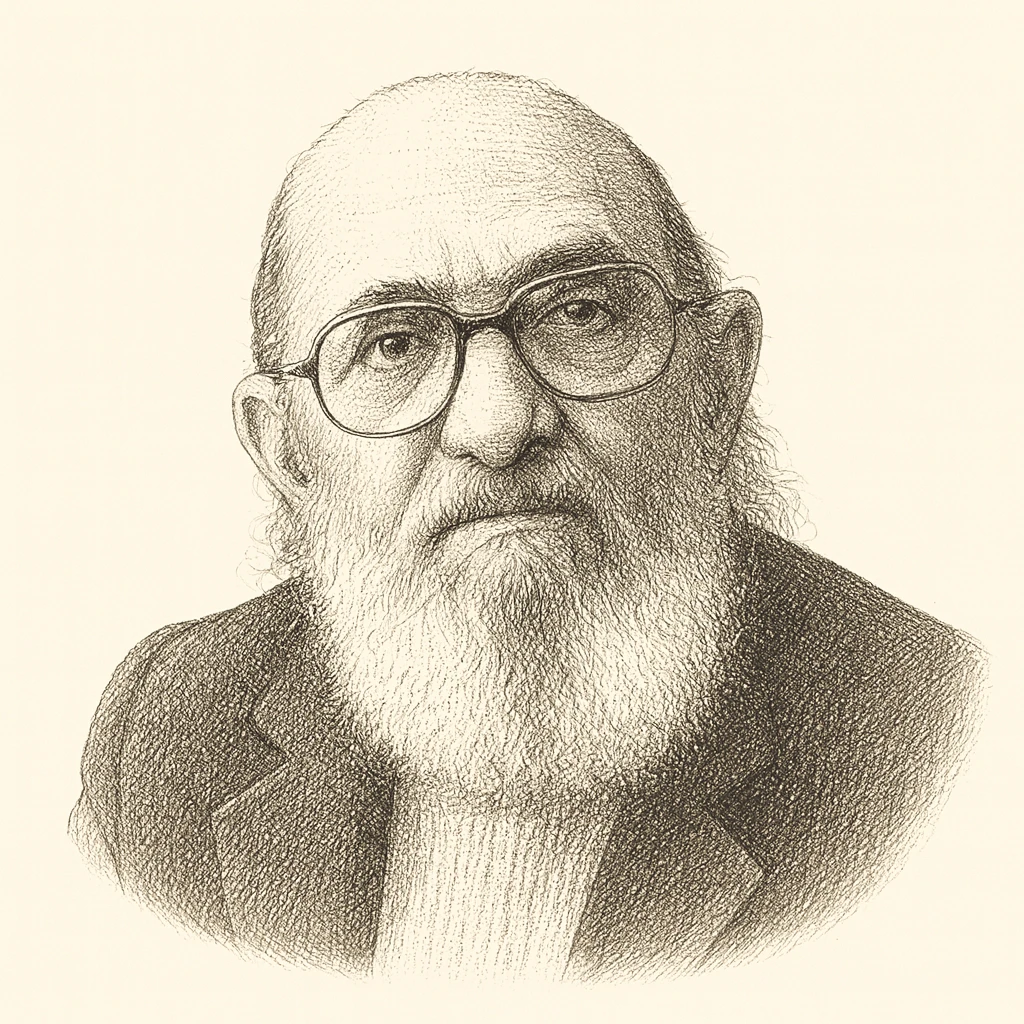
Paulo Freire was a Brazilian educator and theorist whose work made pedagogy a central concern of emancipatory politics. Working first with poor and illiterate populations in northeastern Brazil, he developed literacy methods that treated reading and writing not as neutral technical skills but as tools through which oppressed people could name and analyze their own social conditions. His most influential book argued that education is never politically innocent: it either domesticates learners into accepting an unjust order or awakens them to act upon and transform it.
Central to Freire's political thought is the concept of "conscientization," the process by which people come to perceive the social, economic, and political contradictions shaping their lives and to act against oppressive elements of reality. He criticized what he called the "banking" model of education, in which teachers deposit information into passive students, and argued instead for a dialogical approach in which teacher and learner investigate the world together as co-subjects. For Freire, genuine liberation could not be handed down; it had to be achieved by the oppressed themselves, through reflection joined to action, a unity he called praxis.
Freire's ideas were shaped by, and contributed to, a broader current of engaged Christianity, humanist Marxism, and Latin American liberation thought. His association with reform movements made him a target after Brazil's 1964 military coup, and he spent years in exile, working in Chile and later with international bodies and church organizations before returning to Brazil, where he eventually served in the municipal education administration of São Paulo. This trajectory reinforced his conviction that pedagogy and democratic transformation were inseparable.
His influence extends well beyond schooling into critical pedagogy, community organizing, adult education, and social movements worldwide. Admirers credit him with insisting that ordinary people are capable of theorizing their own oppression and shaping their own liberation. Critics, including some on the left, have questioned the abstraction of his language and the practical limits of translating consciousness-raising into structural change, while some conservatives object to the explicitly political framing of education itself. Even so, Freire remains a foundational reference for those who see democratic empowerment and popular education as intertwined.
Paulo Freire is associated with Democratic Socialist. See the archetype