
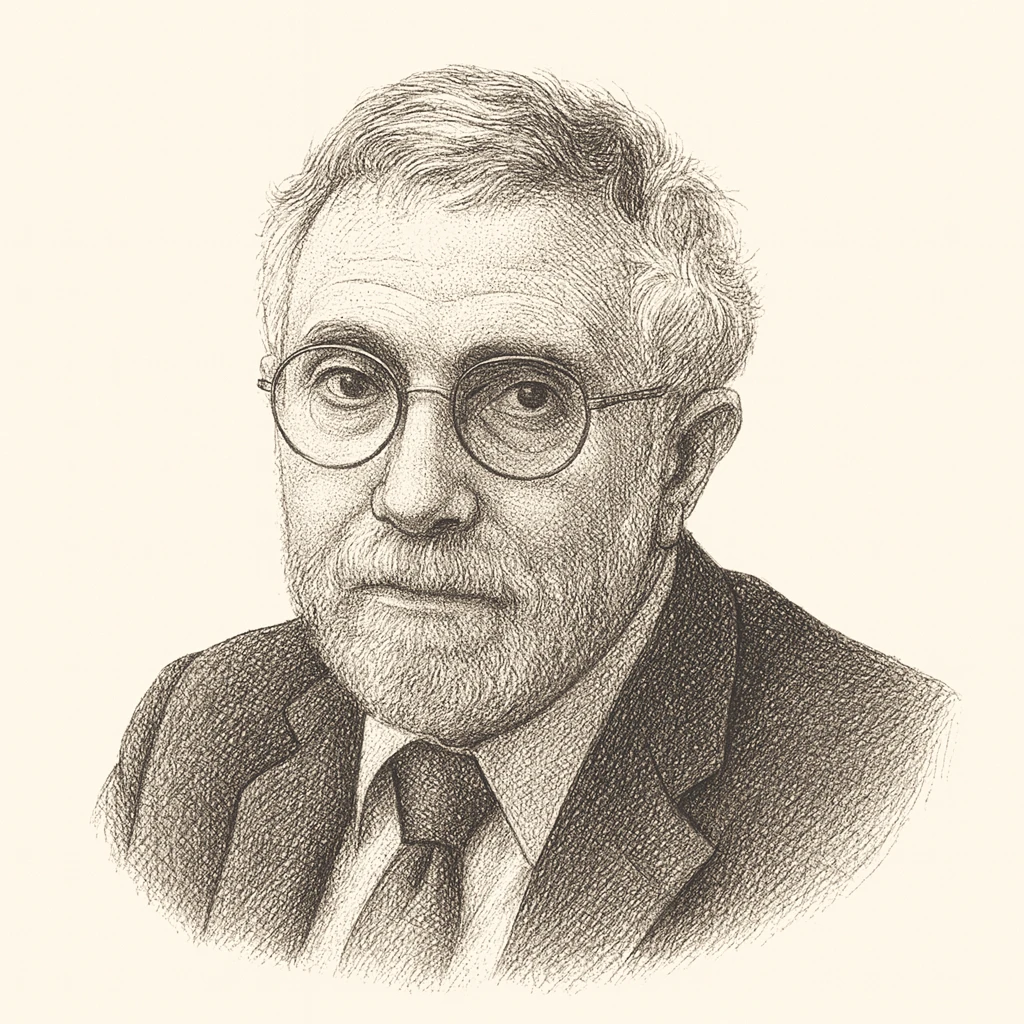
Paul Krugman won the Nobel Memorial Prize in Economic Sciences in 2008 for his work on New Trade Theory and economic geography, which explained why similar countries trade heavily with one another and how economies of scale and consumer preference for variety shape patterns of production and the clustering of industry. That academic reputation gave weight to a second career as a public commentator, and it is through his long tenure as a widely read newspaper columnist that he has most shaped political debate. He became one of the most prominent English-language advocates for an interventionist, Keynesian understanding of macroeconomics and a defender of the welfare state.
Politically, Krugman is associated with what might be called technocratic social liberalism: a belief that markets are powerful but frequently fail, that active fiscal and monetary policy can and should cushion downturns, and that government has a legitimate and substantial role in reducing inequality and providing social insurance. During the aftermath of the 2008 financial crisis he argued forcefully against austerity, contending that cutting public spending during a slump deepened unemployment and prolonged recovery, and he pressed for stimulus, expanded health coverage, and stronger safety nets. He has been a persistent critic of supply-side economics and of claims that tax cuts for the wealthy pay for themselves.
Krugman's political voice is combative and openly partisan, which has drawn criticism from both the right, who see him as an ideological polemicist, and at times from the left, who find him too centrist or too dismissive of heterodox views. Supporters counter that he translates mainstream economic consensus into accessible arguments and holds public officials to empirical standards. Whatever the verdict, he helped define how a generation of American liberals argues about deficits, inequality, trade, and the proper reach of government—making the case that pragmatic, evidence-based state action is compatible with, and indeed necessary to, a functioning market society.
Paul Krugman is associated with Social Liberal. See the archetype