
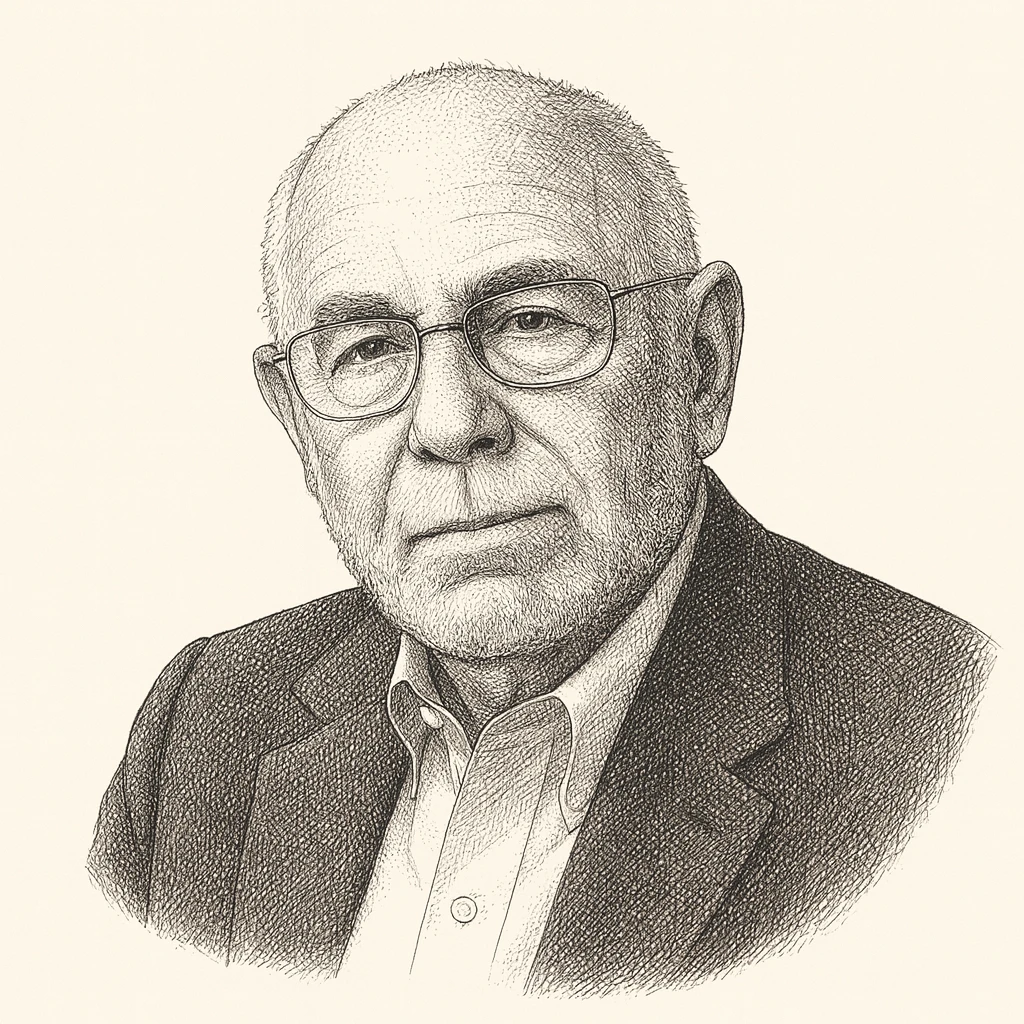
Paul Gottfried is an American academic historian and political theorist widely regarded as a leading intellectual of paleoconservatism, a term he helped popularize. Trained in the history of political ideas and holding a doctorate from Yale, he spent much of his career teaching the humanities at Elizabethtown College. His work sits at the intersection of European political philosophy and American conservative debate, drawing on continental thinkers he studied closely while remaining engaged with the trajectory of the postwar American right.
Gottfried's central preoccupation is the transformation of the modern liberal state into what he, following theorists such as James Burnham and his close associate Samuel Francis, describes as a managerial regime—an administrative and bureaucratic order that governs through expertise, therapeutic intervention, and the reshaping of culture rather than through older constitutional or communal restraints. In a series of books he argued that contemporary liberalism had shed its classical concern with liberty and become an instrument of social engineering, and that multiculturalism and the politics of collective guilt functioned as mechanisms of state and elite control rather than expressions of tolerance. He was equally critical of the mainstream conservative movement, contending that it had abandoned its traditionalist and anti-statist roots and been reoriented, particularly by neoconservatives, toward an interventionist and universalist agenda he saw as continuous with the liberalism it claimed to oppose.
Because of this dual critique, Gottfried positioned himself outside both progressive and establishment-conservative camps, aligning instead with the paleoconservative current that emphasized nationhood, historical particularity, cultural continuity, and skepticism toward global democratic crusades. He is often credited with coining or popularizing the phrase later shortened to the "alt-right," though he has distanced his own thought from the later movement that adopted that label. Through his writing, editing, and organizing of intellectual gatherings, he became a connective figure among traditionalist and dissident-right scholars.
His influence lies less in electoral politics than in supplying a theoretical vocabulary for critics of managerial liberalism and mainstream conservatism alike. For readers on the paleoconservative right he offered a rigorous, historically grounded account of why they felt estranged from both major political tendencies, and his emphasis on the state's cultural power has resonated well beyond his immediate circle.
Wondering where you land? Take the 4-minute assessment