
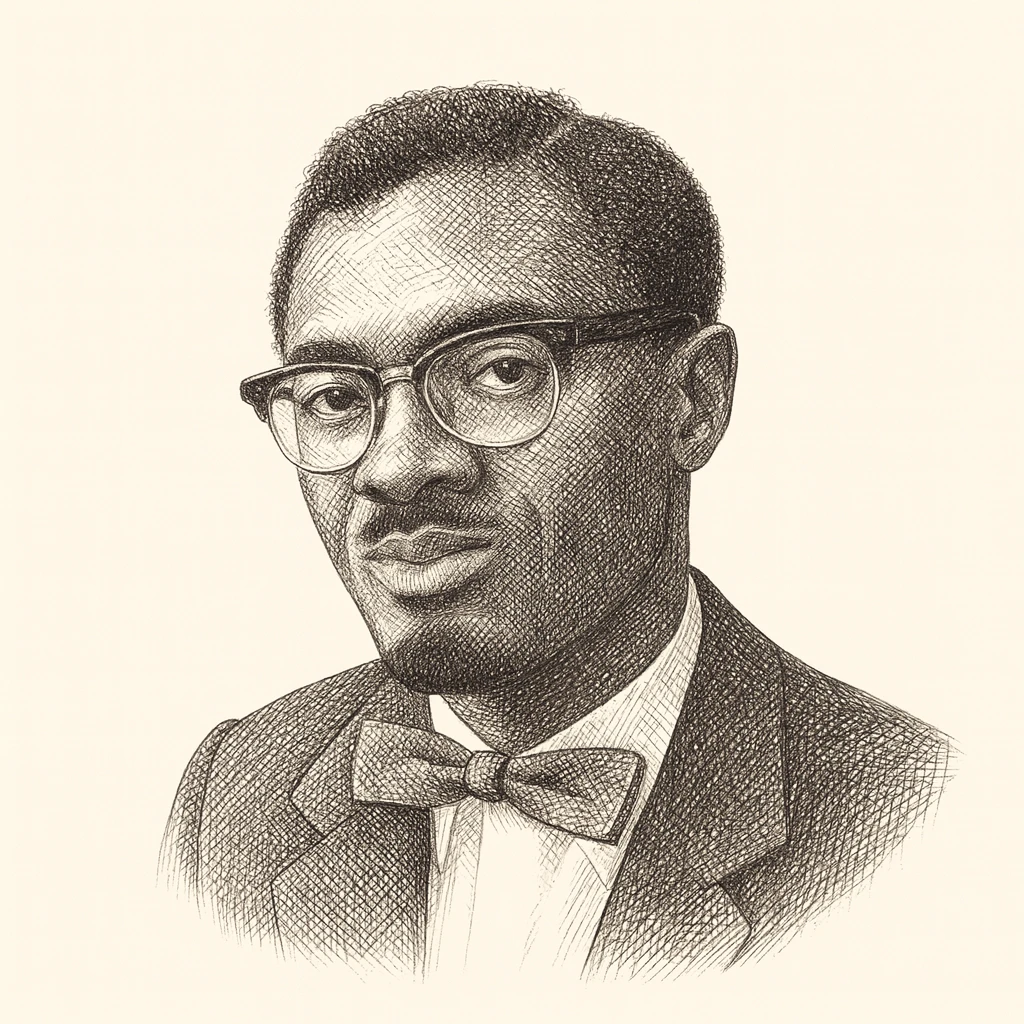
Patrice Lumumba was the first democratically elected Prime Minister of the Republic of the Congo, whose assassination with Western complicity made him a martyr figure for African independence movements. A postal clerk and beer salesman who became a nationalist leader, Lumumba led the Mouvement National Congolais to electoral victory in 1960.
Lumumba pressed a nationalism meant to transcend ethnic division. In his independence-day speech he asked Congolese to sink their tribal quarrels, and he opposed the secession of Katanga, a copper-rich province whose breakaway had Belgium's full backing. His nationalism also carried an economic promise: in the same speech he pledged that the country's land would benefit its own people.
Lumumba's independence-day speech of 30 June 1960, given in the presence of King Baudouin, catalogued the humiliations of colonial rule and drew applause from the Africans present and silence from the Belgians. Delivered after the king's speech praising Belgium's contribution to the Congo, it presented independence as won in struggle rather than granted, and it said the Congo would accept foreign cooperation only when it was not aimed at imposing an alien policy. When the Congo immediately descended into chaos (army mutiny, Belgian intervention, Katanga secession), Lumumba appealed to the UN and then the Soviet Union for help, alarming Western powers during the Cold War, which read the outreach as a move toward the Soviet bloc.
The CIA and Belgian intelligence supported Lumumba's overthrow by Colonel Mobutu. Captured while fleeing, Lumumba was beaten and executed by Katangan forces with Belgian assistance. He was 35. A Belgian parliamentary commission concluded in November 2001 that some Belgian government ministers and other Belgian actors bore moral responsibility for the circumstances that led to his death, and Foreign Minister Louis Michel apologized for Belgium in February 2002. For African nationalists, his murder with direct Western involvement came to symbolize neocolonial violence and the betrayal of independence.
Lumumba became a martyr of Pan-Africanism, his program of full political and economic independence unrealized. Mobutu, who took full power in 1965, ruled the country as a dictatorship for more than three decades.
Patrice Lumumba is associated with Left Nationalist. See the archetype