
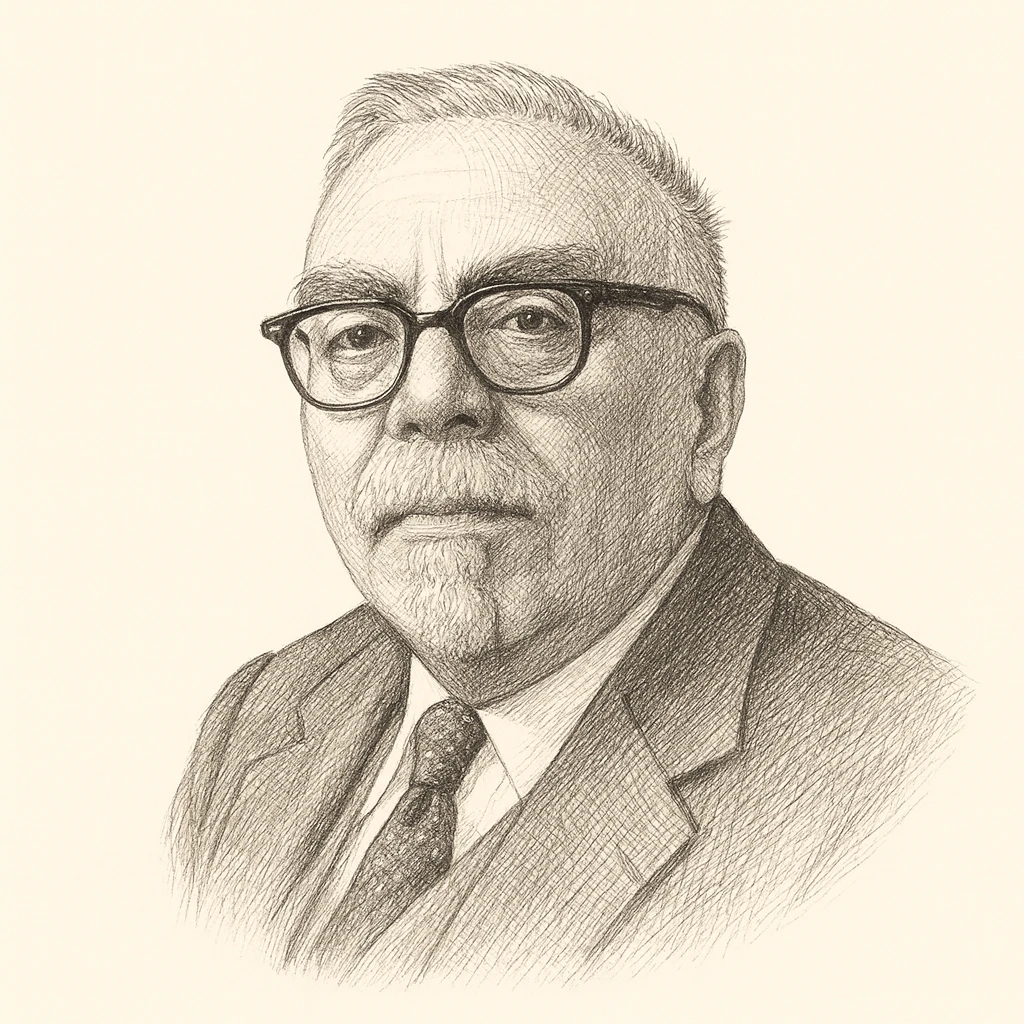
Norbert Wiener was an American mathematician best known for founding cybernetics, the study of communication and control in animals and machines. While his primary contributions were technical—work on stochastic processes, feedback, and information—his mature writings turned repeatedly to the social and political implications of the new technologies he had helped make possible. Wiener argued that feedback and information processing were as fundamental to understanding organisms and societies as they were to machines, and this framework shaped how mid-twentieth-century thinkers approached questions of order, control, and organization far beyond engineering.
Wiener's most enduring political concern was the human consequence of automation. He anticipated that machines capable of learning and self-regulation would displace not only manual but eventually intellectual labor, and he warned that this transformation, if managed carelessly, could produce mass unemployment and severe social dislocation. He drew an explicit analogy between automatic machinery and slave labor, cautioning that treating human beings as interchangeable components in an automated system degraded their dignity. His popular writings on the human uses of automation urged that technological power be governed by ethical and social judgment rather than left to market forces or military imperatives alone.
Having contributed to weapons-related research during the Second World War, Wiener grew deeply uneasy about the relationship between science, the state, and the military-industrial establishment. He publicly resisted lending his expertise to destructive ends and became an early voice for scientists' moral responsibility, questioning whether researchers should cooperate uncritically with military patronage. This stance connected him to broader postwar debates about the political accountability of science and the dangers of concentrating technological capability in the hands of states and large institutions.
Wiener's influence on political thought is largely indirect but substantial. The cybernetic vocabulary of feedback, information, and self-regulating systems informed later systems theory, discussions of governance and management, and reflections on the information society. His warnings about automation, technological unemployment, and the erosion of human autonomy in machine-dominated systems prefigured contemporary debates over artificial intelligence, surveillance, and the political economy of technology, securing his place as a foundational thinker on technology and society.
Norbert Wiener is associated with Techno-Progressive. See the archetype