
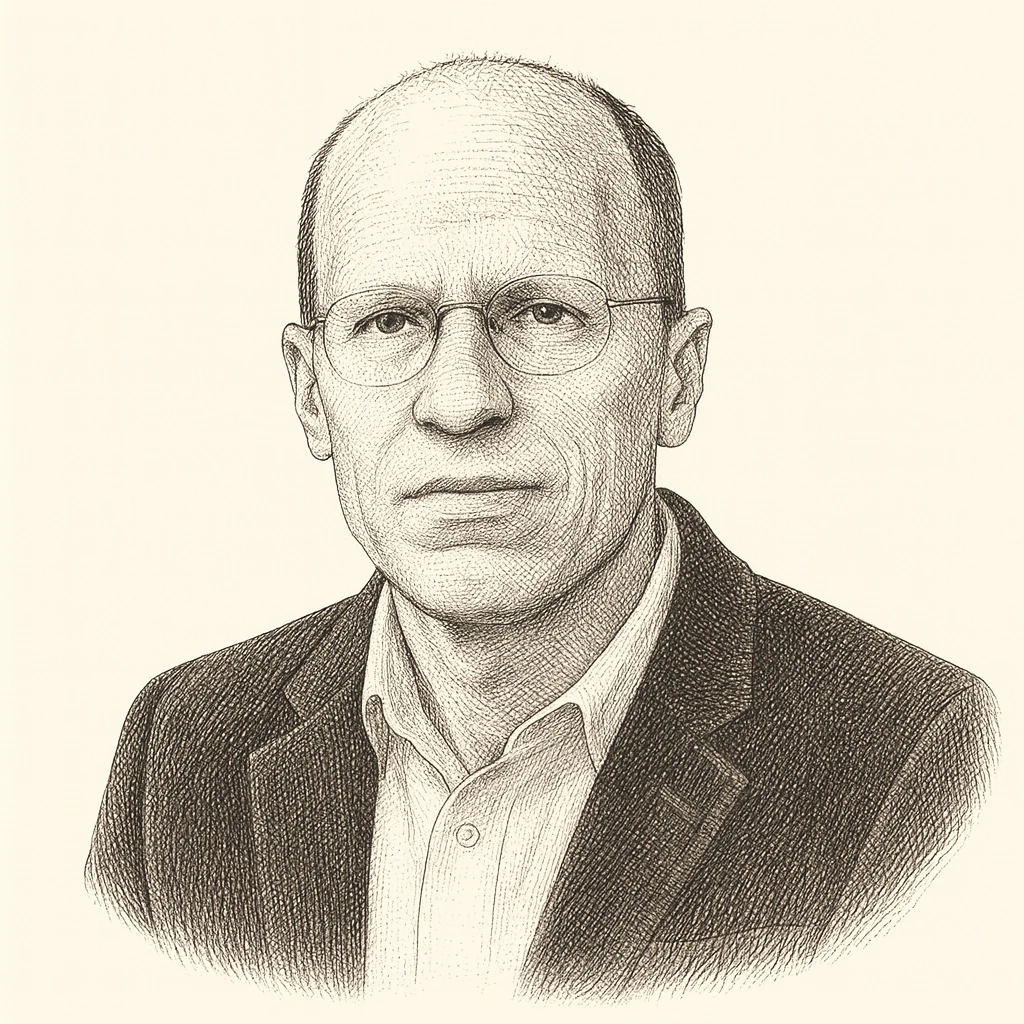
Nick Bostrom is a Swedish-born philosopher best known for founding and directing the Future of Humanity Institute at the University of Oxford, and for placing the concepts of existential risk, transhumanism, and the governance of advanced technology onto the intellectual agenda. His work sits at the intersection of analytic philosophy, decision theory, and public policy, and it has been influential well beyond academia, shaping how technologists, funders, and some policymakers think about the risks posed by emerging technologies. Bostrom's central claim is that certain low-probability but catastrophic outcomes—events that could permanently curtail or end humanity's potential—deserve far greater attention than ordinary political discourse gives them, because their stakes are so large as to dwarf more familiar near-term concerns.
His book on superintelligence brought the problem of artificial intelligence alignment to a wide audience, arguing that a sufficiently capable machine intelligence could pose profound and possibly uncontrollable dangers if its goals were not carefully specified. This argument has had a direct political dimension: it helped catalyze debates over AI regulation, safety research, and international coordination, and it informed the priorities of parts of the effective altruism movement, which treats existential risk reduction as a moral priority. Bostrom's thinking is closely associated with "longtermism," the view that positively influencing the long-term future is among the most important ethical tasks of the present, a stance that carries implications for how societies weigh future generations in policy and resource allocation.
As a transhumanist thinker, Bostrom has defended the legitimacy of human enhancement and argued against reflexive opposition to technologies that might extend human capabilities or lifespans. Politically, this places him in tension with bioconservative positions and aligns him with a broadly liberal, technology-optimistic tradition that nonetheless insists on caution about catastrophic downside risks. His ideas have drawn both serious engagement and criticism—Émile P. Torres, writing in Aeon in 2021, argued that longtermism could justify neglecting present suffering such as global poverty, and pointed to the billionaire funding behind its small circle of theorists.
Bostrom's lasting significance lies less in a conventional political program than in reshaping the frame through which questions of risk, responsibility, and the future are debated. By insisting that humanity's survival and long-term trajectory are proper objects of deliberate collective decision-making, he has helped make existential risk a recognized category in policy discussion.
Nick Bostrom is associated with Techno-Progressive. See the archetype