
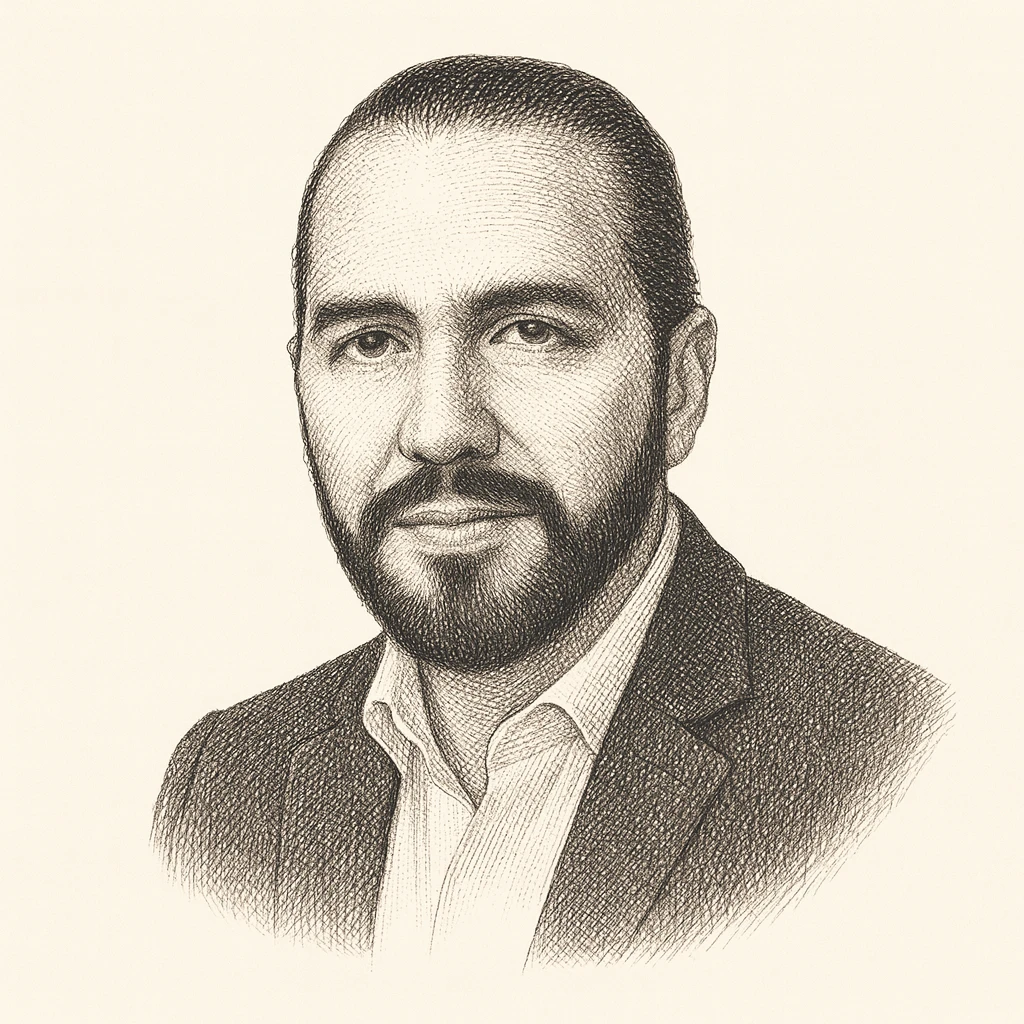
Nayib Bukele, president of El Salvador since 2019, has become one of the most closely watched political figures in contemporary Latin America, less for a formal body of doctrine than for a distinctive style of governing that blends populism, security-first pragmatism, and mastery of social media. Emerging from outside the two parties that dominated Salvadoran politics after the civil war—he was expelled from the leftist FMLN and later built his own vehicle, Nuevas Ideas—Bukele framed himself as the antithesis of a corrupt, exhausted political establishment. His appeal rests on a claim that traditional ideological categories of left and right are obsolete, and that results, particularly on public safety, matter more than adherence to inherited party creeds.
The centerpiece of his political identity is an aggressive crackdown on gang violence, pursued through a prolonged state of exception involving mass arrests and the construction of a large maximum-security prison. Supporters credit these measures with a dramatic reduction in homicides in what had been one of the world's most violent countries, and Bukele has presented this as evidence that decisive executive action can solve problems liberal institutions failed to address. Critics, including human-rights organizations, argue that the same approach has entailed erosion of due process, indefinite detentions, and concentration of power. This tension—between security delivered and democratic norms curtailed—is central to debates his tenure has provoked.
Bukele's governing philosophy is often described as a form of technocratic strongman populism, and he has at times embraced provocative self-descriptions of his unorthodox authority. He has cultivated a highly personalized, digitally native mode of communication, using social media to bypass traditional press and speak directly to citizens. His government also drew international attention by adopting Bitcoin as legal tender, positioning El Salvador as a laboratory for unconventional economic experiments and reinforcing his image as a disruptive modernizer.
His wider significance lies in his influence as a model. Across Latin America and beyond, politicians and commentators invoke the "Bukele model" in arguments about whether hardline security policies and consolidated executive power represent a viable answer to crime and disorder, or a dangerous slide toward elected authoritarianism. In this way Bukele has become a reference point in a broader global conversation about the trade-offs between order, liberty, and the durability of democratic institutions.
Nayib Bukele is associated with Reactionary Strongman. See the archetype