
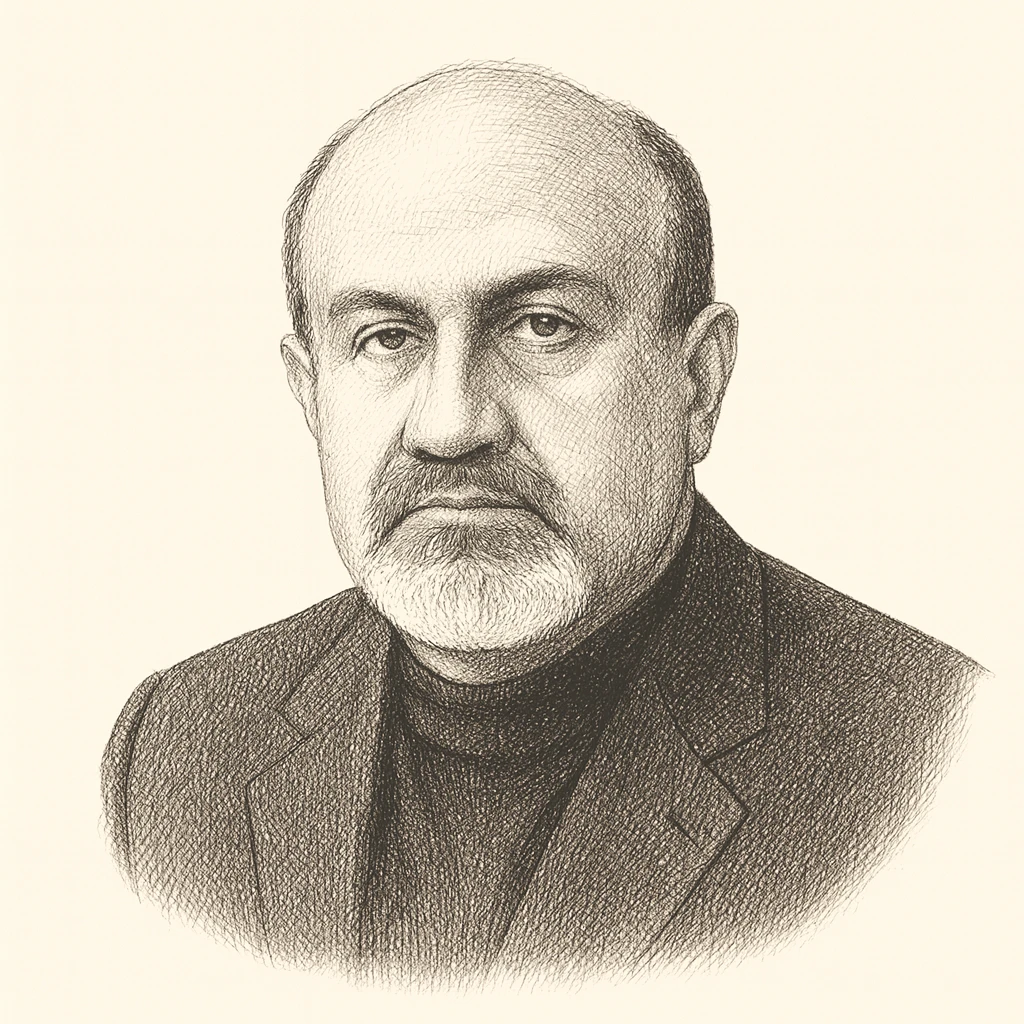
Nassim Nicholas Taleb is a Lebanese-American writer, former options trader, and probabilist best known for a series of books—most prominently The Black Swan and Antifragile—that explore how societies and institutions cope with uncertainty and rare, high-impact events. Though he is not a conventional political theorist, his work has significant political implications. His central claim is that human systems chronically underestimate extreme risks ("Black Swans"), and that robustness comes not from prediction but from building institutions that gain from disorder rather than break under it. This leads him to distrust centralized, technocratic planning and large-scale interventionism, which he argues concentrate hidden fragilities that eventually produce catastrophic failures.
Taleb's political outlook is often described as skeptical of elites and expert authority, favoring decentralization, localism, and bottom-up trial and error over top-down design. He champions the idea of "skin in the game"—the principle that decision-makers should personally bear the consequences of their decisions—as both an ethical and a practical safeguard against reckless governance, financial recklessness, and interventionist foreign policy. He has been a sharp critic of what he sees as an insulated managerial and academic class that theorizes about complex systems without exposure to downside risk, and he draws on classical and ancient sources, along with figures like the Stoics and Hayekian arguments about dispersed knowledge, to defend the wisdom embedded in traditions, heuristics, and time-tested practices.
Because his positions cut across familiar ideological lines, Taleb resists easy left-right categorization. His emphasis on limited intervention, personal accountability, and suspicion of centralized power resonates with libertarian and classical-liberal sensibilities, while his warnings about financial fragility, inequality of risk-bearing, and the dangers of unaccountable elites appeal to populist and anti-establishment critics across the spectrum. He has been outspoken against military interventionism and against policies he views as socializing losses while privatizing gains, particularly in the wake of financial crises.
Taleb's political influence lies less in a systematic program than in a vocabulary and a stance: concepts like antifragility, the precautionary principle applied to systemic risks, and skin in the game have entered public debate about governance, regulation, and institutional design. His public presence is combative, and his framing of risk, accountability, and the limits of expertise has shaped how many people across political traditions think about resilience and the responsibilities of those who wield power.
Nassim Taleb is associated with Independent Localist. See the archetype