
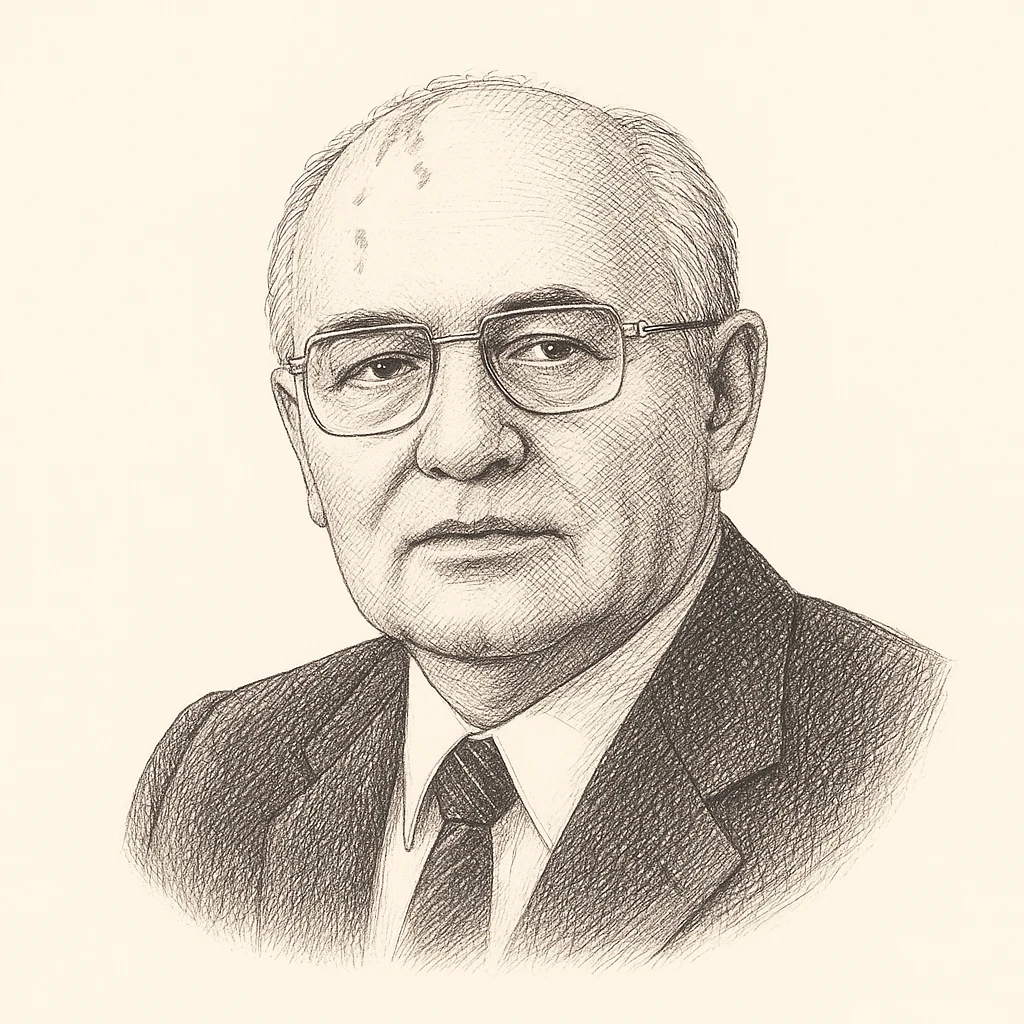
Mikhail Gorbachev came to power in 1985 as General Secretary of the Communist Party of the Soviet Union, convinced that the Soviet system could be renewed rather than abandoned. His two signature programs — perestroika (restructuring) and glasnost (openness) — were attempts to loosen the command economy and to permit a measure of public criticism, debate, and press freedom without renouncing socialism itself. Gorbachev's wager was that a system suffering from stagnation, corruption, and enforced silence could be revitalized by admitting its failings and introducing limited market mechanisms, competitive elections, and a more accountable politics. In this sense he belongs to a long tradition of reform socialism: figures who believed the promise of socialism had been betrayed by bureaucratic ossification and could be recovered through democratization from above.
His political thought blended a genuine commitment to socialist ideals with a growing conviction that repression and secrecy were themselves fatal to the project. He argued for what he called a "common European home" and pursued arms-reduction agreements and a de-escalation of the Cold War, allowing the Warsaw Pact states to break from Moscow without military intervention — a decisive rejection of the Brezhnev Doctrine. This restraint was central to the largely peaceful end of the Cold War, for which he was internationally celebrated even as he became increasingly unpopular at home.
Gorbachev's career is a case study in how systems end. The reforms meant to strengthen the union instead exposed its contradictions: glasnost unleashed nationalist and democratic movements the party could not contain, while perestroika disrupted the old economy without building a functioning new one. Economic hardship, a hardliner coup attempt against him, and the rising authority of republican leaders left him presiding over a state that dissolved beneath him in 1991. Critics on the right blame him for the collapse; critics on the left argue his half-measures satisfied no one.
His lasting influence lies less in a finished doctrine than in the questions he embodies: whether an authoritarian socialist system can democratize without disintegrating, whether openness can be rationed, and how much a single reformer can control the forces he sets in motion. For market-oriented and democratic socialists alike, Gorbachev remains the emblematic figure of reform pursued too late and understood too partially to succeed.
Mikhail Gorbachev is associated with Market Socialist. See the archetype