
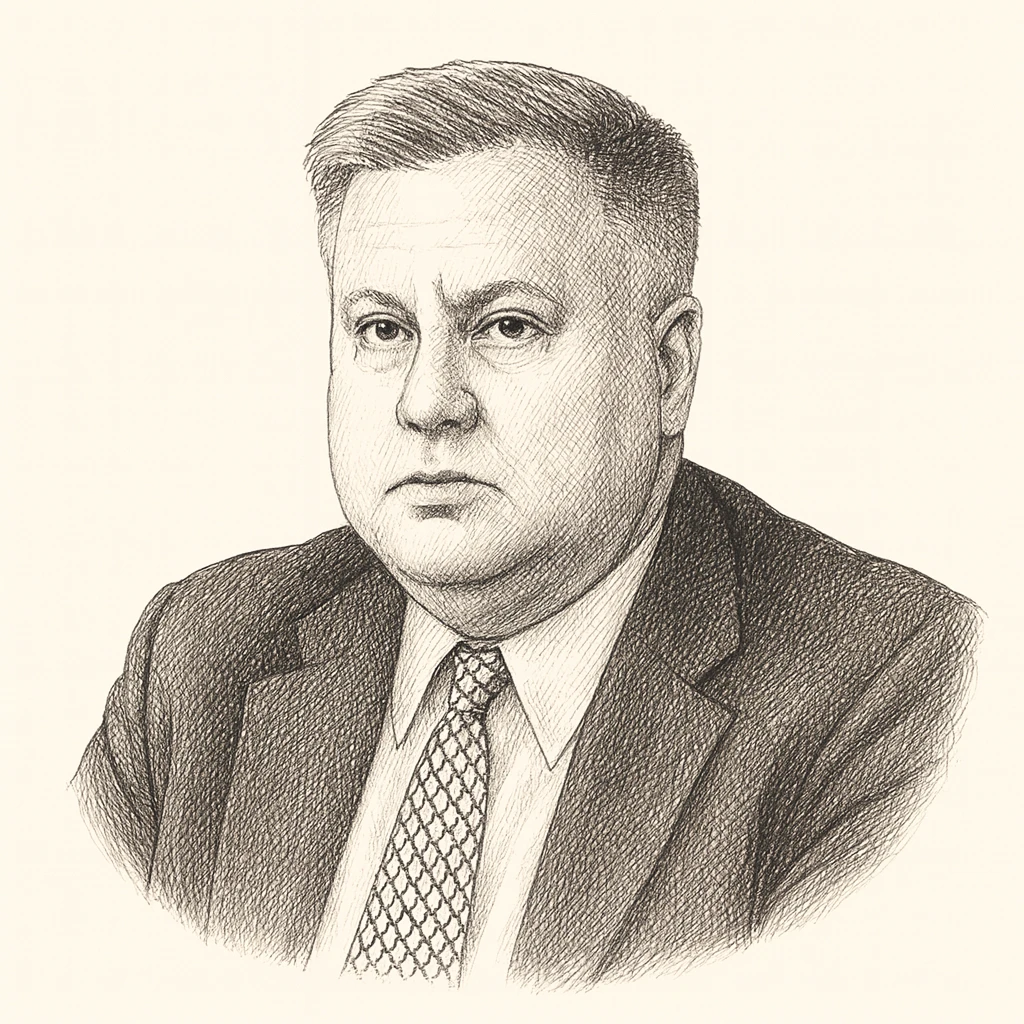
Michael Lind is an American writer, columnist, and public intellectual whose work spans political thought, economic policy, and American history. Beginning his career among conservative circles, he later broke publicly with movement conservatism and repositioned himself as a heterodox thinker who resists easy placement on the left-right spectrum. He co-founded the New America Foundation, a Washington think tank, and has written prolifically for magazines and newspapers across the ideological spectrum, producing books, essays, and even poetry. His writing consistently returns to questions of national cohesion, economic structure, and the relationship between elites and ordinary citizens.
Lind is best known for a strand of thought often described as economic nationalism or productive-economy liberalism. He argues that the United States has a long tradition—rooted in figures like Alexander Hamilton and what he calls the "American School" of political economy—of using national policy to build domestic industry, infrastructure, and broadly shared prosperity. He contrasts this developmental tradition with free-market orthodoxy and laissez-faire globalization, which he contends have hollowed out manufacturing and weakened the working and middle classes. Central to his analysis is a critique of what he characterizes as a self-serving "overclass" of managers, professionals, and credentialed elites whose interests, he argues, have diverged from those of the broader working population.
In more recent work, Lind has framed contemporary politics as a class conflict between a metropolitan, university-educated elite and a working majority, reading populist upheavals as symptoms of that divide rather than as aberrations. He has argued that democratic stability historically depended on countervailing institutions—unions, churches, and civic associations—that gave ordinary people leverage, and that their erosion has left politics dominated by concentrated power. This analysis places him in dialogue with older traditions of pluralism and civic republicanism, even as it cuts against both libertarian economics and identity-focused progressivism.
Lind's influence lies partly in supplying vocabulary and historical framing for debates about class, nationalism, and the future of the working class that gained prominence amid populist realignments in the United States and beyond. Admirers value his willingness to challenge orthodoxies across the political divide, while critics question aspects of his historical interpretation and his sometimes sweeping generalizations about elites. He remains a distinctive voice arguing that economic structure and class, more than culture alone, shape political outcomes.
Michael Lind is associated with Left Nationalist. See the archetype