
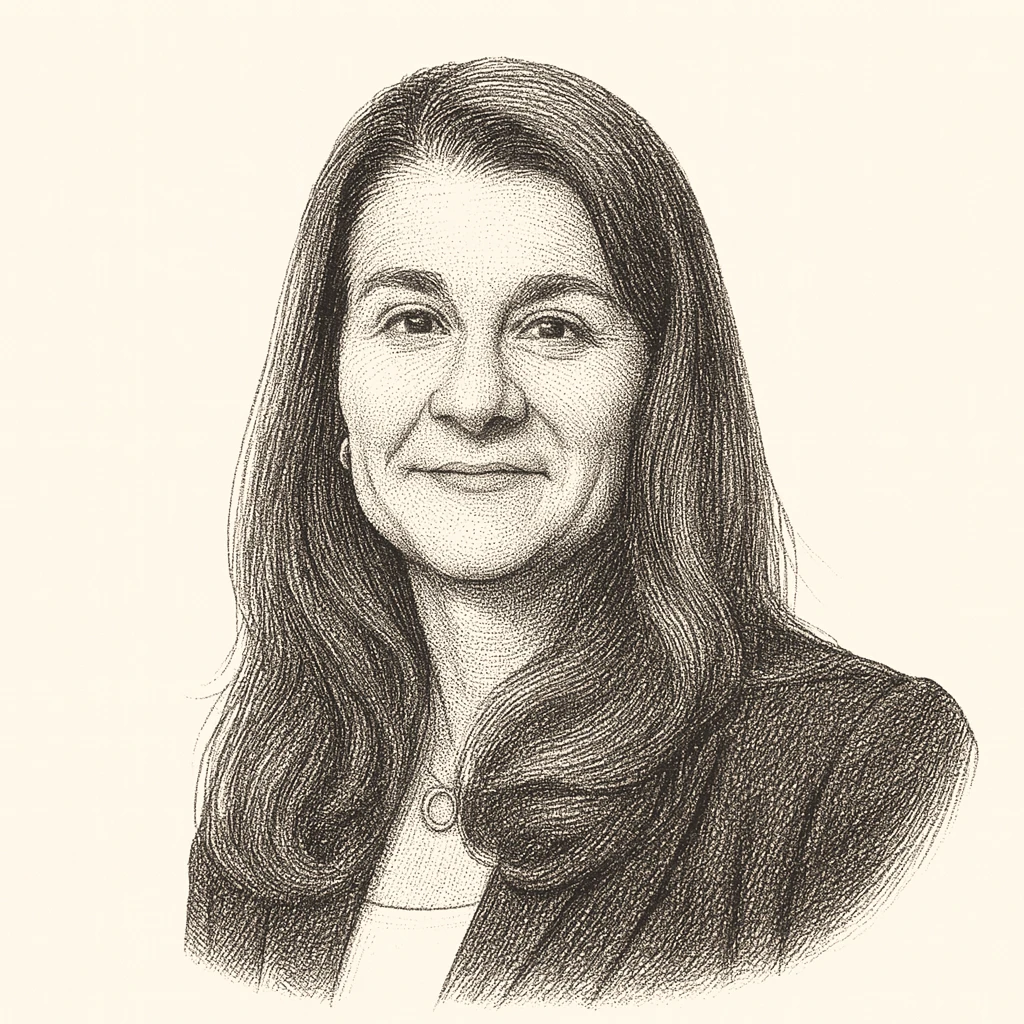
Melinda French Gates is an American philanthropist whose political significance lies less in electoral engagement than in reshaping the priorities of global development and domestic policy debate through large-scale private philanthropy. As co-founder of the Bill & Melinda Gates Foundation, she helped direct one of the world's largest charitable endowments toward global health, poverty reduction, and education. Over time her distinctive contribution became the argument that improving the lives of women and girls is not a peripheral moral concern but a central lever for economic development and social progress—a claim she has advanced in the language of both effectiveness and equity.
Her thinking draws on a tradition of empirical, data-driven philanthropy that treats measurable outcomes as the test of good intentions, aligning her with a broadly technocratic and pragmatic approach to social problems. Yet she has increasingly emphasized issues that carry sharper political edges, particularly access to contraception and family planning, which she framed as questions of women's autonomy and health rather than as ideological battlegrounds. This stance placed her within longstanding debates over reproductive rights and the role of women's agency in development economics, and drew criticism from some religious and conservative quarters while earning support among advocates for women's health.
Through her investment and advocacy organization Pivotal Ventures, French Gates turned toward gender equity in the United States, funding efforts to expand women's economic power, political representation, and presence in technology. In her writing, notably her book The Moment of Lift, she articulated the view that lifting women lifts entire communities, connecting personal narrative to arguments about structural barriers. This positions her within a liberal, reform-minded tradition that seeks to expand opportunity through targeted intervention rather than systemic upheaval.
French Gates also occupies a contested place in broader debates about philanthrocapitalism—the question of whether concentrated private wealth should shape public priorities that democratic institutions might otherwise decide. Stanford political scientist Rob Reich argues in Just Giving (2018) that big philanthropy is "a form of power that is largely unaccountable, often perpetual, and lavishly tax-advantaged"; defenders point to the scale and focus such resources can bring to neglected problems. Her career thus serves as a prominent case study in the political power and accountability of modern philanthropy, and in the mainstreaming of gender equity as a framework for thinking about economic and social policy.
Melinda French Gates is associated with Establishment Progressive. See the archetype