
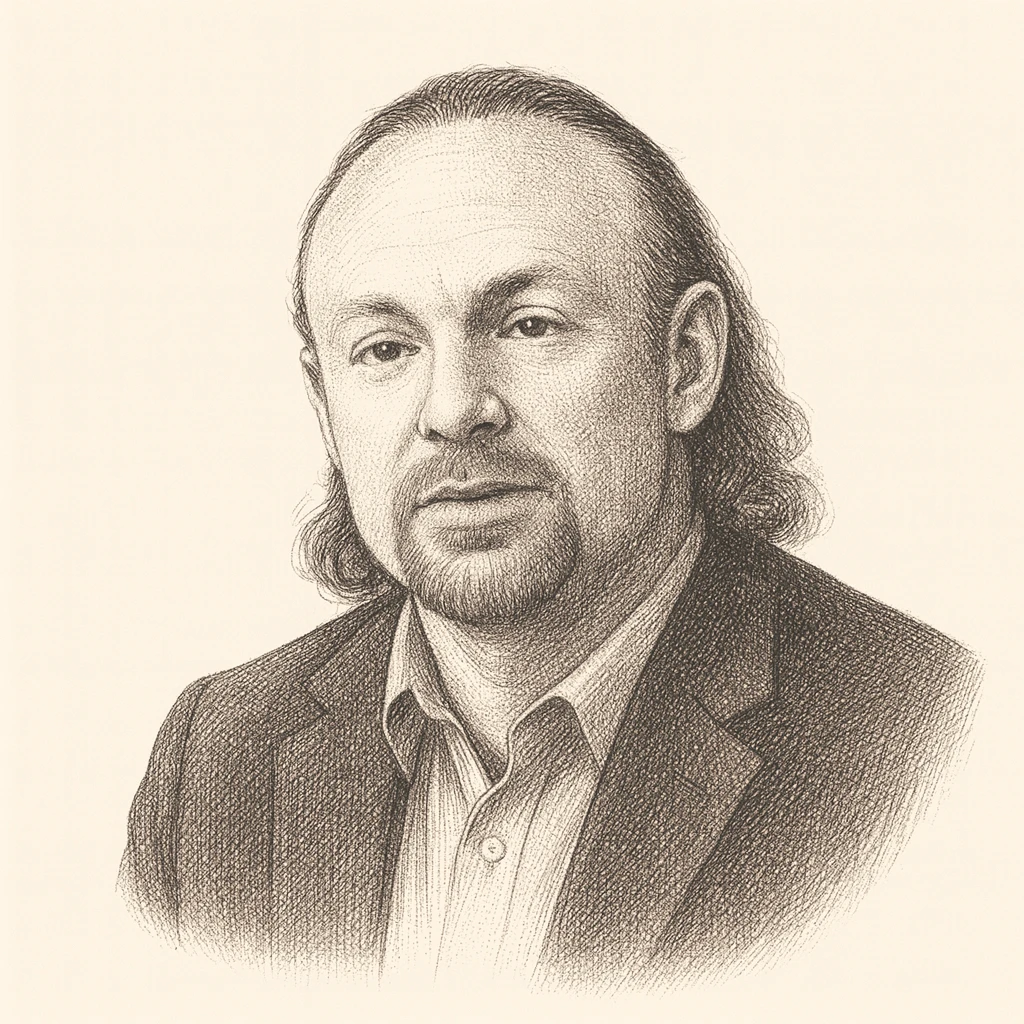
Max More is a British-born philosopher best known as a founding figure of modern transhumanism and the intellectual architect of "extropianism," an optimistic worldview centered on the idea that intelligence, life, and order can be expanded indefinitely through reason, science, and technology. In the late 1980s and 1990s he helped organize the Extropy Institute and articulated a set of guiding principles that emphasized perpetual self-improvement, open inquiry, spontaneous order, and self-direction. These ideas placed him at the intersection of philosophy of technology and political theory, offering a program for how individuals and societies might use emerging technologies—from life extension to artificial intelligence—to transcend existing biological and social limits.
More's political thought is strongly libertarian in temperament. He drew on traditions associated with free-market liberalism and skepticism of centralized authority, emphasizing individual autonomy, voluntary association, and distrust of paternalistic regulation. His concept of the "proactionary principle" was framed as a deliberate counter to the "precautionary principle" that dominates much environmental and technological policy: rather than restricting innovation until it is proven safe, he argued that the freedom to experiment and develop new technologies should be given substantial weight, with risks assessed against the costs of stagnation and inaction. This stance made him an influential voice in debates over how democracies should govern rapid technological change.
Through his advocacy for cryonics and radical life extension—reflected in his long association with the Alcor Life Extension Foundation, which he led as chief executive—More extended his political vision to questions of mortality, arguing that death itself should be treated as a problem to be solved rather than an unquestioned boundary. His writing links personal transformation to a broader civilizational project, in which technological progress and expanding individual choice are seen as engines of human flourishing.
More's influence is felt less in electoral politics than in the culture of Silicon Valley, futurist movements, and ongoing debates about technology governance. Francis Fukuyama named transhumanism "the world's most dangerous idea" in Foreign Policy in 2004, warning that "the first victim of transhumanism might be equality," while sympathizers credit More with helping to legitimize serious discussion of human enhancement. Either way, he remains a reference point for anyone examining how libertarian ideals and faith in technological progress shape contemporary visions of the political future.
Max More is associated with Techno-Progressive. See the archetype