
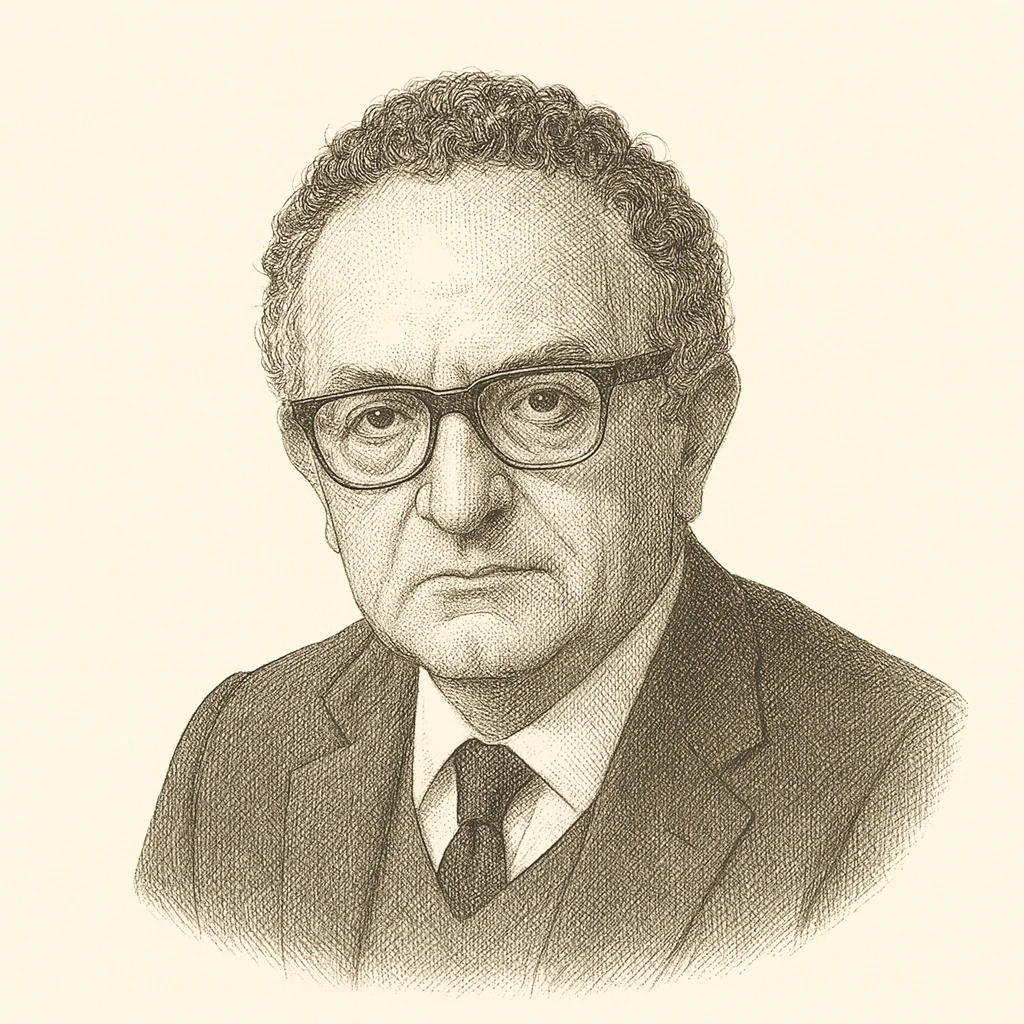
Maurice Glasman is a British political theorist and academic based at London Metropolitan University, best known as the founder and intellectual figurehead of "Blue Labour," a tendency within the British Labour Party that emerged around 2009–2011. His thought represents a self-consciously conservative-inflected critique of the modern left, arguing that Labour had lost touch with the values and lived experience of working-class communities. Glasman contends that both the free market and the centralizing state can be corrosive of the relationships, traditions, and local institutions that give ordinary people security and dignity. Against what he sees as an overly technocratic and individualist politics, he emphasizes community, family, faith, work, and a sense of place.
Central to Glasman's argument is a critique of unfettered capitalism drawn in part from Karl Polanyi, whose account of how market forces "disembed" and disrupt social life he frequently invokes. He advocates a politics of relationship-building and mutual obligation, championing traditions of ethical socialism, guild and cooperative organization, trade unionism as a civic institution, and community organizing. His work has been closely associated with the practices of broad-based organizing, and he stresses the importance of reciprocity, vocation, and institutions that mediate between the individual and the state. This leads him to positions often seen as heterodox on the left, including skepticism about large-scale immigration's effects on communities and an openness to patriotism and religious tradition; in July 2011 his remark in a Telegraph interview that immigration should be halted set off a row in which Blue Labour was declared finished.
Blue Labour's slogan, often summarized as a defense of "family, faith and flag," or the triad of community, work, and belonging, positioned it as a communitarian alternative to New Labour's managerial liberalism. Though never a mass movement, its ideas influenced debates about Labour's relationship with its traditional base, and gained renewed attention in the wake of Brexit and Labour's losses in former industrial "red wall" constituencies, where questions of cultural identity and economic decline converged.
Glasman was made a Labour life peer in 2011, taking a seat in the House of Lords. From this platform and through his writing and public commentary, he has continued to argue for a communitarian, tradition-conscious politics. His influence is best understood less as a coherent policy program than as a persistent provocation to the left to take seriously the moral and social dimensions of politics, and the attachments people hold to community and nation.
Maurice Glasman is associated with Rooted Progressive. See the archetype