
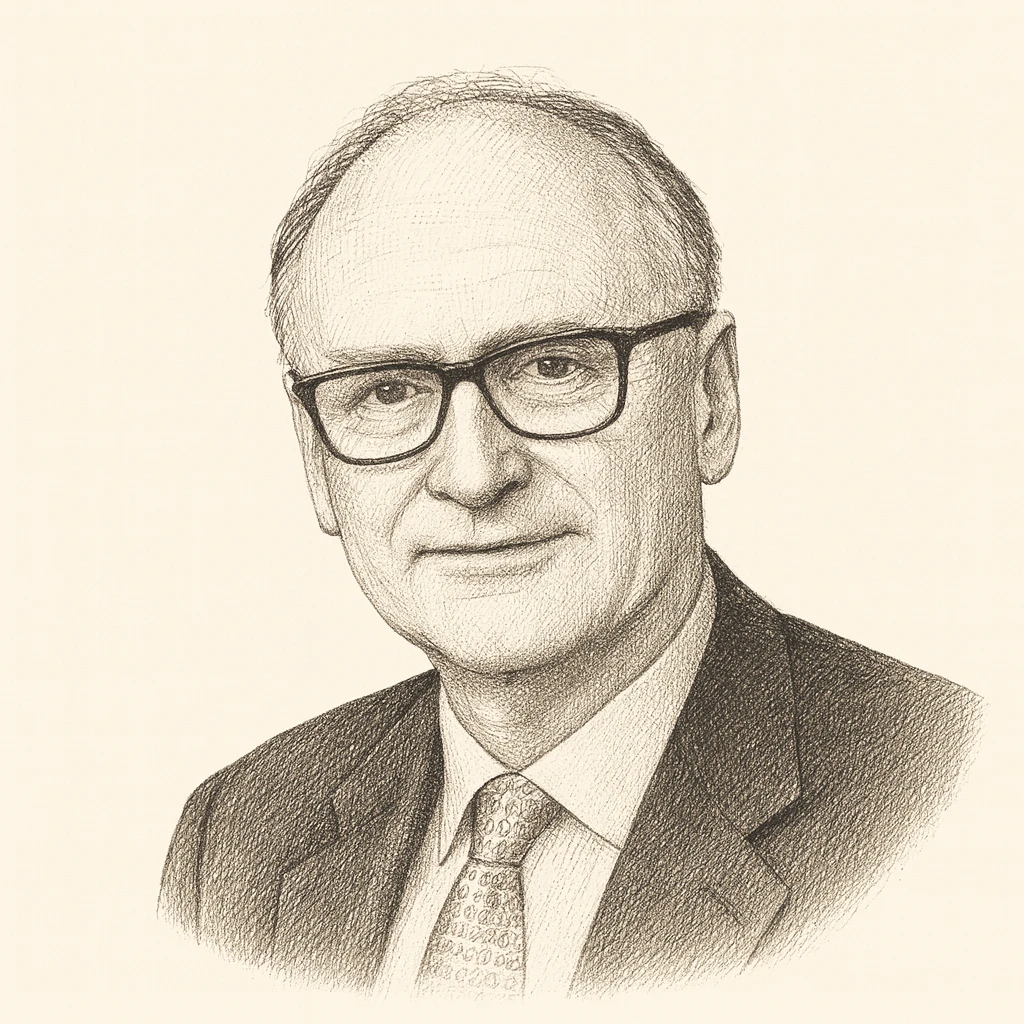
Matt Ridley is a British science writer, journalist, and businessman whose popular books have made him one of the most widely read exponents of evolutionary and free-market ideas. Trained as a zoologist, he built his reputation writing about genetics, evolution, and the biology of human behavior before turning increasingly toward political economy. His best-known work, The Rational Optimist, argues that human prosperity has expanded dramatically over history through trade, specialization, and the exchange of ideas, and it frames pessimism about the future as both empirically mistaken and morally corrosive. Ridley presents progress not as the product of central planning but as an emergent, bottom-up phenomenon.
Politically, Ridley is associated with classical liberalism and libertarianism. He draws heavily on the tradition of spontaneous order linked to thinkers such as Adam Smith and Friedrich Hayek, extending it with metaphors from evolutionary biology: he treats innovation, culture, and institutions as products of decentralized selection rather than deliberate design, a theme he developed in his book The Evolution of Everything. From this vantage he is consistently skeptical of top-down government intervention, sympathetic to markets and technological innovation, and critical of what he regards as unwarranted precaution against new technologies. He has been a prominent skeptic of alarmist framings of climate change, arguing for a lukewarm interpretation and questioning costly mitigation policies, positions that have drawn substantial criticism from many scientists and commentators.
Ridley sits in the House of Lords as a hereditary peer, having inherited the title Viscount Ridley, and has aligned with Conservative politics; he was also a public supporter of Britain's exit from the European Union, viewing it through his broader commitment to deregulation and open trade. His earlier career included chairing the bank Northern Rock during the period leading up to its 2007 collapse, an episode frequently cited by critics who see tension between his anti-regulation views and that outcome. His influence lies less in formal political theory than in popularizing a confident, data-driven optimism about human progress and free exchange, offering an accessible intellectual framework for pro-market and pro-innovation arguments in contemporary policy debates.
Matt Ridley is associated with Techno-Progressive. See the archetype