
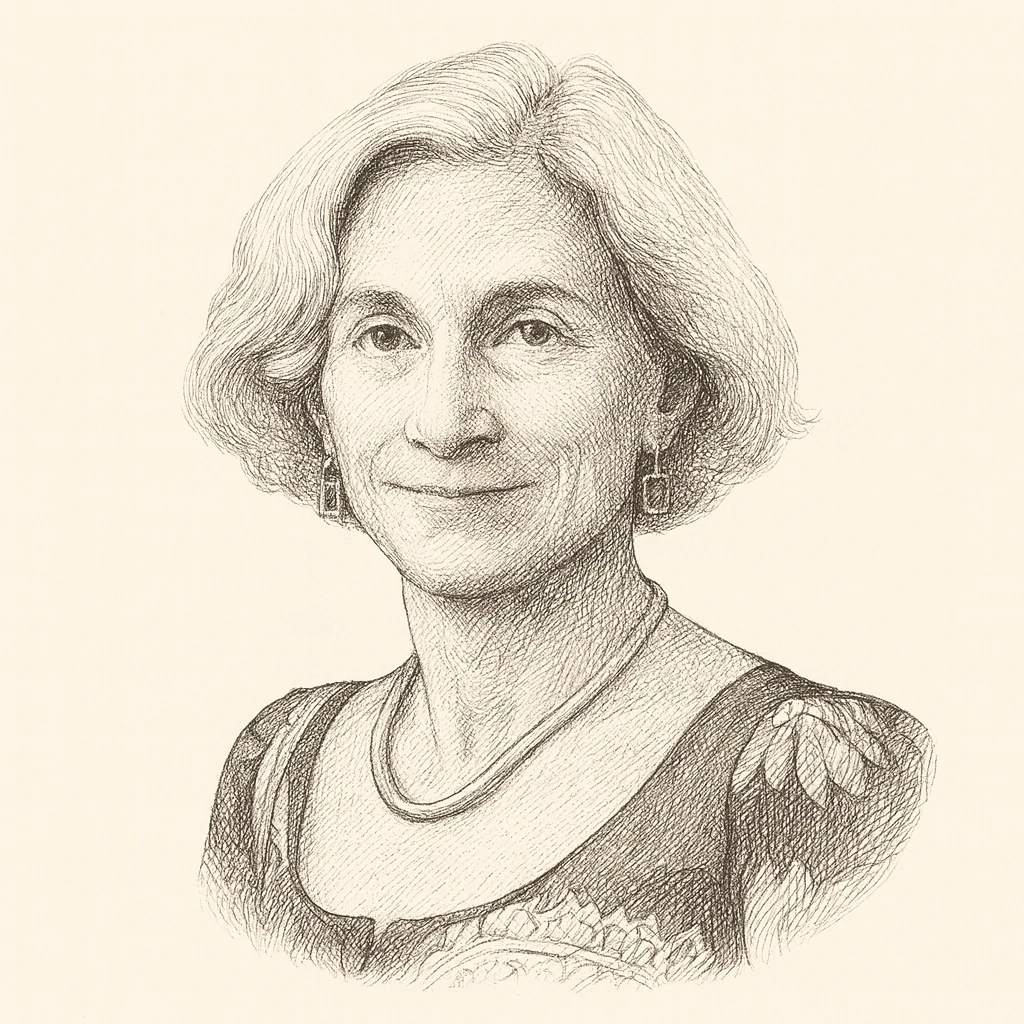
Martha Nussbaum is one of the most prolific and influential living political philosophers, a scholar whose work spans ancient Greek philosophy, contemporary political theory, feminist philosophy, philosophy of emotions, disability rights, animal welfare, and the philosophical foundations of international development policy. Her development of the capabilities approach into a systematic political theory has made her, alongside her longtime collaborator Amartya Sen, the central figure in one of the most important contemporary frameworks for thinking about justice, human flourishing, and the proper goals of political community. Her willingness to take public stands on controversial questions, her extraordinary output (more than twenty-five books across four decades), and her rigorous engagement with both the classical philosophical tradition and contemporary political questions have made her a model of what publicly engaged academic philosophy can look like in the early 21st century.
Nussbaum was born in 1947 in New York City, raised in a wealthy Philadelphia Main Line family that she has described as privileged, conventional, and emotionally distant. She has written openly about the limitations of her upbringing and about her conscious decision to construct an intellectual and personal life that rejected the class snobbery, religious indifference, and emotional restraint of her origins. She studied at New York University and then at Harvard, where she completed her doctorate in classical philology in 1975, focusing on Aristotle. Her early academic work was in ancient philosophy, and her first major book, The Fragility of Goodness (1986), was a study of Greek tragedy and philosophy that argued against the standard view that ancient ethics had moved from tragedy's vulnerability to human fortune toward philosophy's attempt to make the good life invulnerable to circumstance. Nussbaum argued instead that the tragic recognition of human vulnerability was actually one of the most important contributions of Greek ethical thought, and that attempts to make virtue invulnerable (whether in Plato's later dialogues or in Stoic philosophy) had sacrificed something essential about what it meant to live a fully human life.
This early work established themes that would run throughout her career. Nussbaum has always insisted on the importance of emotions, vulnerability, and attachment in ethical and political life, against traditions that treated these as obstacles to rational moral judgment. Her book Upheavals of Thought (2001) was a systematic philosophical treatment of the emotions, arguing that emotions are not merely subjective feelings but genuine cognitive judgments about what matters, and that political philosophy cannot afford to ignore them. Her work on compassion, disgust, fear, and shame has shaped contemporary debates about the role of emotions in law, political discourse, and democratic citizenship, and her arguments that political communities should actively cultivate certain emotions (compassion, love) while resisting others (disgust, contempt) have been influential in contemporary debates about everything from criminal justice to immigration policy.
Nussbaum's most politically consequential work has been on the capabilities approach, which she began developing in collaboration with Sen in the 1980s and then extended in her own distinctive direction. Where Sen resisted developing the approach into a specific list of capabilities, arguing that such specification should be left to democratic deliberation in particular contexts, Nussbaum argued that political philosophy had a responsibility to specify a concrete list of central human capabilities that constituted the threshold conditions for a fully human life. Her list has gone through multiple versions but includes ten capabilities: life; bodily health; bodily integrity; senses, imagination, and thought; emotions; practical reason; affiliation; other species; play; and control over one's environment. Her argument was that any political community worthy of the name had an obligation to ensure that all its members could achieve at least minimum threshold levels of each of these capabilities, and that failure to do so was a form of political failure rather than mere misfortune.
This framework became the foundation for a systematic political philosophy that Nussbaum has developed across multiple books. Women and Human Development (2000) applied the capabilities framework specifically to questions about women's rights in developing countries, drawing on extensive fieldwork in India to show how formal legal equality was inadequate when women lacked the underlying capabilities to actually exercise their legal rights. Frontiers of Justice (2006) extended the framework to three groups that mainstream political philosophy had failed to accommodate: people with severe cognitive disabilities, people in other countries, and non-human animals. Creating Capabilities (2011) provided an accessible introduction to the approach for general readers. Throughout these works, Nussbaum has insisted that political philosophy should be rigorous and universal while also being attentive to concrete particulars and responsive to the lived experiences of actual people facing actual injustices.
Nussbaum has also been a major contributor to contemporary feminist philosophy, though her feminism is distinctive in its willingness to engage with and criticize other feminist positions. She has argued against what she regards as the excesses of postmodern feminism, particularly the work of Judith Butler, whom she criticized in a widely-discussed essay for what she saw as a retreat from concrete political engagement into academic performance. She has defended universalist positions about women's rights against relativist arguments that such positions amount to cultural imperialism, arguing that certain capabilities are essential to human flourishing regardless of cultural context and that defending these capabilities cross-culturally is not imperialism but solidarity. Her feminist positions have sometimes made her unpopular in academic feminist circles, but they have also given her unusual credibility with audiences who were skeptical of academic feminism's tendencies toward abstraction and theoretical complexity.
Beyond her contributions to capabilities theory and feminism, Nussbaum has written extensively on emotions and law, liberal education, religious tolerance, the treatment of people with disabilities, animal welfare, and the philosophical foundations of international human rights. Her book From Disgust to Humanity (2010) argued against the use of disgust as a basis for legal judgment, particularly in debates about LGBT rights, making the case that political communities should actively resist the temptation to translate visceral reactions into legal prohibitions. Her work on liberal education, particularly Cultivating Humanity (1997), defended a vision of liberal arts education as essential preparation for democratic citizenship in diverse societies.
Nussbaum has taught at Harvard, Brown, and since 1995 at the University of Chicago, where she holds joint appointments in philosophy and law and where she has continued to produce books at an extraordinary pace. She remains actively engaged in public political debates and writes regularly for general audiences as well as for academic readers. Her influence on contemporary political philosophy, feminist theory, and international development policy continues to grow, and she is widely regarded as one of the most important living philosophers working on questions of political justice and human flourishing.
Martha Nussbaum is associated with Social Liberal. See the archetype