
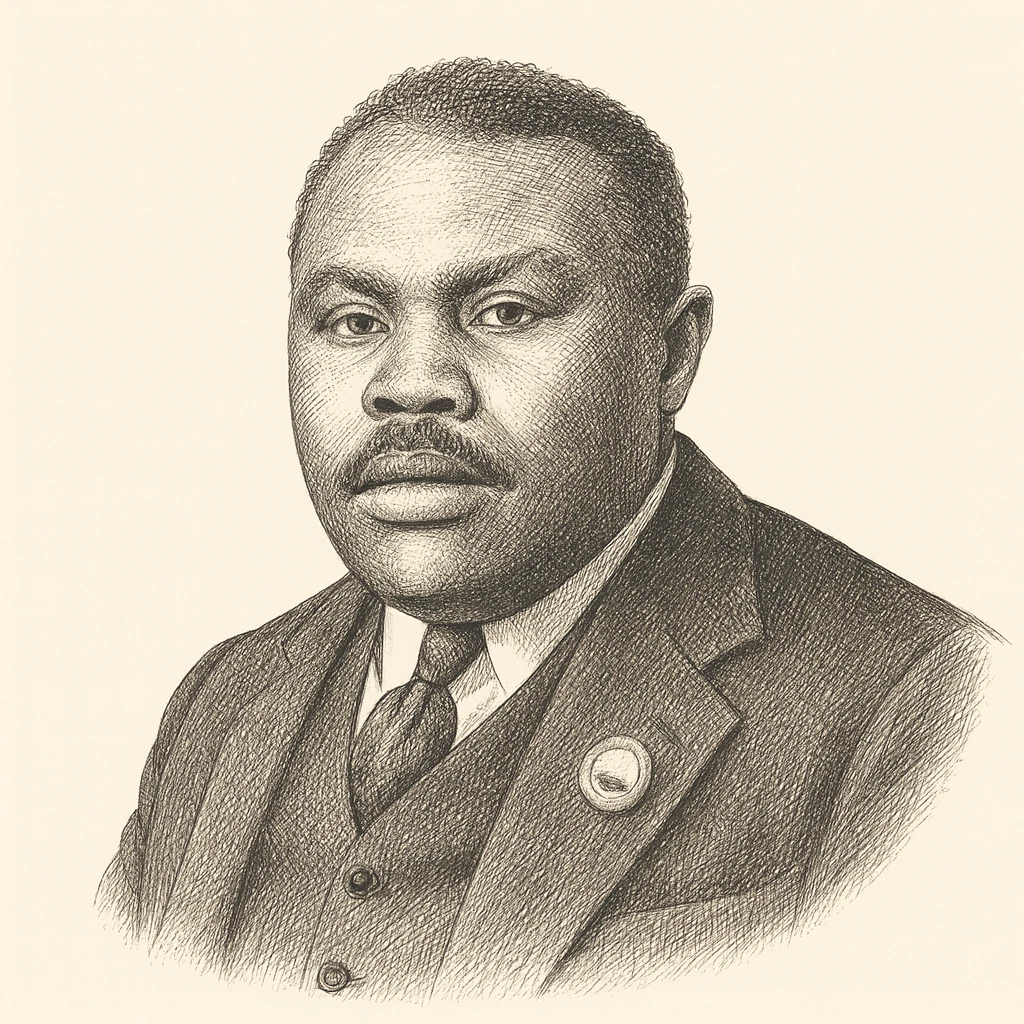
Marcus Garvey was a Jamaican-born organizer whose ideas gave shape to a distinctly mass-based Black nationalism in the early twentieth century. Through the Universal Negro Improvement Association (UNIA), which he founded and then expanded dramatically after moving to the United States, Garvey argued that people of African descent worldwide constituted a single political community whose dignity, security, and prosperity could only be secured through their own institutions. His program fused racial pride, economic self-reliance, and pan-African solidarity, insisting that Black people should build businesses, newspapers, and organizations under their own control rather than seek acceptance within structures that excluded them.
Central to Garvey's thought was the conviction that political redemption required both cultural regeneration and a territorial or civilizational anchor. He popularized the idea that Africa should be reclaimed and unified as a homeland and source of collective pride, a vision often summarized in the slogan of Africa for Africans. He built commercial ventures, most famously a shipping line intended to link the diaspora through Black-owned enterprise, treating economic power as inseparable from political dignity. These projects proved financially fragile, and Garvey was ultimately convicted of mail fraud in connection with fundraising, imprisoned, and later deported from the United States — a prosecution his defenders regard as politically motivated and his critics as evidence of mismanagement.
Garvey's politics drew sharp contemporary opposition. W. E. B. Du Bois and other integrationist leaders criticized both his methods and his separatist emphasis, and Garvey's own meeting with Ku Klux Klan leadership — sought on the shared premise of racial separation, and publicly defended by him as engaging the Klan's candor about white America — remains a deeply contested part of his record; it provoked the "Garvey Must Go" campaign among Black leaders. His movement's pageantry, hierarchy, and personalized leadership have also drawn charges of authoritarian style.
Despite these controversies, Garvey's influence on later political thought was profound and enduring. His fusion of nationalism, mass mobilization, and racial self-determination shaped the Nation of Islam and figures such as Malcolm X, informed pan-Africanist leaders in the decolonizing world, and provided a spiritual and rhetorical foundation for the Rastafari movement. He remains a defining reference point for traditions that link the liberation of a people to collective self-organization rather than assimilation.
Marcus Garvey is associated with Left Nationalist. See the archetype