
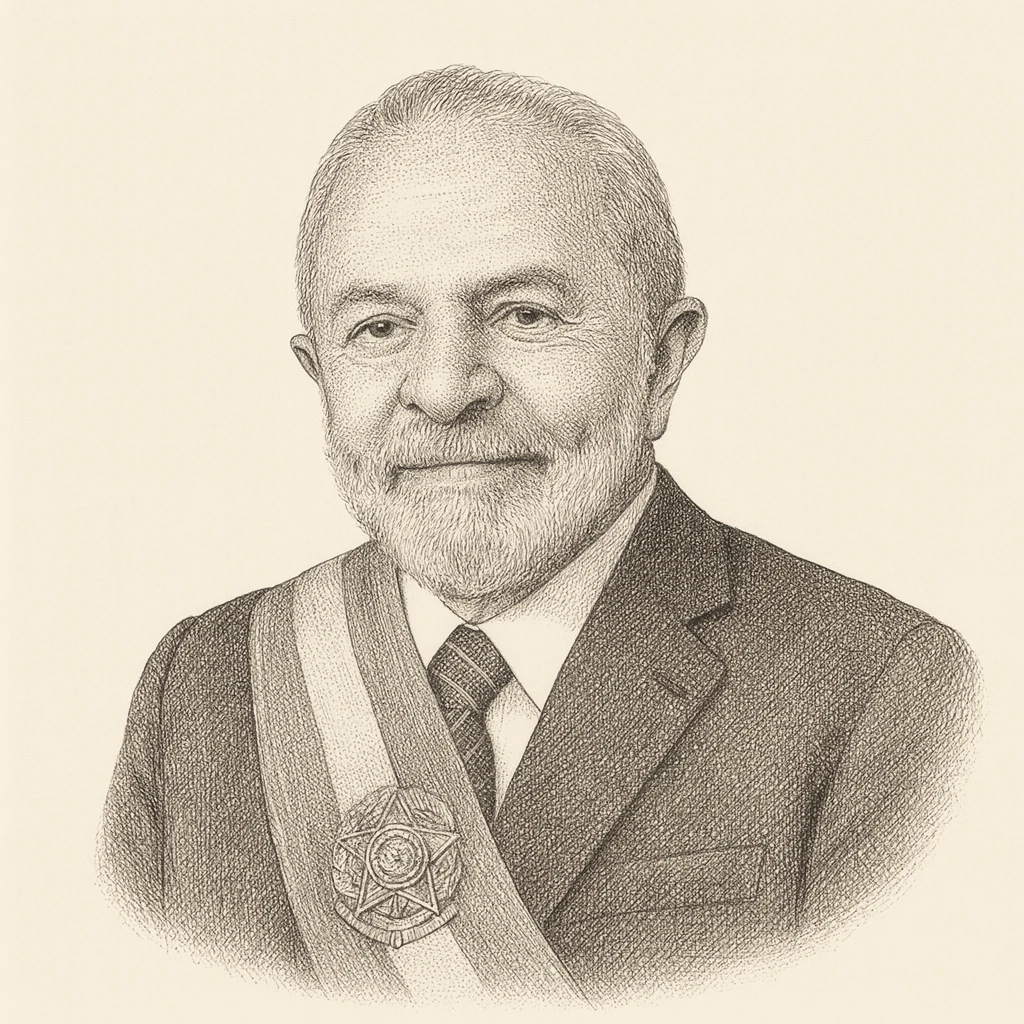
Luiz Inácio Lula da Silva rose from metalworker and union organizer to become the most consequential figure of the Brazilian and Latin American left. Emerging from the militant strikes of São Paulo's industrial belt during the final years of military dictatorship, he helped found the Workers' Party (Partido dos Trabalhadores) in 1980, a party rooted in trade unionism, base communities influenced by liberation theology, and social movements demanding both democratization and redistribution. His early politics were framed by class conflict and worker autonomy, and he built a distinctive Brazilian version of democratic socialism that combined grassroots mobilization with commitment to electoral and constitutional means.
Over several presidential campaigns Lula's thought shifted from confrontational socialism toward a pragmatic, coalition-building social democracy. By the time he won the presidency, he explicitly reassured markets while insisting that fighting hunger and poverty was the state's central moral task. His governing philosophy held that growth and social inclusion were complementary rather than opposed: expanding minimum wages, formal employment, and cash transfers such as Bolsa Família, which conditioned modest payments on school attendance and health checks, became emblematic of a targeted anti-poverty model widely studied and copied across the Global South. This synthesis—macroeconomic caution paired with ambitious social spending—defined what came to be called Lulismo.
Internationally, Lula argued for a more assertive Global South, promoting South-South cooperation, regional integration in Latin America, and reform of institutions he saw as dominated by wealthy nations. He positioned Brazil as a voice for developing countries and a broker among emerging powers, articulating a vision in which sovereignty and development justice mattered as much as domestic redistribution.
His record is genuinely contested. Corruption investigations connected to his party and government led to his conviction and imprisonment, convictions later annulled on procedural grounds by Brazil's Supreme Court, allowing his political return; supporters call the prosecutions politically driven, critics see unresolved questions of accountability. Debates also persist over how deeply his policies changed structural inequality versus softening its edges. Yet his influence on how the left thinks about governing—that credible economic management and mass poverty reduction can be pursued together within democracy—remains a defining reference point.
Luiz Inácio Lula da Silva is associated with Democratic Socialist. See the archetype