
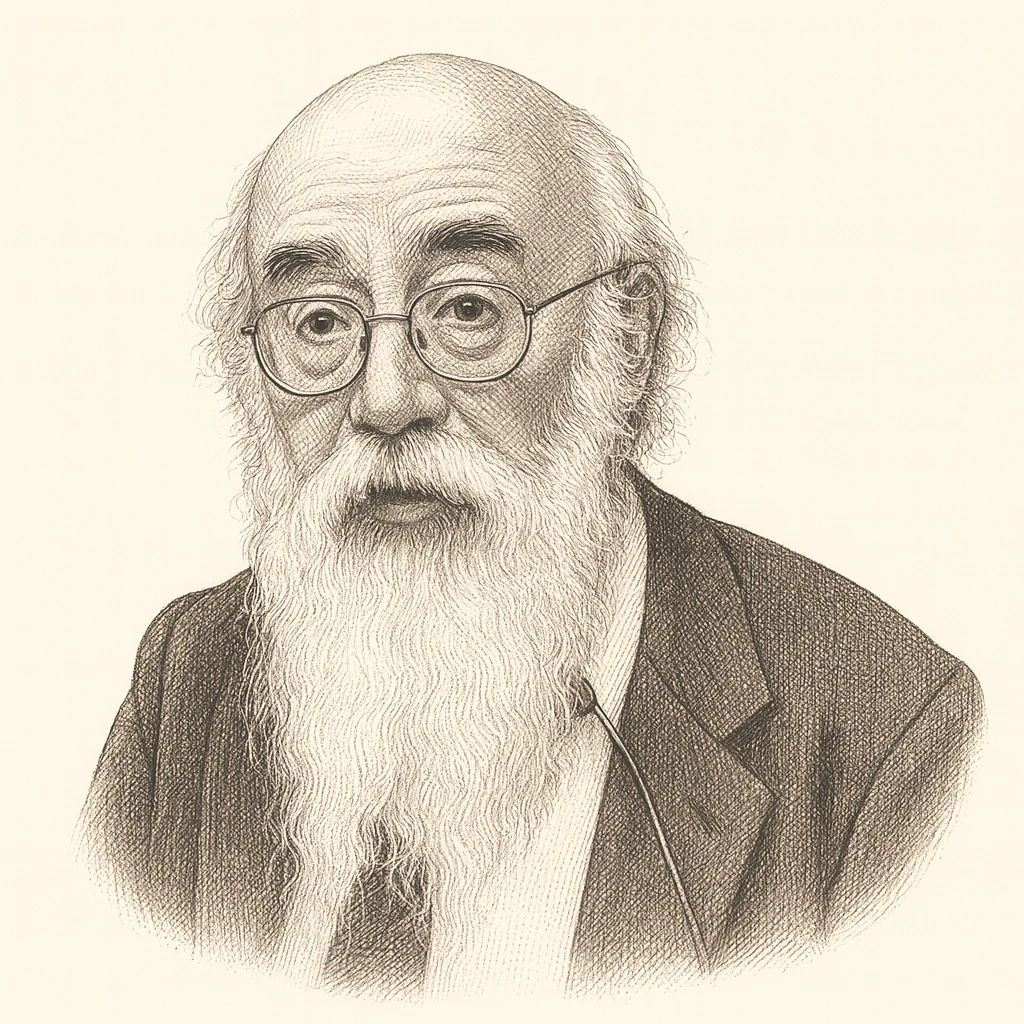
Loren Lomasky is a philosopher associated with contemporary classical liberal and libertarian political thought, working in the area where moral philosophy, rights theory, and political economy intersect. His most influential contribution is a defense of basic rights rooted in an account of persons as beings who conceive, pursue, and are committed to long-term projects. On this view, the capacity to form and act on such projects gives individuals a distinctive moral standing, and a framework of basic liberties is what allows diverse project-pursuers to coexist and cooperate. This argument positioned him as a thinker who sought to justify liberal rights not through abstract contractarian machinery alone but through a recognizable picture of what human lives are actually like.
Lomasky's work is notable for taking market society and commercial life seriously as morally significant arenas rather than as mere backdrops to political theory. He has argued that markets and the freedoms they presuppose are broadly compatible with, and often supportive of, the pursuit of meaningful individual ends, and he has engaged sympathetically with the liberal tradition's emphasis on liberty, pluralism, and limited government. In doing so he contributed to a strand of libertarian philosophy that emphasizes moral foundations and the value of individual autonomy rather than purely consequentialist or economic defenses of freedom.
Beyond rights theory, Lomasky is known for his work in collaboration with the political economist Geoffrey Brennan on the theory of voting and democratic choice. Their analysis advanced the idea of expressive voting: because a single vote is very unlikely to determine an electoral outcome, citizens may vote to express values and identities rather than to secure instrumental results. This reframing has had considerable influence in public choice theory and the philosophy of democracy, complicating simple assumptions about voter rationality and the informational quality of democratic decisions.
An academic philosopher long associated with the University of Virginia, Lomasky has been an active participant in debates among libertarians, classical liberals, and their critics. His broader significance lies in bridging rigorous analytic moral philosophy with political economy, offering arguments that treat individual liberty as grounded in the moral texture of ordinary human striving while remaining attentive to the practical workings of markets and democratic institutions.
Loren Lomasky is associated with Compassionate Libertarian. See the archetype