
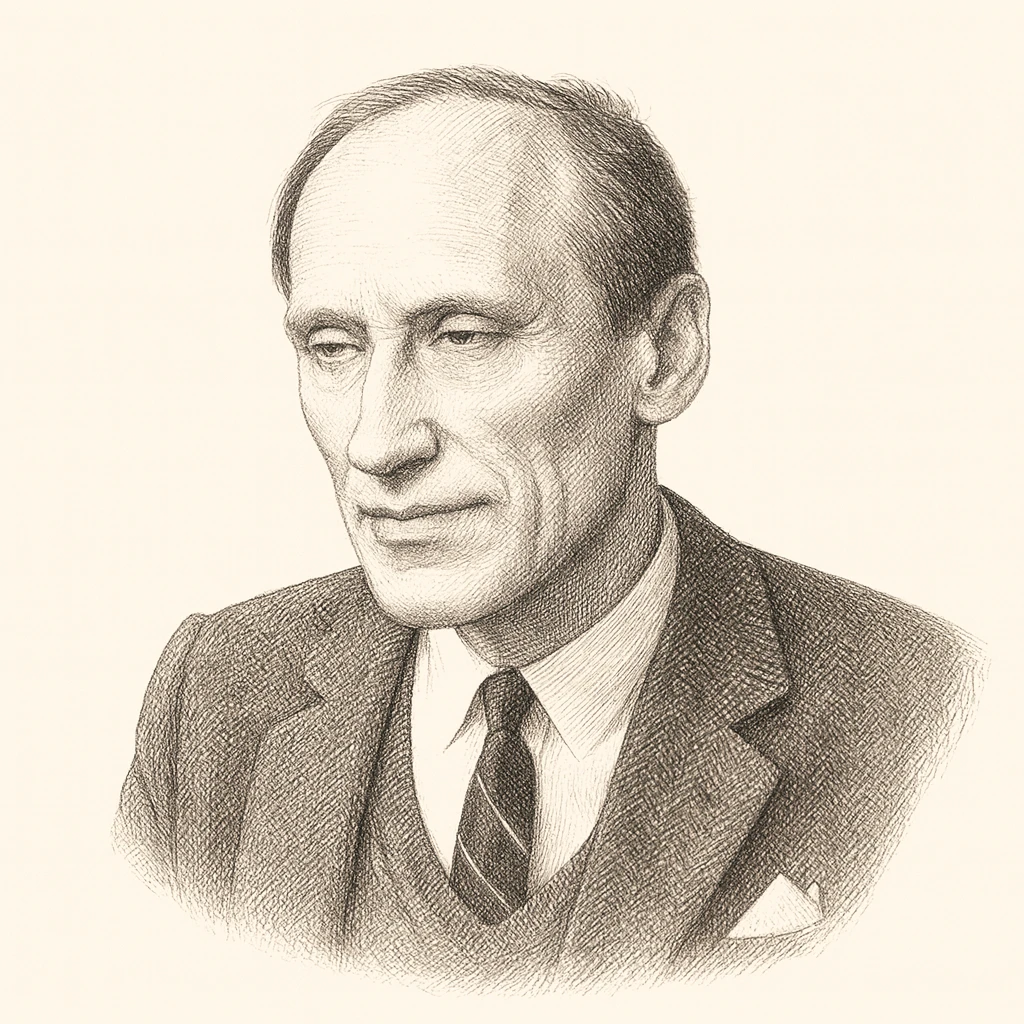
Leszek Kołakowski (1927-2009) was a Polish philosopher and historian of ideas whose intellectual trajectory traced the arc of twentieth-century Marxism itself. In his early career he was a committed Marxist and a prominent figure in Poland's postwar intellectual life, but he became increasingly critical of Stalinism and the dogmatic orthodoxy imposed under communist rule. His growing dissent, including his association with revisionist currents seeking a more humane and open socialism, brought him into conflict with the authorities. He was eventually expelled from the Polish United Workers' Party and later removed from his academic position, after which he emigrated and spent much of his career in the West, notably associated with Oxford University.
Kołakowski's most influential contribution to political thought was his sustained, historically grounded critique of Marxism as a comprehensive doctrine. His major work tracing the origins, development, and dissolution of Marxist thought examined how a philosophy of human emancipation could give rise to systems of repression. He argued that the utopian and totalizing ambitions embedded in Marxism helped explain its authoritarian outcomes, and he became one of the most penetrating analysts of the gap between communism's emancipatory promises and its practice. This made him a central reference point for critics of communism and for those reflecting on the seductions of ideological certainty.
Beyond his engagement with Marxism, Kołakowski developed a broader skepticism toward all closed ideological systems that claimed to possess final answers to political and human problems. He was wary of both dogmatic revolutionary politics and of the pretensions of any doctrine that promised complete social redemption. At the same time, his thought was marked by an appreciation for tradition, religion, and the persistence of unresolved moral and metaphysical questions, and he resisted the idea that reason alone could dispose of them. This gave his political writing a conservative-leaning caution about grand schemes for remaking society, combined with a liberal insistence on intellectual freedom and doubt.
His ideas influenced dissident movements in Eastern Europe and contributed to the intellectual climate that accompanied the erosion of communist legitimacy. For readers in the West and East alike, Kołakowski became a model of the engaged philosopher who took ideology seriously enough to dissect it rigorously, and his work remains widely cited in debates about totalitarianism, utopianism, and the moral limits of political ambition.
Leszek Kołakowski is associated with Independent Localist. See the archetype