
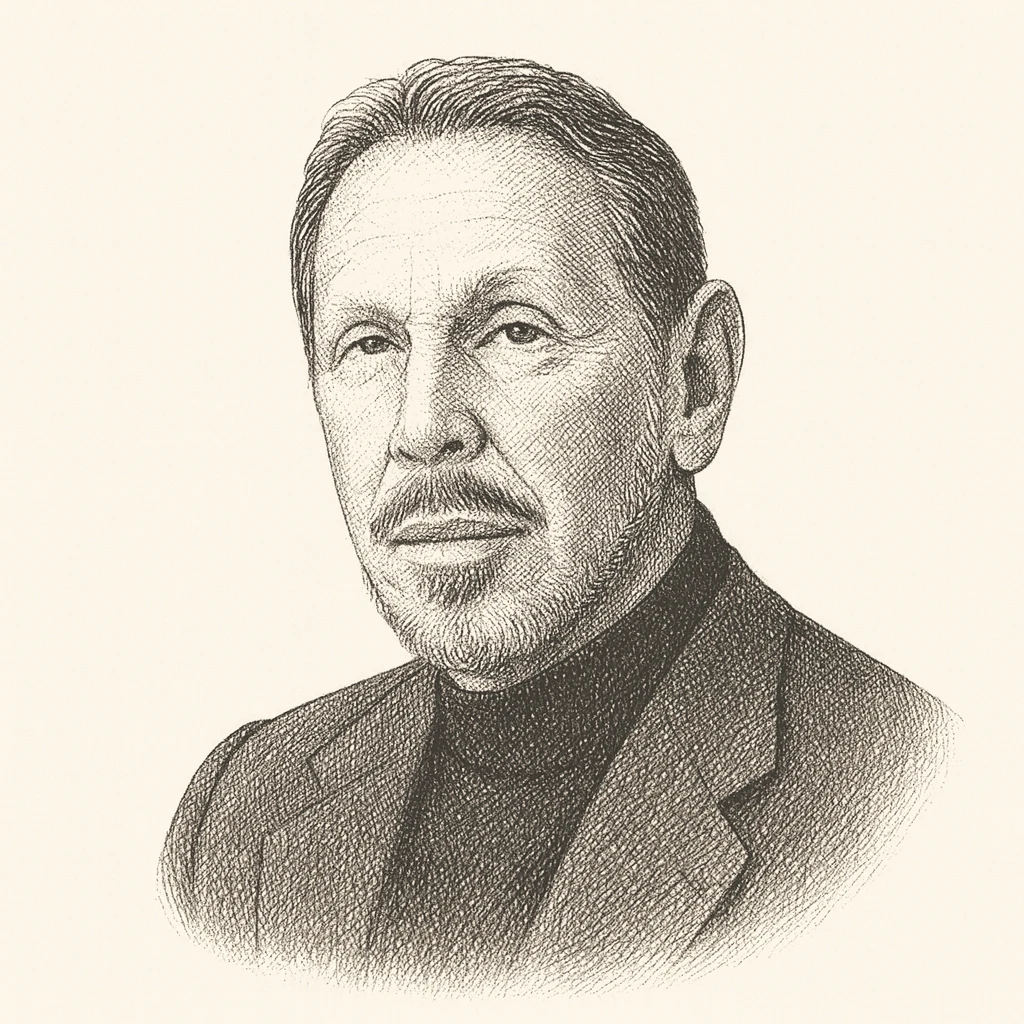
Larry Ellison is primarily a technology entrepreneur rather than a political theorist, but his interventions in public life have made him a recognizable figure in debates over data, surveillance, and the political uses of information technology. As the co-founder of Oracle Corporation, one of the world's largest database software companies, Ellison built a career and fortune on the aggregation, storage, and management of large-scale information. His political sensibility is often read as an extension of this commercial worldview: a conviction that comprehensive data systems can solve problems of security and governance that traditional institutions handle imperfectly.
Ellison's most-discussed political stance emerged in the aftermath of the September 11, 2001 attacks, when he publicly advocated for a national identification database and offered Oracle's involvement in building such a system. This proposal placed him in a broader post-9/11 debate over the trade-offs between security and civil liberties, aligning him with those who prioritized centralized surveillance capacity over privacy concerns. More recently, he has spoken favorably about the potential of artificial intelligence and pervasive monitoring to keep citizens accountable and on their "best behavior," comments widely cited as illustrating a technocratic and surveillance-friendly outlook that critics associate with authoritarian tendencies.
In electoral politics, Ellison has been a significant donor to Republican candidates and causes, backing figures such as Marco Rubio and later aligning himself with Donald Trump's political orbit; Oracle's involvement in negotiations over TikTok's U.S. operations further tied his business interests to national-security politics. His close personal relationships with other technology magnates, including Elon Musk, situate him within a network of wealthy Silicon Valley figures whose political influence has grown alongside their fortunes.
Ellison matters politically less for any systematic doctrine than for what he represents: the convergence of concentrated technological power, private wealth, and a governing philosophy that treats data collection and surveillance as instruments of stability and order. He is frequently invoked in discussions of how the interests and instincts of tech billionaires are reshaping questions of privacy, state power, and democratic accountability, making him a case study in the political consequences of the information economy rather than an author of political ideas in the conventional sense.
Larry Ellison is associated with Techno-Authoritarian. See the archetype