
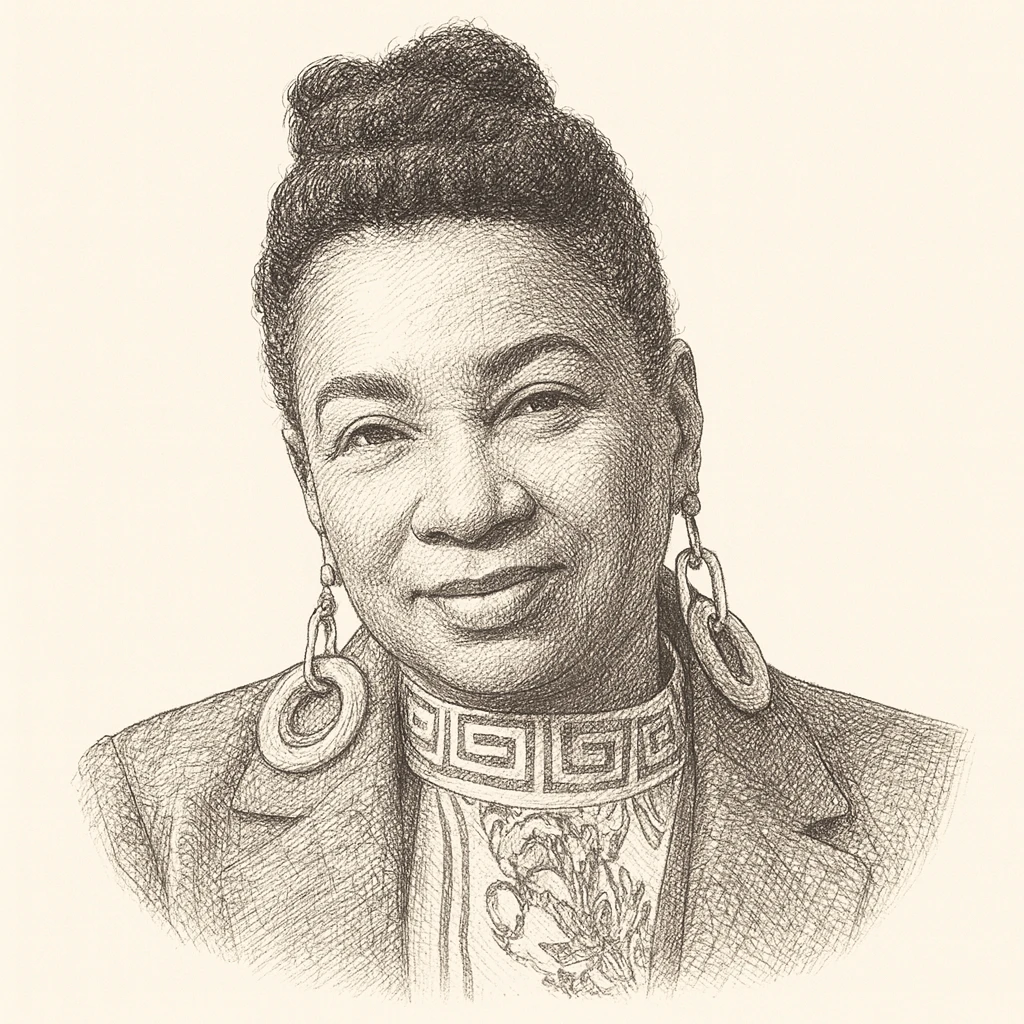
Kimberlé Crenshaw is a legal scholar whose work reshaped how activists, courts, and scholars think about discrimination and disadvantage. In the late 1980s and early 1990s she introduced the concept of intersectionality, arguing that anti-discrimination law, by treating race and gender as separate and independent categories, failed to capture the experiences of Black women, who could be harmed at the intersection of multiple systems of subordination. Her point was legal and structural before it was cultural: single-axis frameworks left some injuries invisible because they did not fit neatly into a single protected category. The idea has since traveled far beyond law into sociology, feminist theory, and everyday political vocabulary.
Crenshaw is also among the founding figures of critical race theory, an academic movement that contends racial inequality is embedded in ordinary legal structures and outcomes rather than confined to individual prejudice. Working alongside other scholars in the 1980s, she helped articulate the argument that formally neutral, colorblind rules can reproduce racial hierarchy, and that law is better understood as a site where power and race are contested rather than as a neutral arbiter. This body of work emphasizes the gap between formal equality and substantive results, and treats lived experience and history as legitimate evidence about how legal systems operate.
A longtime law professor at UCLA and Columbia, Crenshaw has used public scholarship and advocacy to extend her ideas, including efforts to draw attention to violence and discrimination affecting Black women and girls that she argues are overlooked by mainstream conversations. Her concepts have become central reference points in progressive politics.
Her influence is genuinely contested. Critical race theory and intersectionality have become flashpoints in American political debate, with critics arguing they emphasize group identity over individual responsibility, encourage grievance-based politics, or license division; defenders counter that these frameworks describe structural realities that older liberal models obscured. Much recent controversy involves popularized versions of the terms rather than her scholarly arguments, but the disputes have put her name at the center of contemporary debates over race, law, and equality.
Kimberlé Crenshaw is associated with Progressive Activist. See the archetype